Understanding Math Concepts Math Worksheets for Ages 5-7
3 filtered results
-
From - To
Welcome to our "Understanding Math Concepts Math Worksheets for Ages 5-7" page! Here, you'll find engaging and colorful worksheets designed to help young learners grasp essential math skills. Our resources cover fundamental concepts such as addition, subtraction, shape recognition, and basic measurements, providing a solid foundation in math. Each worksheet is crafted to promote critical thinking and problem-solving while making learning enjoyable. Perfect for parents and educators, these printables can easily be integrated into home schooling or classroom activities. Empower your child's math journey with fun and effective exercises that ignite a love for numbers and build confidence in their abilities!
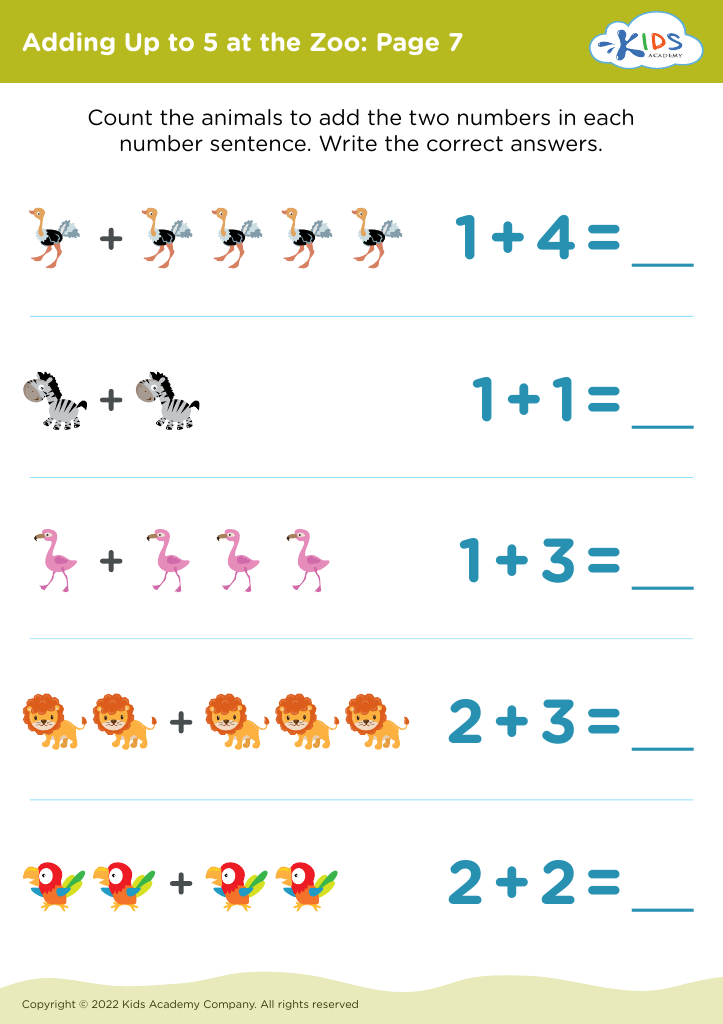
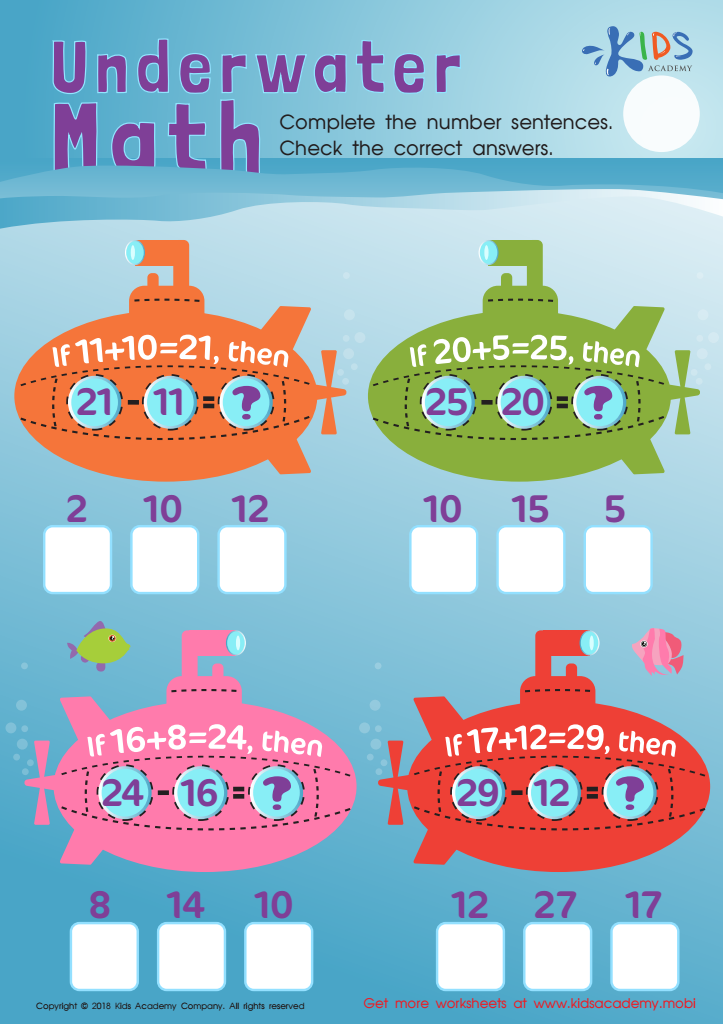
Addition and Subtraction: Underwater Math Worksheet
 Assign to My Students


.jpg)





Understanding math concepts in early childhood is crucial for both parents and teachers, as these foundations shape a child's future learning and overall confidence in academics. Ages 5-7 are pivotal years, during which children transition from basic number recognition to more complex skills such as addition, subtraction, and problem-solving. When parents and teachers prioritize math understanding, they help children build a solid framework for logical reasoning and critical thinking.
Moreover, a strong grasp of math concepts fosters a positive attitude toward learning. Early successes create a sense of achievement, encouraging children to embrace challenges and engage actively in the learning process. Understanding math also contributes to everyday life skills, making it easier for children to manage money, time, and measurements, which are essential beyond the classroom.
Furthermore, young learners often form their attitudes about math during these years. If teachers and parents support a conceptual understanding rather than rote memorization, children are more likely to view math as an exciting and manageable subject. By investing time and resources into understanding math concepts early on, adults play a crucial role in empowering children to become confident, competent math learners throughout their educational journey.








