Understanding more/less concept Math Worksheets for Ages 5-7
3 filtered results
-
From - To
Discover our engaging "Understanding More/Less Concept Math Worksheets" designed for ages 5-7! These interactive activities help young learners grasp the essential math skills needed to compare quantities effortlessly. Each worksheet presents colorful visuals and practical exercises, making it fun for kids to identify which set has more or less. Perfect for building a strong foundation in early math, these worksheets encourage critical thinking and improve number sense. Tailored for teachers and parents, these resources provide a reliable way to enhance classroom learning or support at-home education. Prepare your child for future math success with our expertly crafted worksheets!
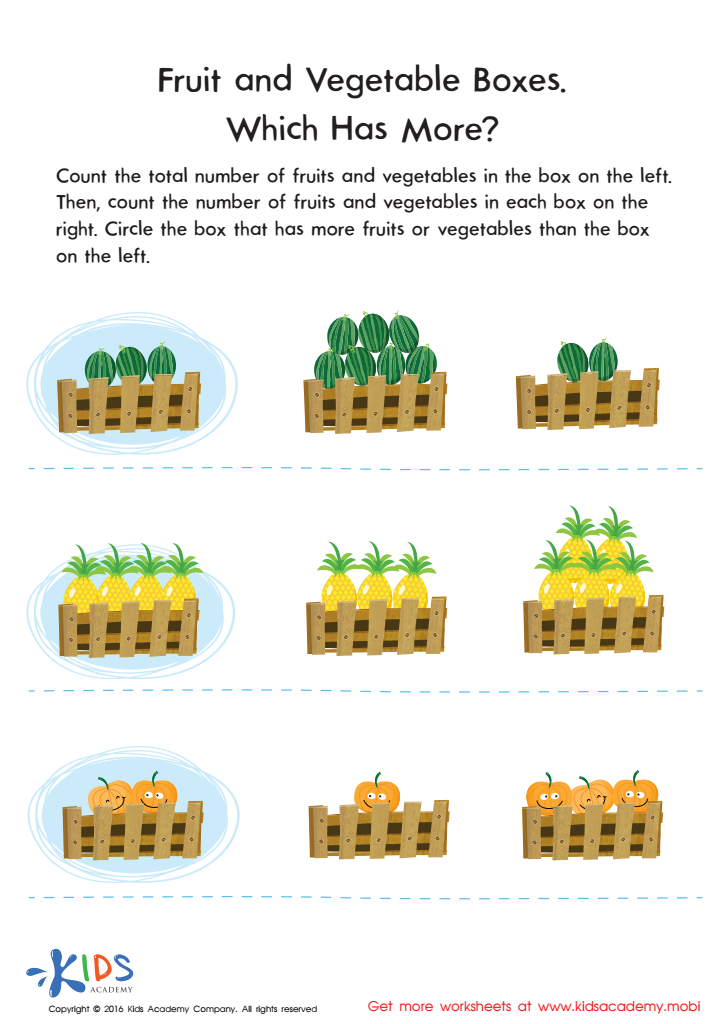
Which Has More? Size Worksheet
 Assign to My Students
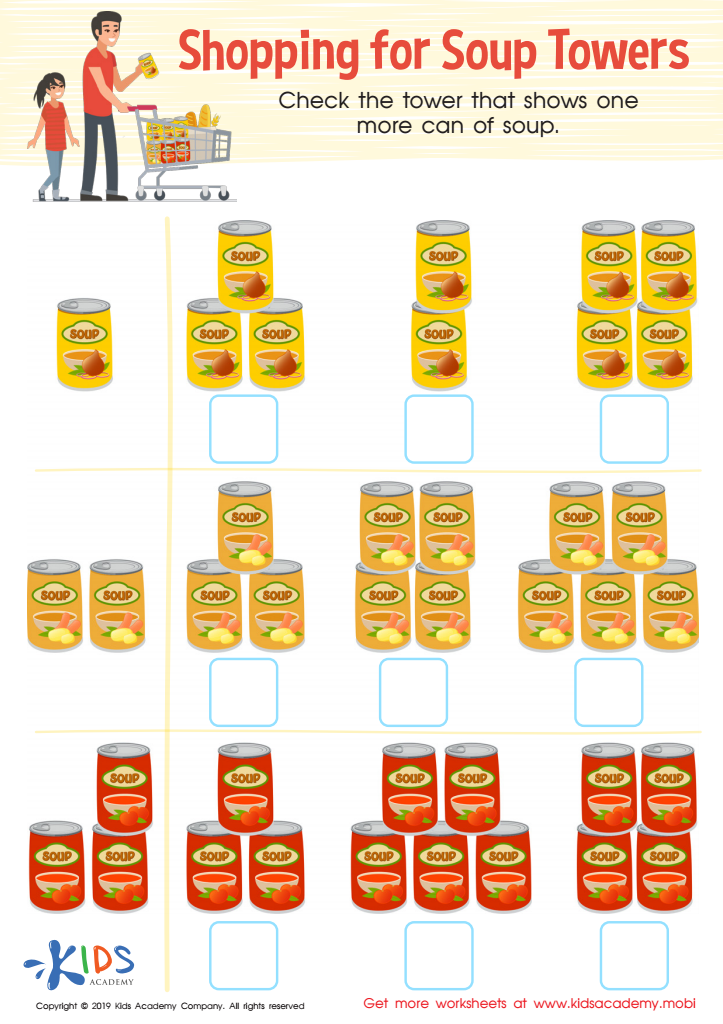
Soup Towers Worksheet
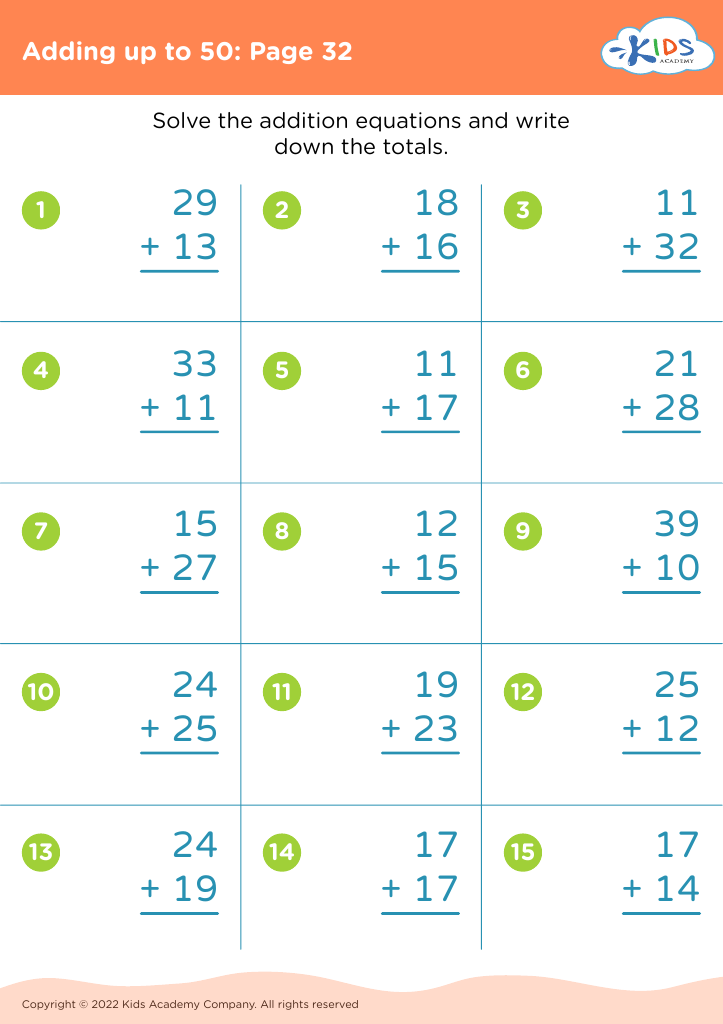








Understanding basic math concepts such as "more" and "less" is crucial for children aged 5-7 because these are foundational skills that support later mathematical learning and everyday decision-making. Grasping these concepts early helps in develop a child's number sense, which is the ability to understand, relate, and connect numbers. This creates a strong basis not only for future arithmetic skills, such as addition and subtraction, but also for more complex areas like multiplication and division later on.
Parents and teachers should emphasize these concepts because they also play a significant role in fostering critical thinking and problem-solving abilities. When children learn to compare quantities and determine which is more or less, they begin to think logically and make informed decisions. These skills are not limited to math but applicable across various life situations.
Moreover, understanding "more" and "less" helps children with everyday tasks. For example, distributing snacks, organizing toys, or deciding how much of an activity can fit into a given time frame are practical applications that children encounter regularly. Addressing these concepts in a fun and engaging way ensures that children see the relevance of math in their daily lives, ultimately nurturing a positive attitude towards learning in general.
Therefore, investing time in teaching and reinforcing these basic math concepts goes beyond academic achievement, fostering overall intellectual and social development.








