Understanding seasons Math Worksheets for Ages 5-7
5 filtered results
-
From - To
Discover our engaging and educational "Understanding Seasons Math Worksheets" for children ages 5-7! Our expertly designed worksheets help young learners grasp the concept of seasons through fun, interactive math activities. Kids will explore weather patterns, seasonal changes, and time sequences while developing essential math skills such as counting, addition, subtraction, and pattern recognition. Perfect for kindergarten and first-grade students, these colorful and engaging worksheets encourage a love for learning and improve critical thinking. Foster your child's curiosity and support their education with our vibrant, easy-to-use resources! Visit us now for hands-on seasonal learning fun!
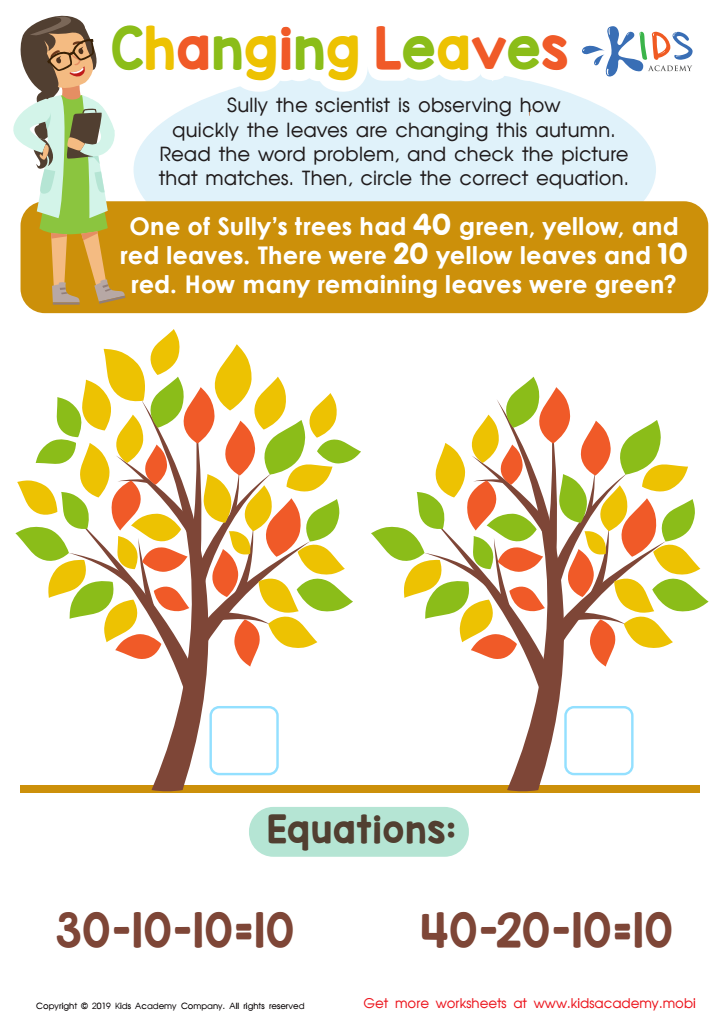
Changing Leaves Worksheet
 Assign to My Students
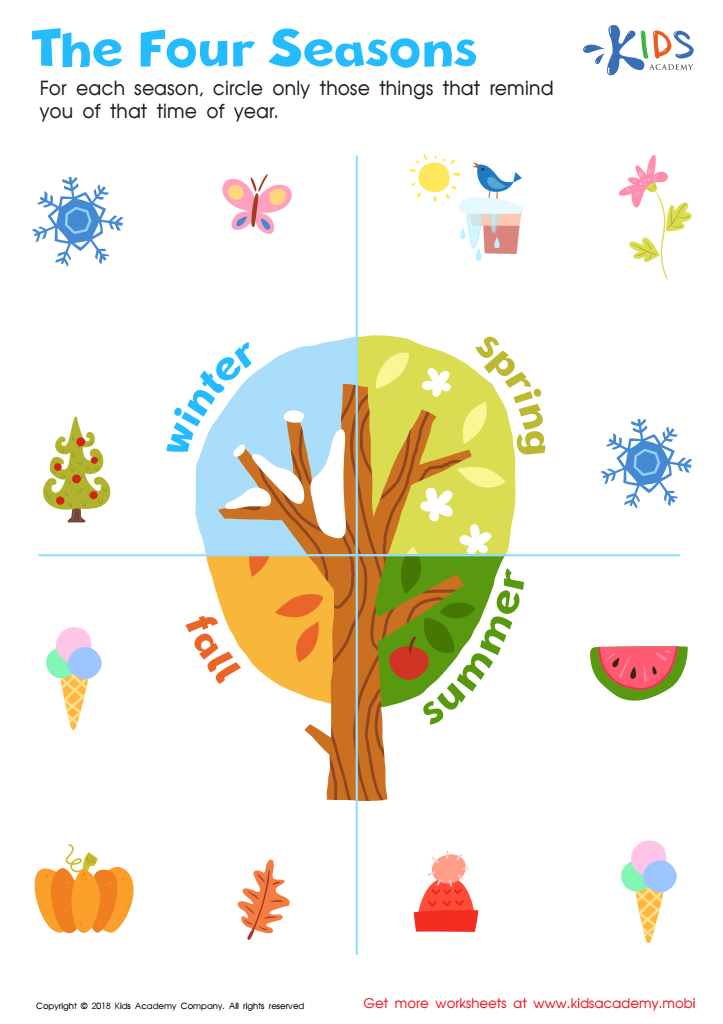
The Four Seasons Worksheet







Understanding seasons and basic math concepts is essential for young children aged 5-7 for several important reasons. Firstly, it helps establish a foundation in critical thinking and problem-solving skills. By recognizing patterns in weather changes across seasons, children begin to grasp the concept of time and the cyclical nature of events, which are fundamental principles in both science and math.
Secondly, learning about seasons offers real-world applications that make math relatable and engaging. For example, counting the days in each season, understanding temperatures, and comparing daylight hours can all integrate basic arithmetic skills like counting, addition, and subtraction. These activities make abstract concepts tangible, fostering a deeper understanding and retention of math principles.
Additionally, incorporating seasons-related activities can enhance a child’s observational and analytical skills. When children collect and interpret data about weather patterns, they not only practice math but also learn to make predictions and draw conclusions, skills that are transferable across various disciplines.
Lastly, understanding seasons is part of broader scientific literacy, helping children appreciate and respect the environment. Early exposure to these concepts nurtures curiosity and encourages lifelong learning in both math and science. Therefore, parents and teachers should prioritize these lessons to develop well-rounded, critical thinkers from a young age.








