
Underwater animal identification Math Worksheets for Ages 5-7
3 filtered results
Difficulty Level
Grade
Age
-
From - To
Subject
Activity
Standards
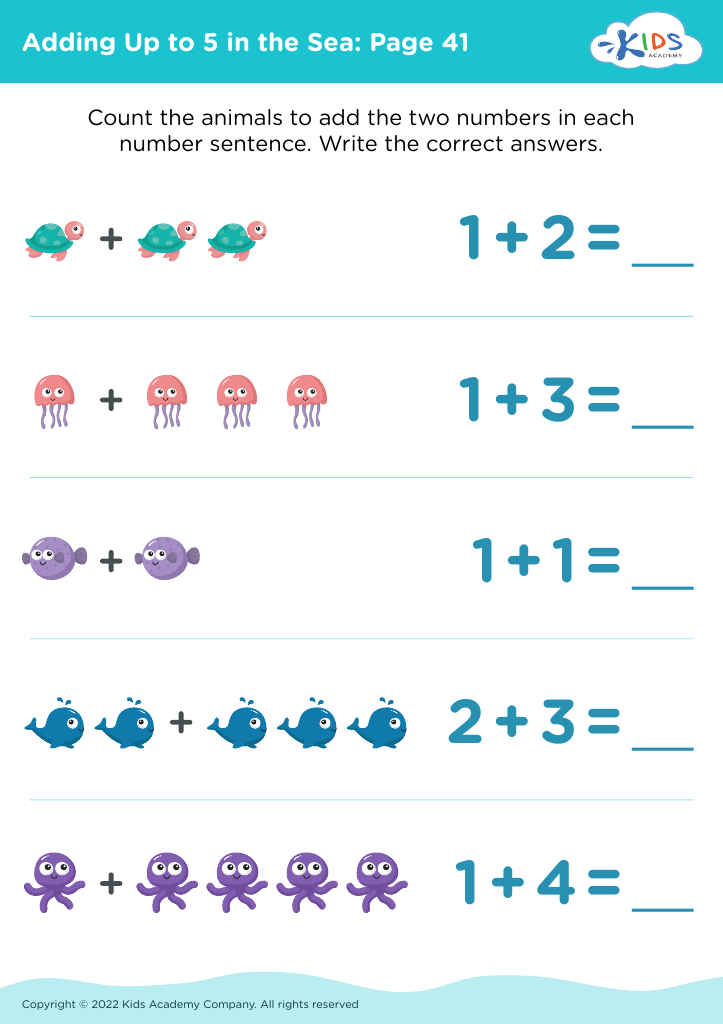
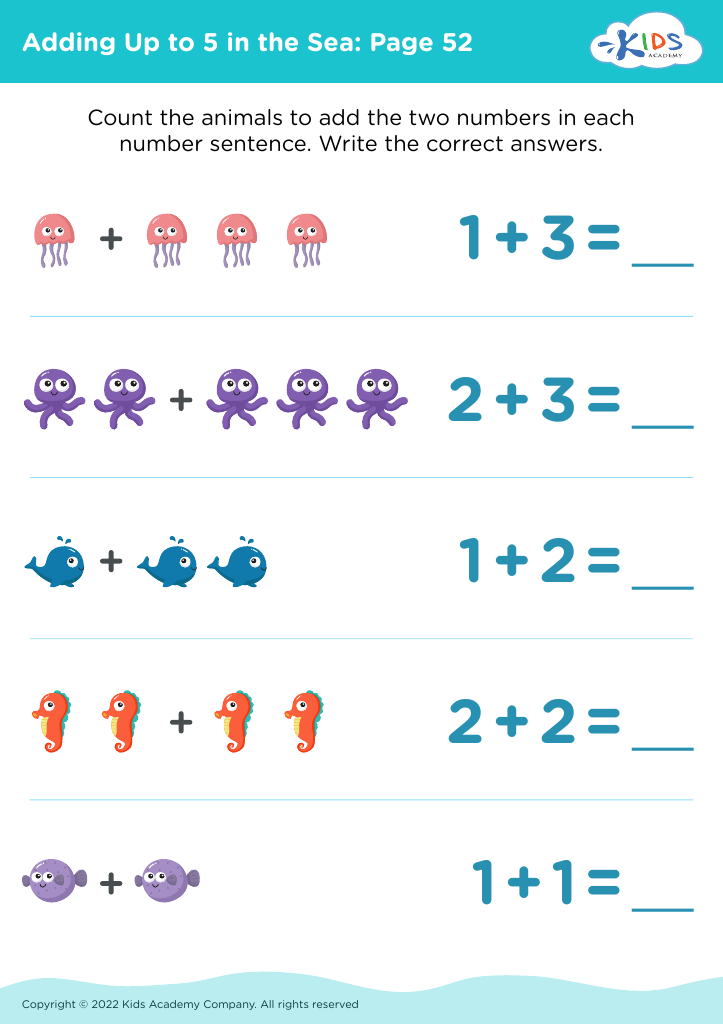
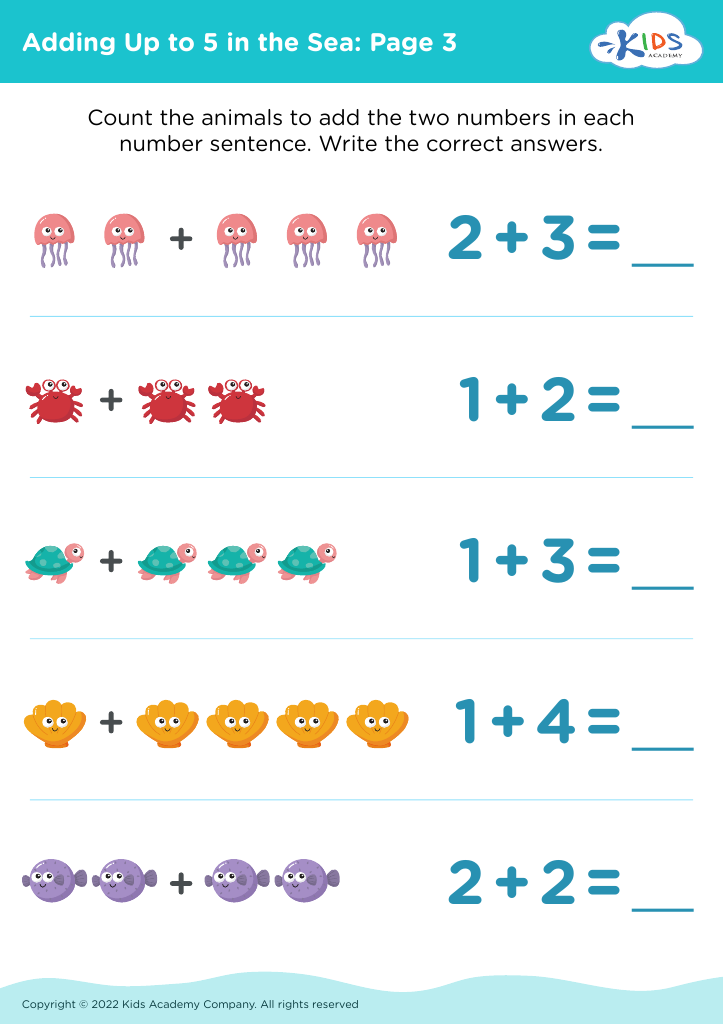
Discover our engaging Underwater Animal Identification Math Worksheets designed specifically for children aged 5-7! These vibrant, interactive worksheets combine math skills with fun, featuring a variety of underwater creatures to captivate young learners. As students identify animals like fish, turtles, and dolphins, they simultaneously practice essential math concepts such as counting, addition, and subtraction. Our resources encourage cognitive development while fostering a love for ocean life and mathematics. Perfect for homeschooling or classroom use, these worksheets provide an exciting and effective way for kids to enhance their learning experience. Dive in and explore the wonders of the underwater world through math!
Favorites
With answer key
Interactive
Join Kids Academy for Free
Who is primarily going to use this learning content?








Underwater animal identification math is a fascinating and engaging way to integrate various subjects—science, math, and environmental awareness—for young learners aged 5-7. Understanding marine life is crucial in fostering a sense of curiosity and respect for the environment. Through this activity, children not only learn to identify different underwater animals but also practice essential math skills, such as counting, sorting, and basic addition or subtraction.
Parents and teachers should care about this educational approach as it promotes critical thinking and boosts essential cognitive skills. Identifying animals encourages observation and reasoning, while the inherent math components help young learners develop numerical literacy in a fun and interactive manner. It also aligns with educational standards, enhancing real-world knowledge while reinforcing mathematical concepts in a compelling context.
Moreover, this immersive approach promotes a passion for science and nature, helping to develop environmentally conscious citizens. By learning about underwater ecosystems, children can grasp the importance of conservation and biodiversity, laying the foundation for sustainable living in the future. In essence, underwater animal identification math nurtures curiosity, cognitive development, and environmental responsibility, making it a valuable experience for young learners.








