Visual discrimination skills Math Worksheets for Ages 5-7
4 filtered results
-
From - To
Enhance your child's mathematical abilities with our Visual Discrimination Skills Math Worksheets designed for ages 5-7. These engaging worksheets help young learners develop essential skills, such as recognizing patterns, identifying differences, and sorting objects. Perfect for early grade students, these activities boost critical thinking, attention to detail, and cognitive development. Our expertly crafted exercises ensure that learning is fun and accessible, keeping children motivated and eager to learn. Encourage your child to explore the world of math with our comprehensive collection of visual discrimination worksheets, and watch as they build a strong foundation for future academic success.
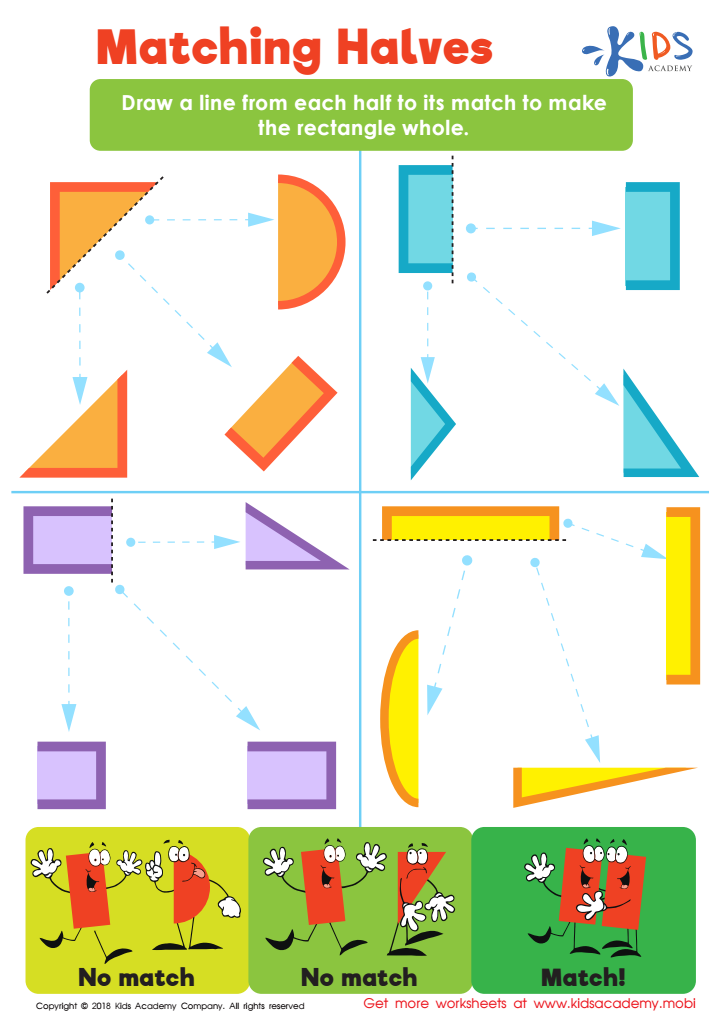
Matching Halves Worksheet
 Assign to My Students
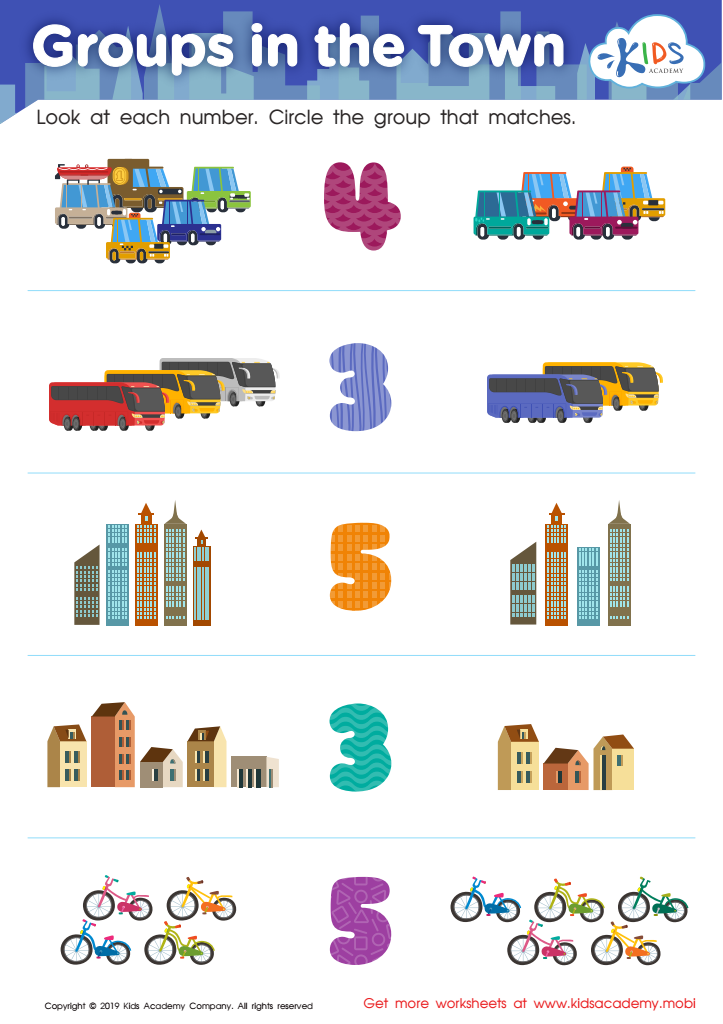
Groups in the Town Worksheet
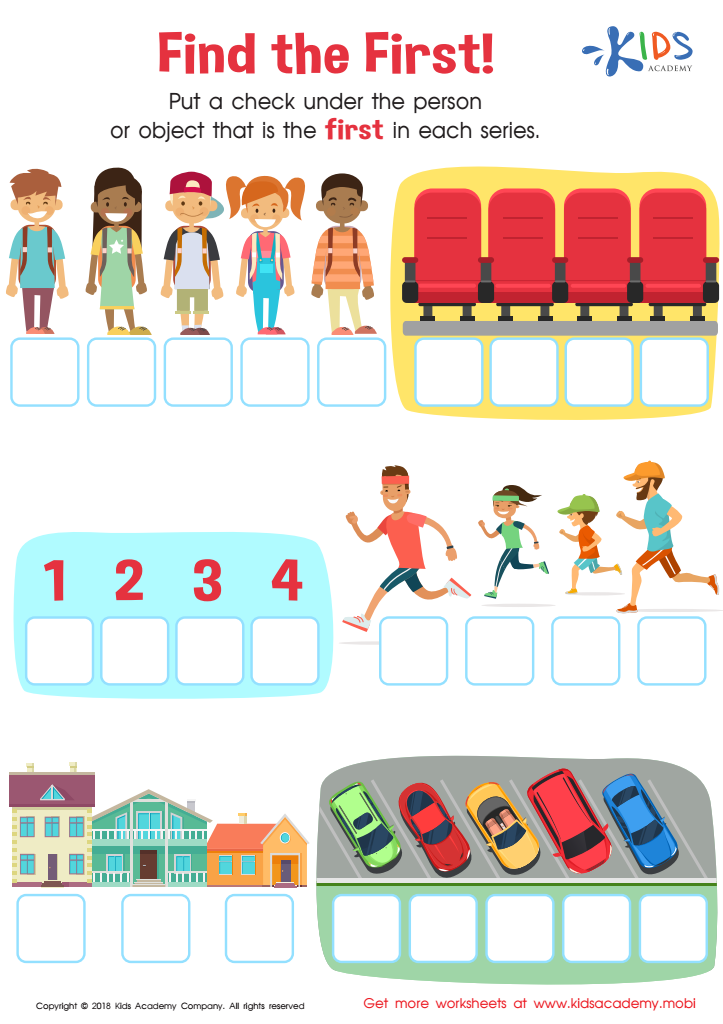
Find the First! Worksheet








Visual discrimination skills in math for ages 5-7 lay the foundation for children’s overall academic success and cognitive development. These skills involve the ability to notice and compare similarities and differences in visual patterns, shapes, symbols, and numbers. At this critical stage, young learners are just beginning to grasp fundamental mathematical concepts, and visual discrimination plays a pivotal role in ensuring they understand what they see.
For instance, distinguishing between numbers that look similar, such as 6 and 9 or 3 and 8, is essential for accurate arithmetic operations and number recognition. Visual discrimination also helps children differentiate geometric shapes, fostering early geometry skills. This capability is essential for tasks such as identifying patterns, sorting objects, and recognizing sequences, all of which underlie basic math concepts.
Without strong visual discrimination abilities, children might struggle with early math tasks, potentially leading to frustration and a lack of confidence in their mathematical skills. Parents and teachers play crucial roles in supporting the development of these skills through activities like matching games, puzzles, and pattern-based exercises. Ensuring that children develop robust visual discrimination skills at an early age can pave the way for a smoother transition into more complex math concepts, ultimately contributing to their lifelong learning and problem-solving abilities.








