Visual-motor skills Math Worksheets for Ages 5-7
5 filtered results
-
From - To
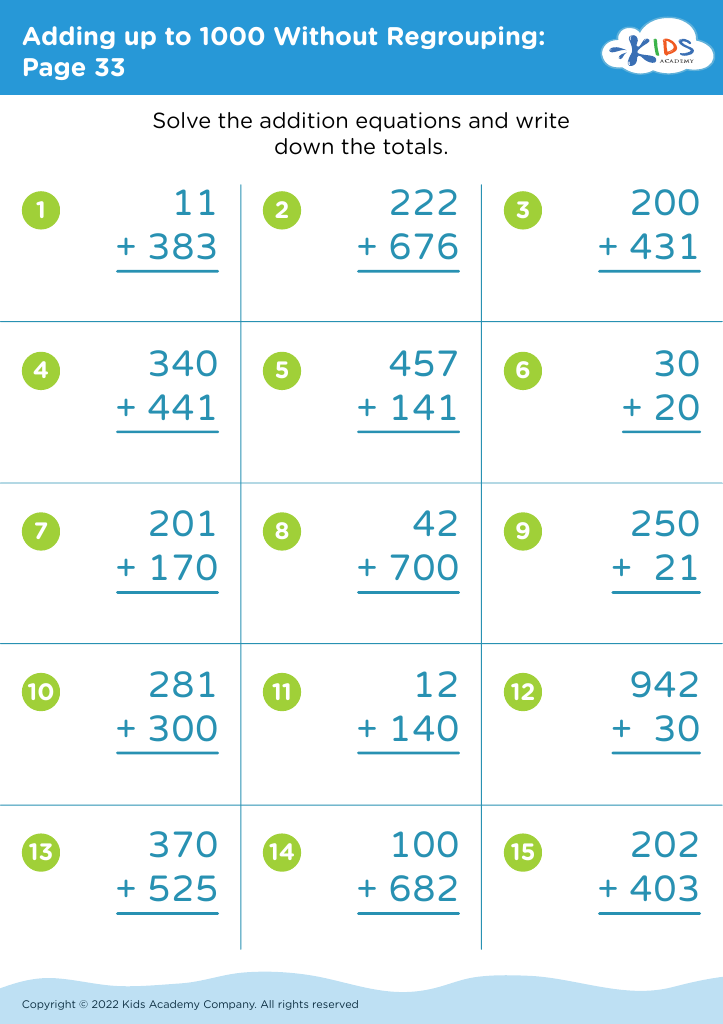
Enhance your child's math abilities with our Visual-Motor Skills Math Worksheets, designed specifically for ages 5-7. These engaging worksheets combine fun activities and exercises to develop crucial visual-motor skills, key for effective learning. Children will practice and improve hand-eye coordination, spatial awareness, and fine motor skills while mastering basic math concepts. Perfect for kindergarten and early elementary students, our worksheets effectively balance education with enjoyment. Help your child gain confidence and foster a love for math through interactive, visually appealing worksheets tailored to young learners' developmental needs. Dive into a productive learning experience today!
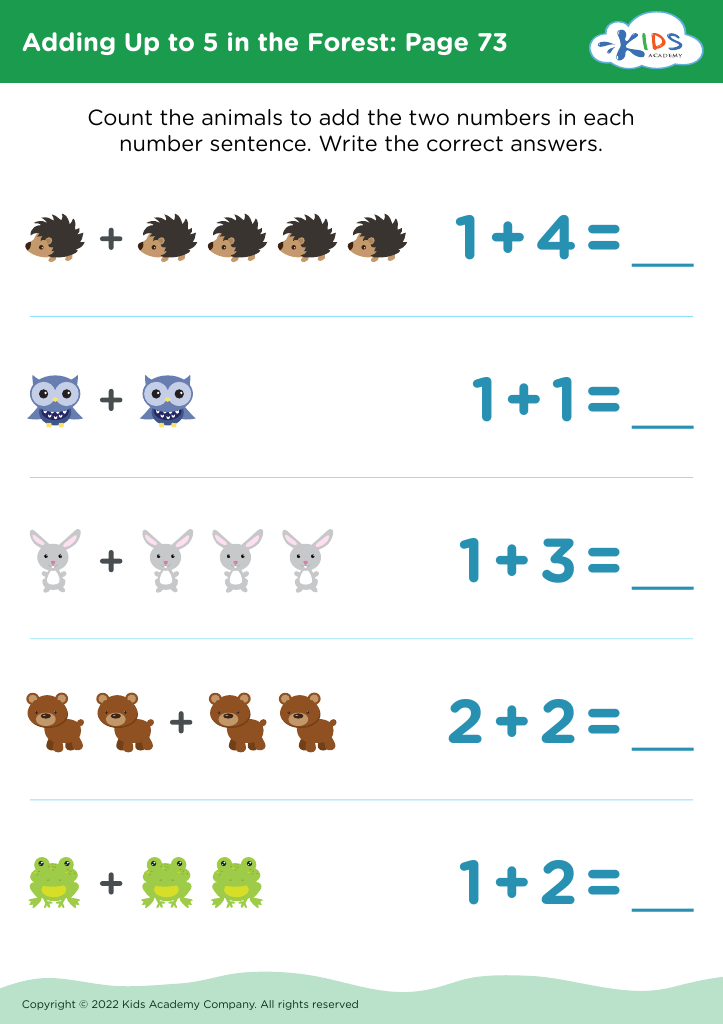
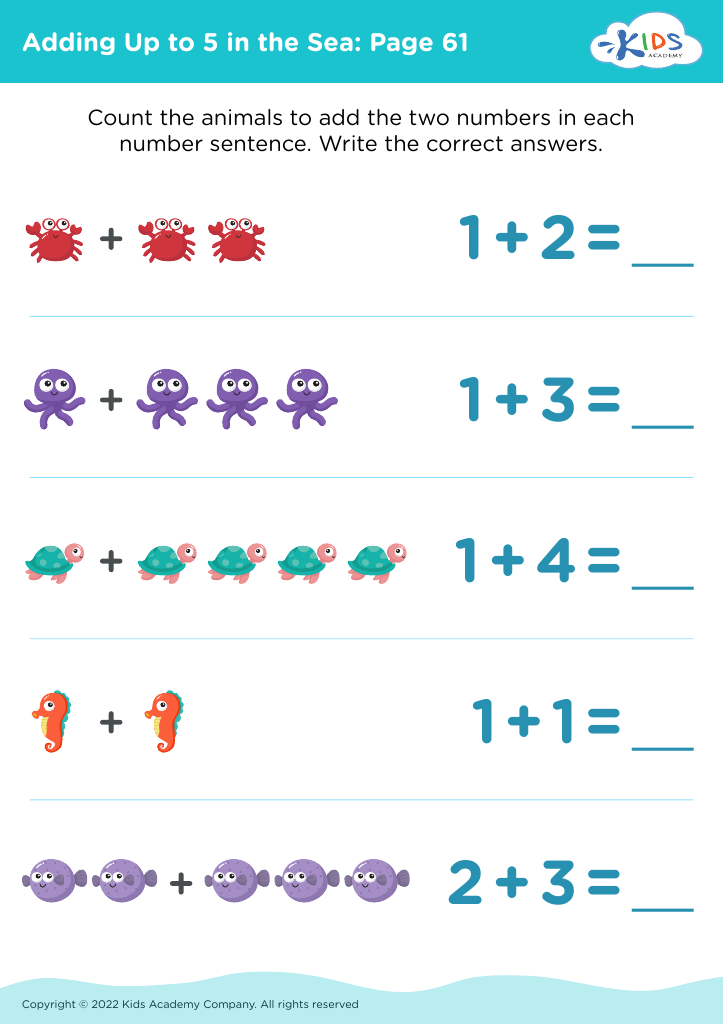
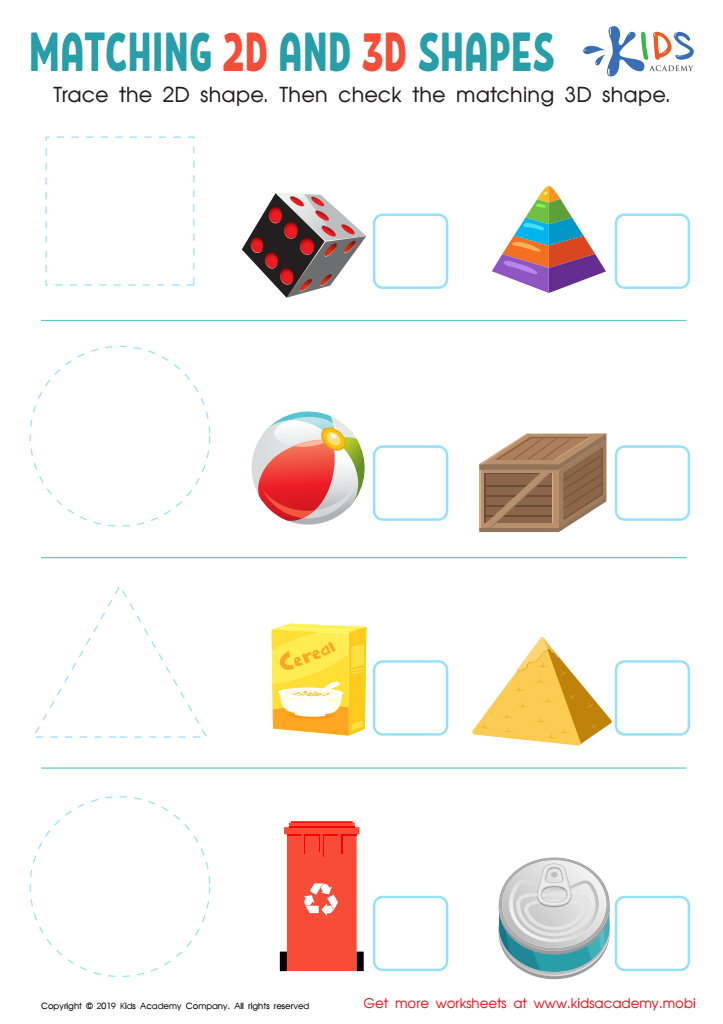
Matching 2D and 3D Shapes Worksheet
 Assign to My Students
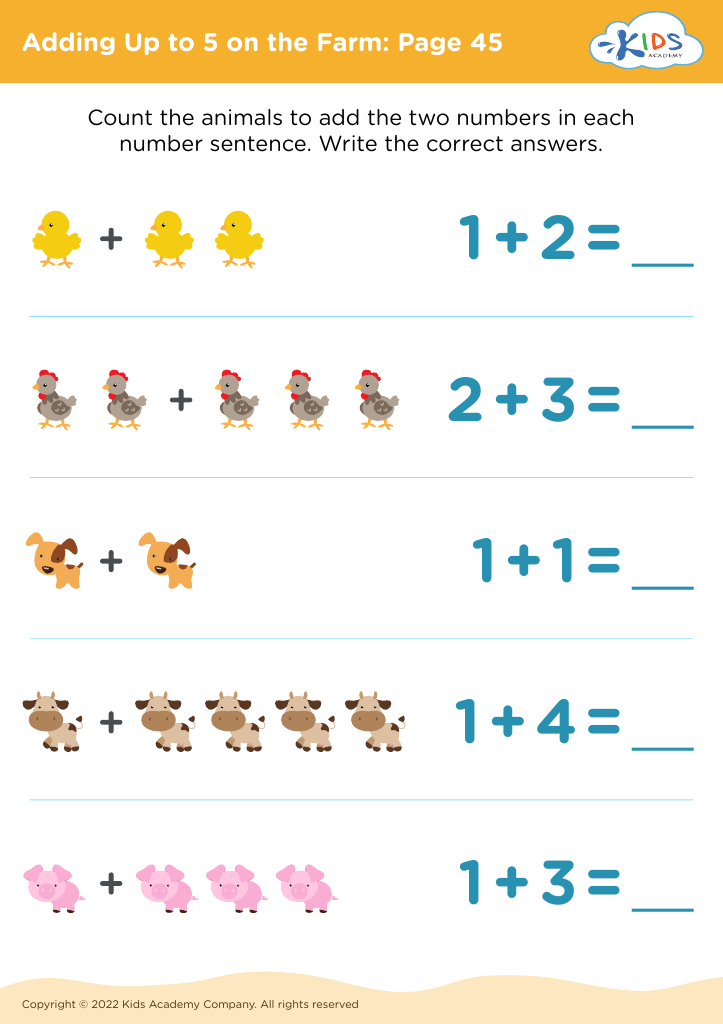


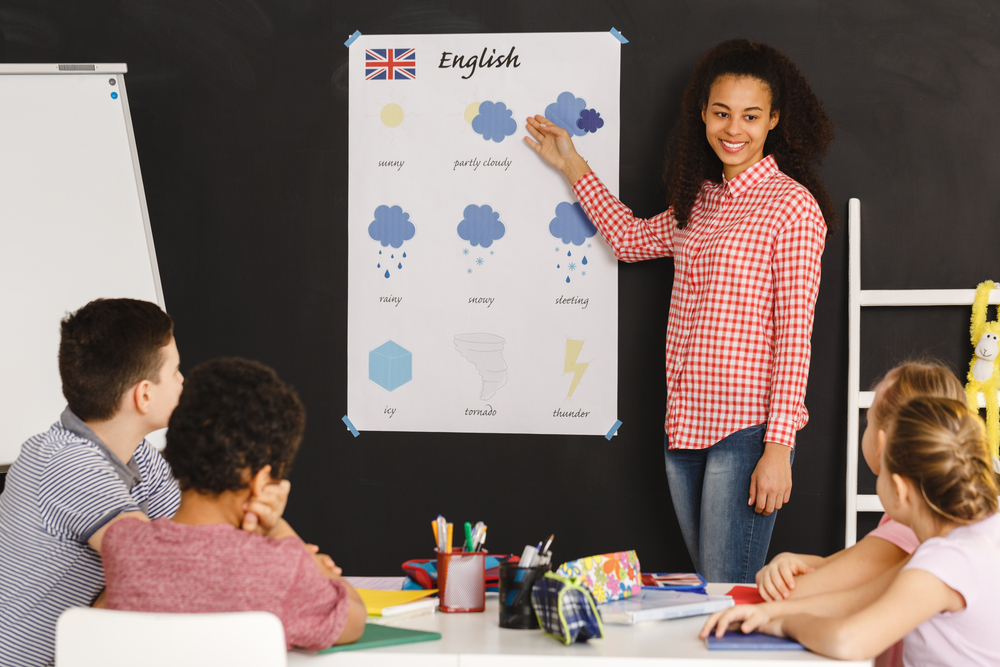
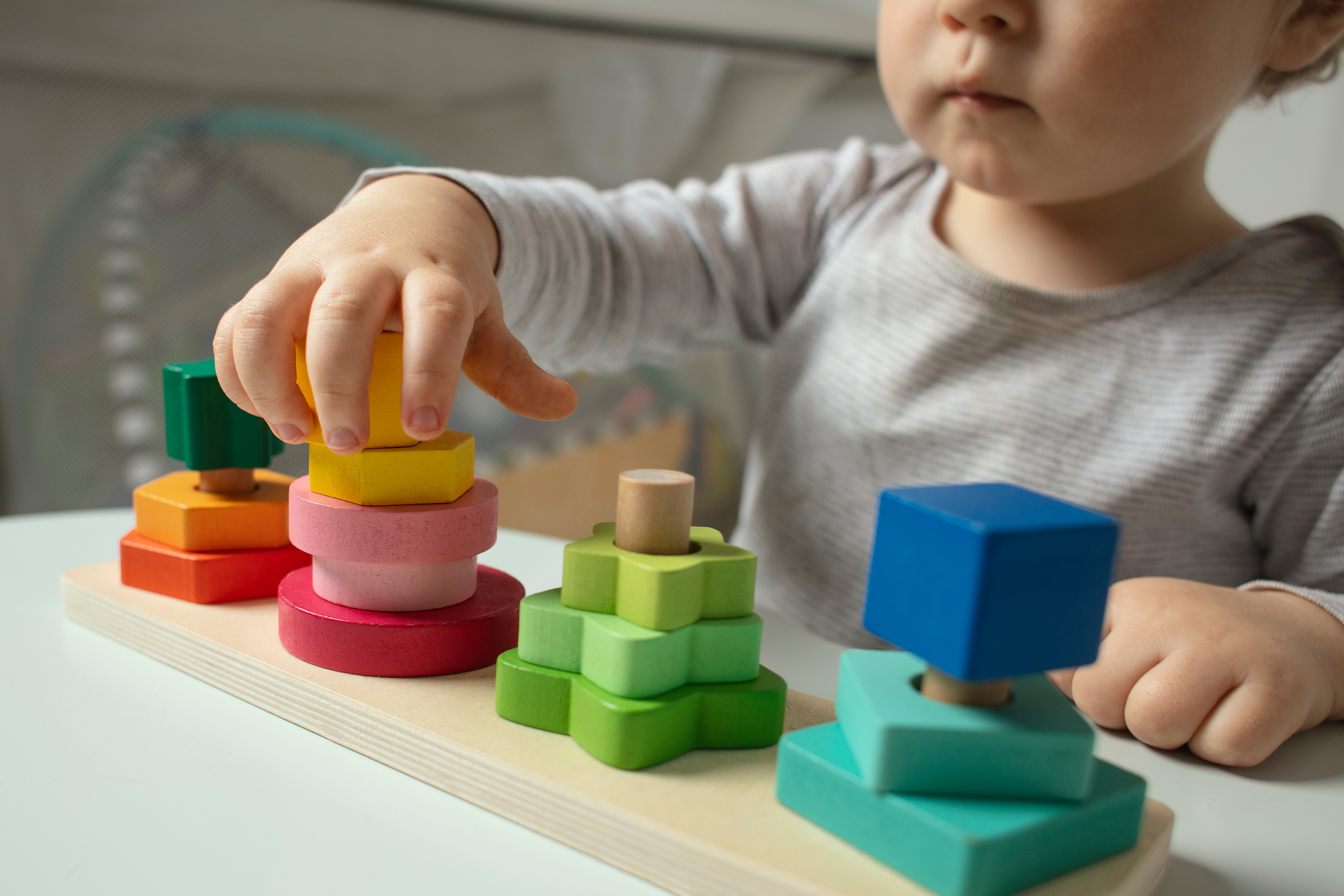




Visual-motor skills are essential for young children, especially in relation to math for ages 5-7. These skills enable children to coordinate their visual perception with their motor actions, a crucial ability when learning to write numbers, solve puzzles, and understand geometric shapes. Strong visual-motor skills contribute to a child's ability to grasp spatial relationships, which is fundamental in understanding math concepts such as patterns, symmetry, and problem-solving.
For example, tasks like recognizing numbers and shapes require children to process visual information accurately and reproduce it through drawing or other motor activities. These foundational skills support the ability to copy and remember patterns and sequences, aiding in the transition to more complex math skills in later grades. Moreover, hands-on activities, such as using manipulative blocks to represent numbers or simple addition and subtraction tasks, bolster mathematical thinking by merging sight with touch and movement.
Enhancing a child's visual-motor abilities not only fosters academic success but also boosts confidence and reduces frustration during learning activities. When parents and teachers actively support the development of these skills — through activities like drawing, cutting shapes, or playing games that require coordination and precision — they lay a solid groundwork for long-term mathematical proficiency and overall cognitive development.








