Basic measurement skills Measurement Worksheets for Ages 5-7
3 filtered results
-
From - To
Our Basic Measurement Skills Worksheets for Ages 5-7 are designed to engage young learners in fun and interactive ways. These worksheets introduce foundational measurement concepts, including length, height, weight, and volume, using age-appropriate activities. Children will enjoy tasks like comparing objects, using non-standard units of measurement, and recognizing measurements in everyday situations. These exercises not only boost math skills but also enhance problem-solving, critical thinking, and attention to detail. Perfect for both classroom and at-home learning, our expertly crafted worksheets support early education standards and foster a love for math from an early age.
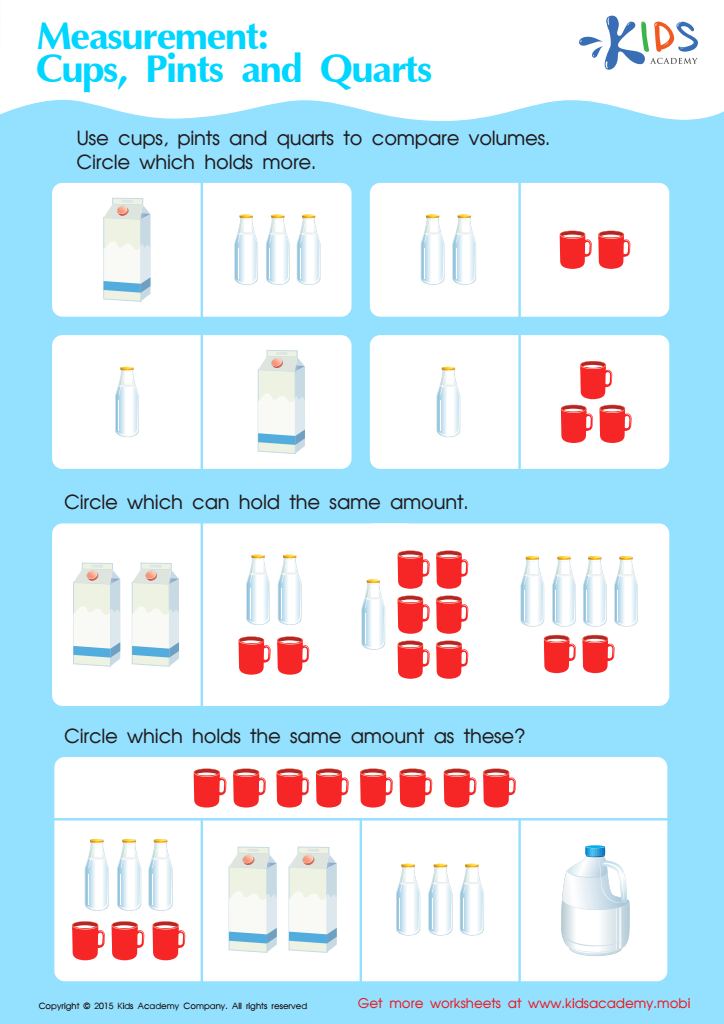
Measurement: Compare Volumes Worksheet
 Assign to My Students
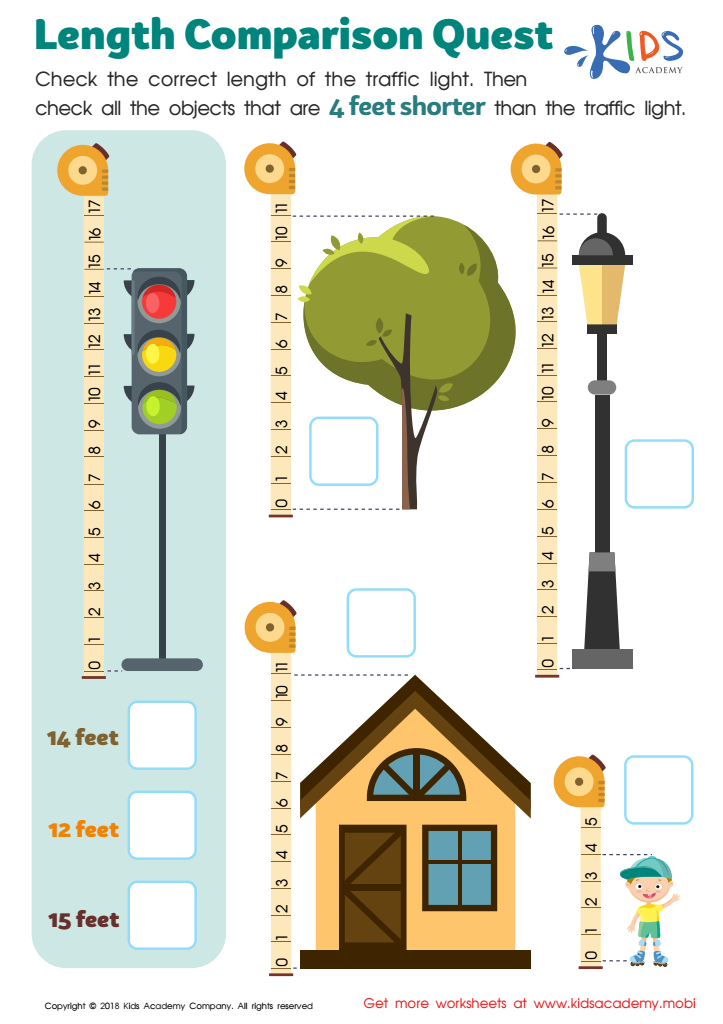
Length Comparison Quest Worksheet
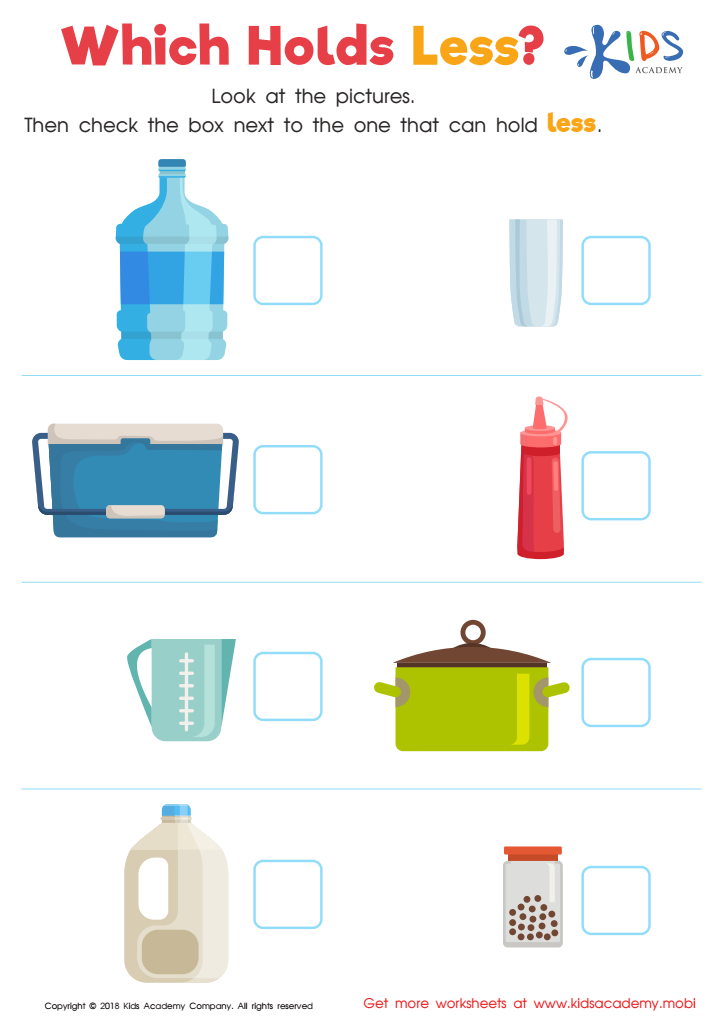
Which Holds Less? Worksheet








Basic measurement skills are crucial for children aged 5-7 because they form the foundation for understanding the world around them and tackling more complex mathematical concepts later on. At this age, kids are naturally curious and keen to explore. Introducing them to measurement activities like comparing lengths, weights, and volumes helps them develop critical thinking and problem-solving skills. It also fosters a hands-on approach to learning, making abstract ideas more concrete and easier to grasp.
Measurement skills extend beyond the classroom, offering practical benefits in everyday life. When kids learn to measure, they gain an understanding of quantities and spatial relationships, which can boost their skills in areas such as cooking, playing sports, and even organizing their personal space. Additionally, mastering these basics early sets the stage for future success in math and science, subjects that increasingly demand accurate measurement and data interpretation.
From a socio-emotional perspective, engaging in measurement activities enhances cooperative learning and improves communication skills as children describe and compare their findings. Overall, nurturing basic measurement skills at this formative stage equips kids with essential tools for academic achievement and life-long competence, making it a top priority for parents and teachers.








