Comparing numbers Measurement Worksheets for Ages 5-7
3 filtered results
-
From - To
Introduce kids to the fun of comparing numbers and measurements with our specially designed worksheets for ages 5-7! Engaging and educational, these exercises help young learners develop essential math skills such as recognizing different sizes, lengths, and weights. Each worksheet combines creative illustrations with interactive tasks to make learning enjoyable and effective. Perfect for classroom and home use, these printables encourage critical thinking as children compare and contrast quantities. Give your kids a head start in math with activities that blend playfulness with practical learning. Visit Kids Academy for a variety of comparing numbers measurement worksheets!
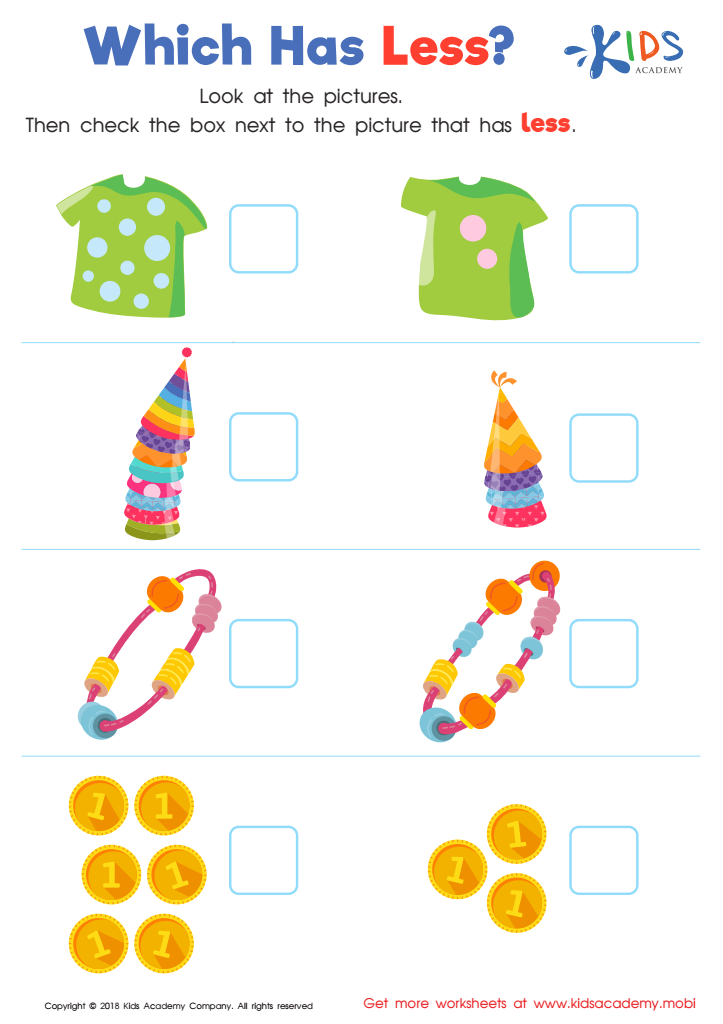
Which Has Less? Worksheet
 Assign to My Students
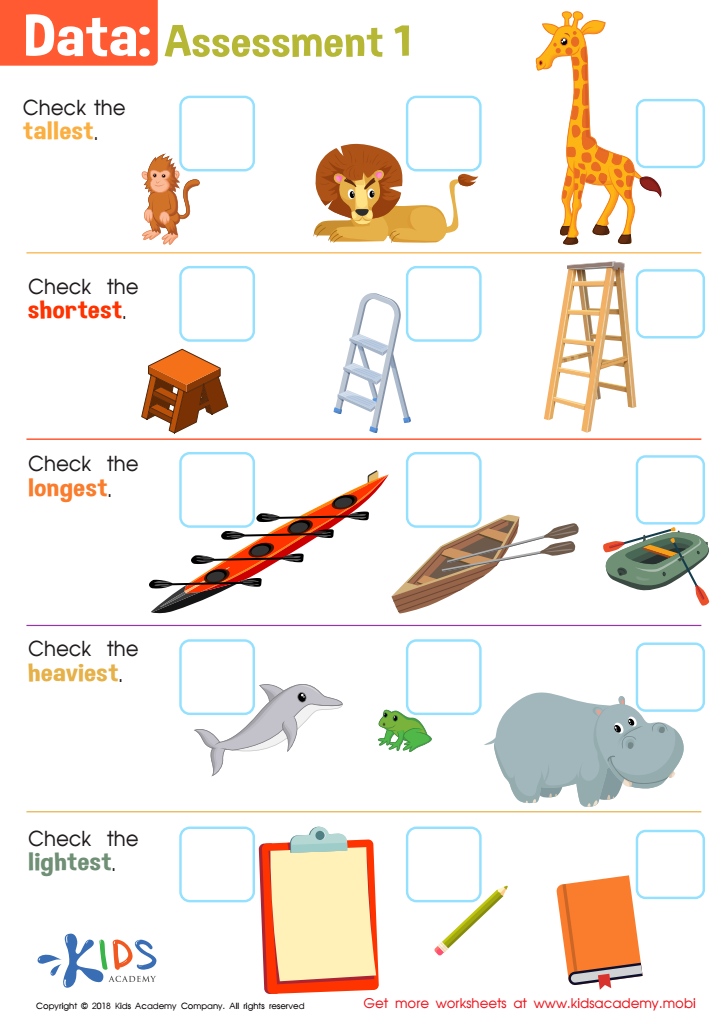
Data: Assessment 1 Worksheet
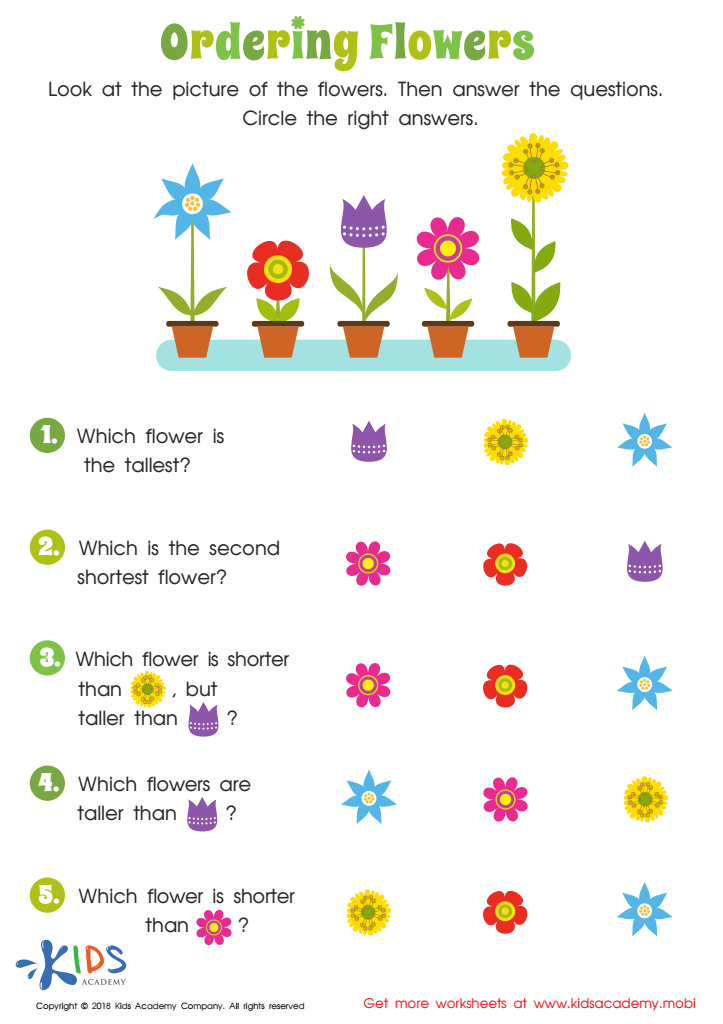
Ordering Flowers Worksheet








Understanding how to compare numbers and basic measurement is crucial for children aged 5-7 because it lays the foundation for essential math skills and cognitive development. At this age, children are developing their number sense, which is key to their overall mathematical understanding. Comparing numbers helps young learners grasp the concepts of more, less, and equal, which are fundamental to arithmetic operations such as addition and subtraction.
Measurement lessons encourage children to observe, describe, and quantify their environment, fostering critical thinking and problem-solving skills. Activities like comparing lengths of objects, determining weight, or measuring volume involve practical, hands-on learning that can make abstract concepts more concrete and relatable. Engaging in these activities enhances vocabulary by introducing terms like "shorter," "longer," "heavier," and "lighter," improving both their language and mathematical literacy.
Early exposure to comparing numbers and measurements also promotes logical reasoning and the ability to make informed decisions. These skills are not only vital in everyday life but also serve as a foundation for future learning in science, technology, engineering, and math (STEM). Parents and teachers support their children’s overall intellectual development by focusing on these areas, fostering a love for learning and confidence in their abilities to solve problems.








