Interpreting data Measurement Worksheets for Ages 5-7
4 filtered results
-
From - To
Enhance your child's math skills with our "Interpreting Data Measurement Worksheets" designed for ages 5-7. These engaging, printable worksheets help young learners grasp essential concepts in measurement and data interpretation. With fun exercises that incorporate real-life scenarios, children will practice comparing lengths, weights, and more while developing critical thinking skills. Our resources encourage hands-on learning and foster curiosity about the world around them. Perfect for classroom use or homeschool settings, these worksheets are an excellent way to build a strong foundation in mathematical concepts. Empower your child's learning journey and make data fun with our vibrant worksheets today!
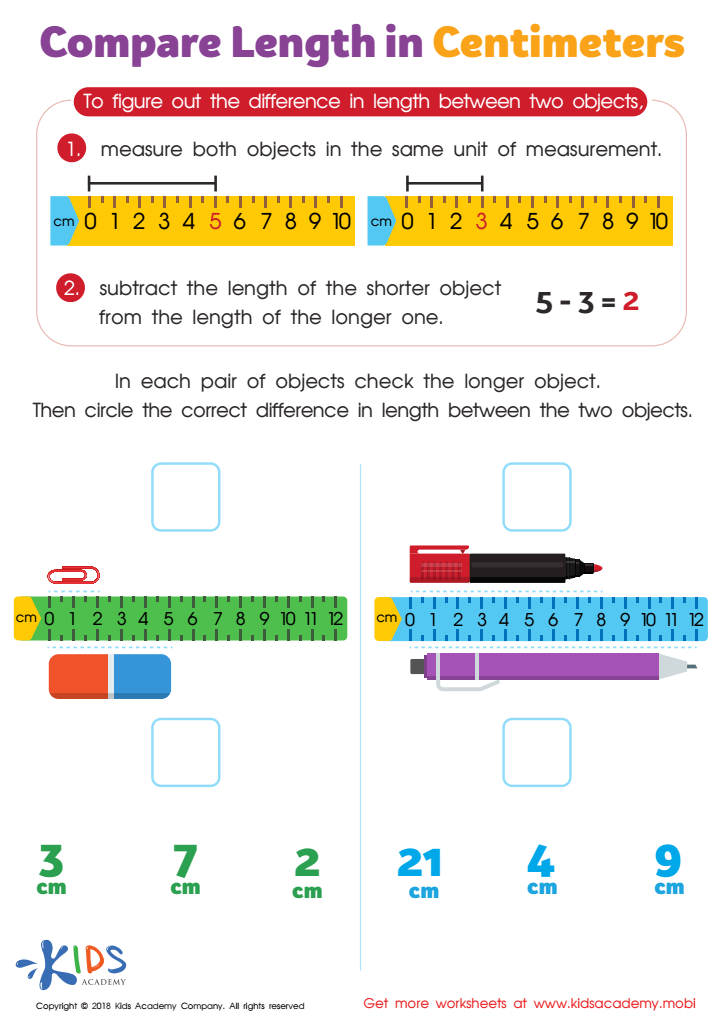
Compare Length in Centimeters Worksheet
 Assign to My Students
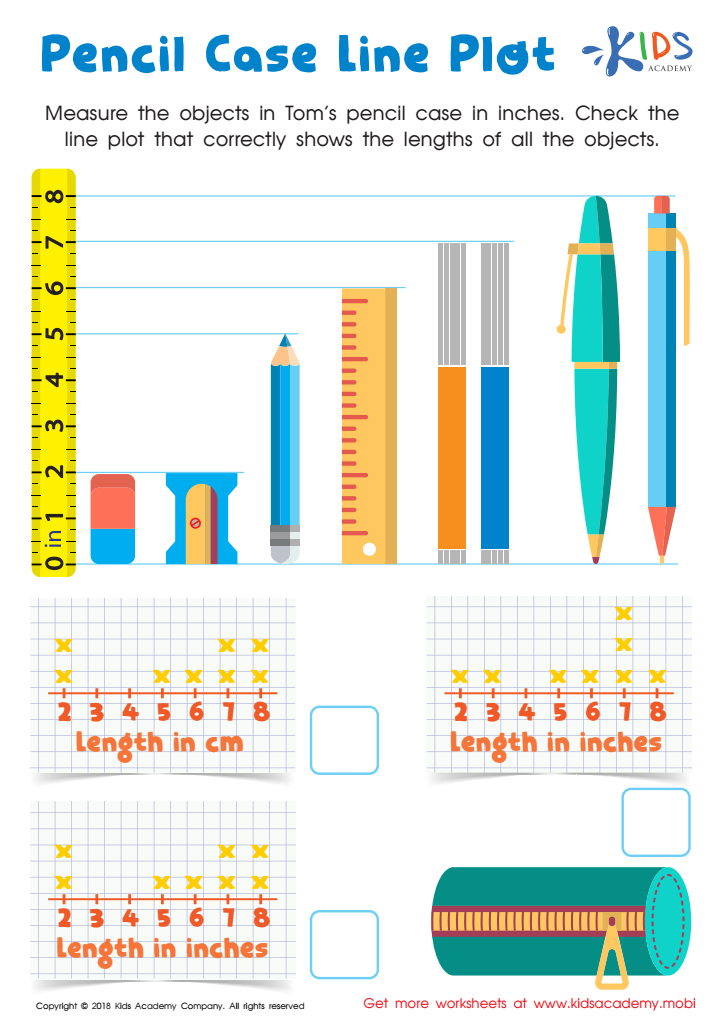
Pencil Case Line Plot Worksheet
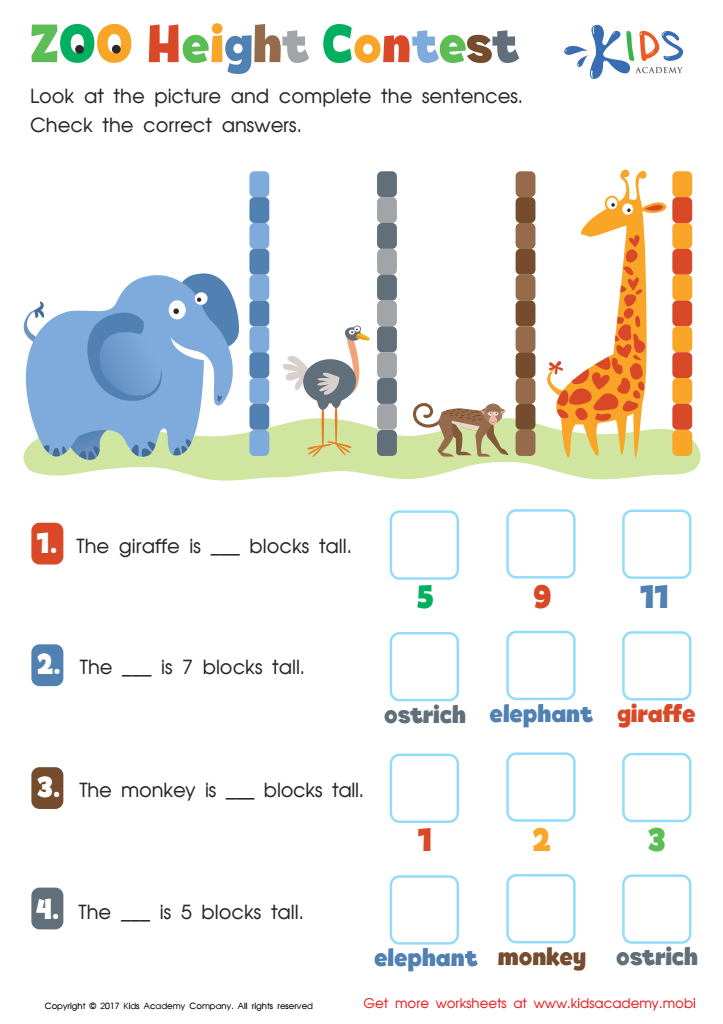
Zoo Height Contest Worksheet
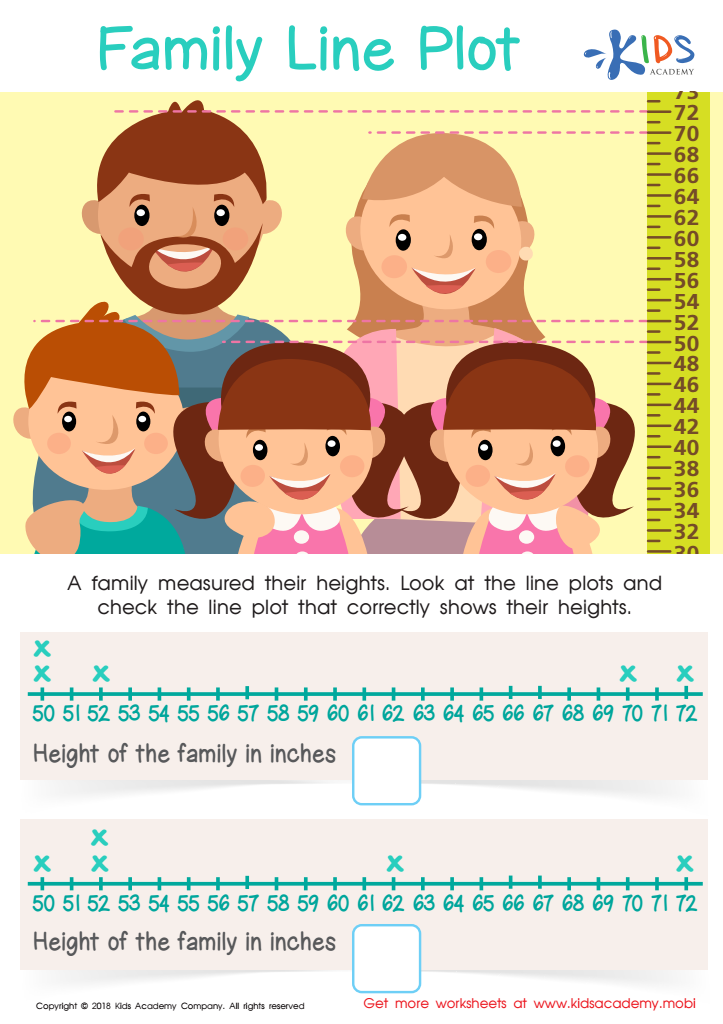
Family Line Plot Worksheet








Interpreting data is a crucial skill for children aged 5-7, as it lays the groundwork for critical thinking and informed decision-making. At this developmental stage, children begin to encounter simple forms of data, such as collections, charts, or basic graphs. Parents and teachers should prioritize data interpretation because it actively engages students in exploring real-world contexts, transforming abstract mathematical concepts into tangible experiences.
Understanding data helps young learners develop analytical skills, enhancing their ability to ask questions, make predictions, and draw conclusions based on evidence. For example, when children interpret a bar graph representing their favorite fruits, they learn not only about data representation but also about comparison and simplicity in reporting numerical information.
Additionally, fostering these skills early on assists in strengthening children's cognitive development and can positively influence their academic performance in more complex subjects later on. By valuing data interpretation, educators and parents support a growth mindset and cultivate curiosity, equipping children with tools necessary for lifelong learning in our increasingly data-driven world. Ultimately, the ability to interpret data empowers young learners, nurturing confidence in their understanding of the world around them and enhancing their engagement in STEM fields as they progress through their education.








