
Understanding time Time Worksheets for Ages 5-7
3 filtered results
Difficulty Level
Grade
Age
-
From - To
Subject
Activity
Standards
"Understanding Time Worksheets for Ages 5-7" are expertly crafted learning resources designed to help young children master the concept of time. These engaging worksheets focus on teaching kids how to read clocks, grasp time intervals, and understand daily schedules. By combining fun exercises with critical thinking, they pave the way for essential time management skills. Ideal for both classroom and homeschool environments, these worksheets facilitate interactive learning through a variety of activities, including matching, drawing, and writing. Ensure your child stays ahead in their learning journey with our comprehensive time-telling worksheets at Kids Academy.
Favorites
With answer key
Interactive
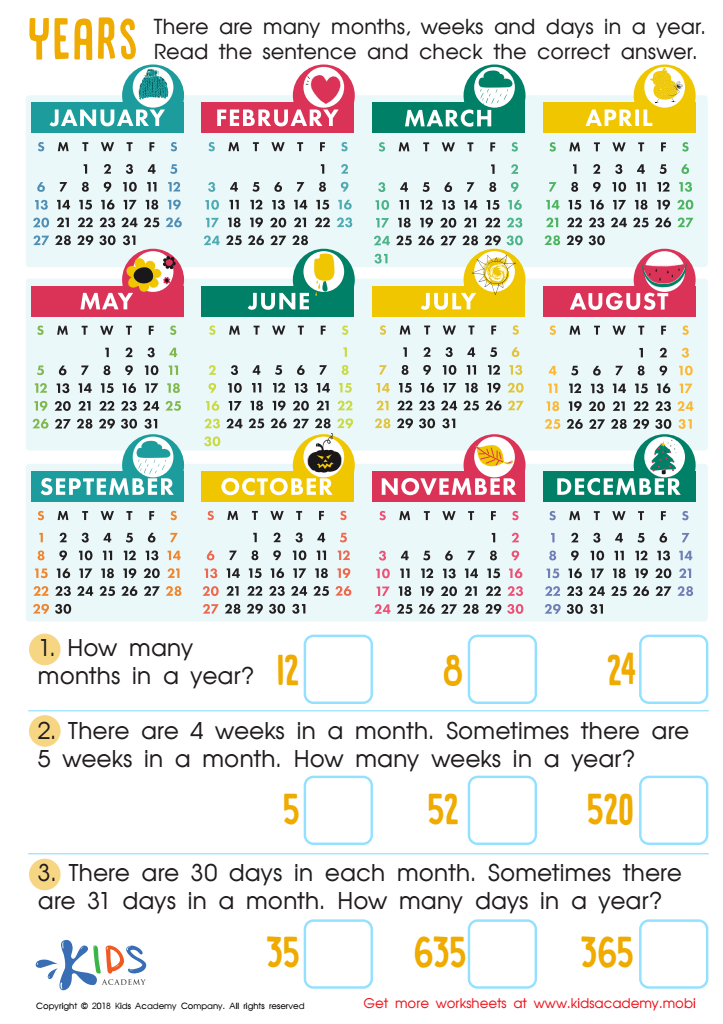
Years Worksheet
This worksheet is a great way to test your children's knowledge of the calendar. Ask them if they can name the days of the week and months in a year. Read and discuss the questions with them and help them find the right answers. Encourage them to check their answers.
 Assign to My Students
Years Worksheet
Worksheet
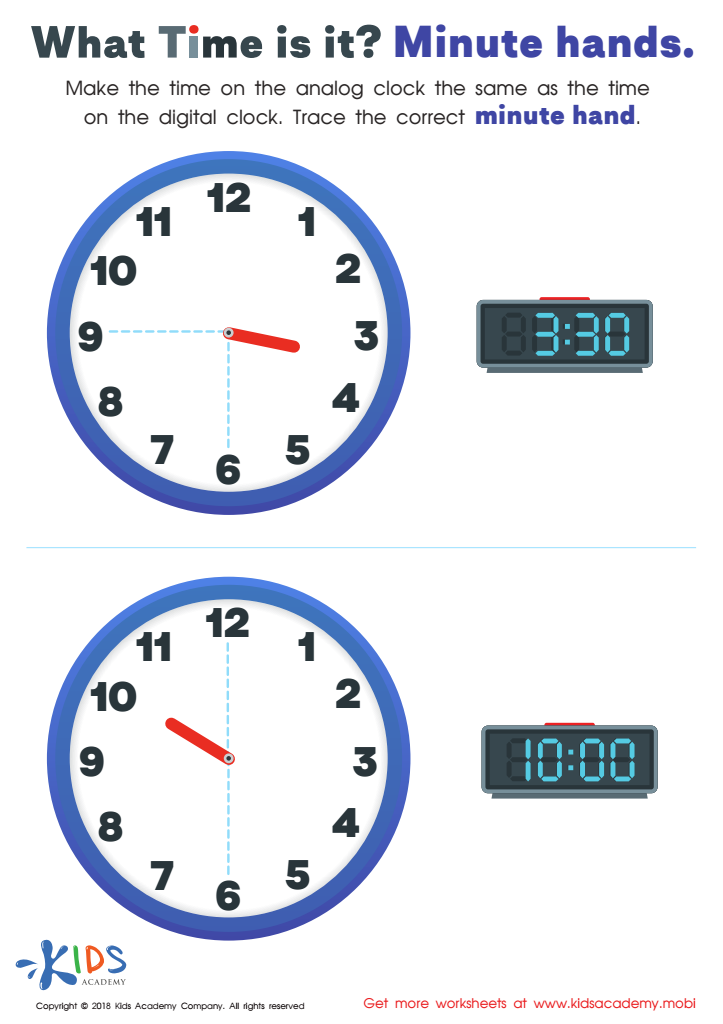
What Time Is it? Minute Hands Worksheet
Help your kids telling time with the minute hand correctly with this tracing sheet. Trace the correct minute hand to make the time on the analog clock the same as the time on the digital clock. Give them a pictured demonstration of how to do it and you'll be all set!
What Time Is it? Minute Hands Worksheet
Worksheet
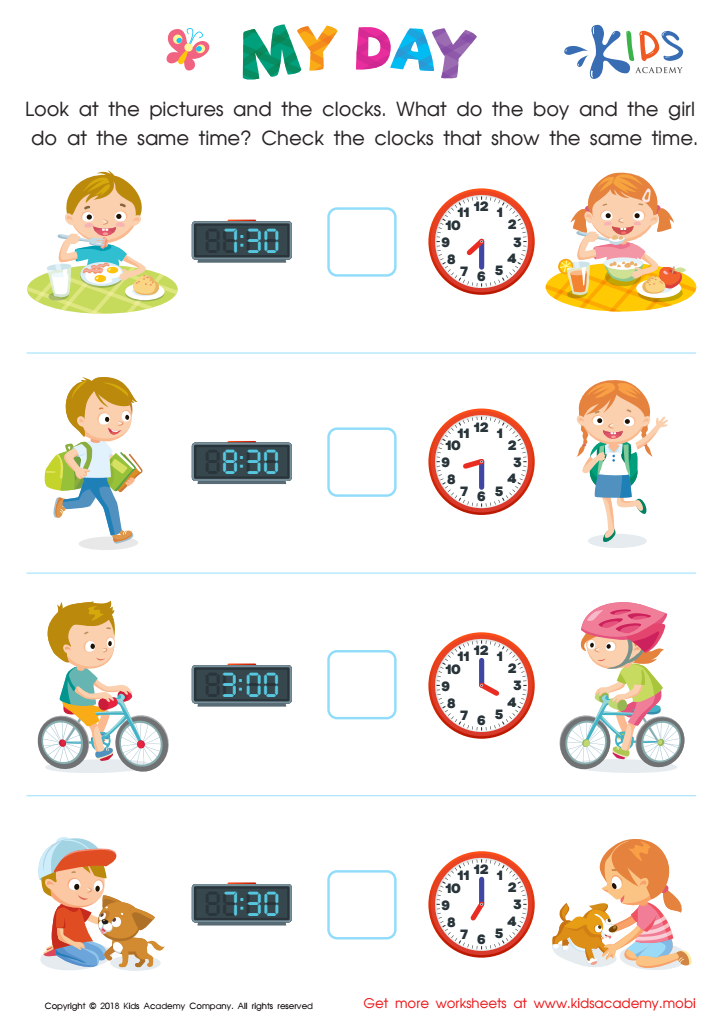
My Day Worksheet
Show your students the pictures and clocks in the colorful worksheet. Ask what the boy and girl are doing in each, then what time the clocks show. Finally, ask what activities they both do at the same time. Help them check the clocks showing the same time in both pictures.
My Day Worksheet
Worksheet
Join Kids Academy for Free
Who is primarily going to use this learning content?







.jpg)
Understanding the concept of time is crucial for young children aged 5-7 as it fosters foundational skills that are essential throughout life. At this developmental stage, children begin to develop the ability to organize their day, making them more independent and responsible. Introducing them to time management concepts like routines and schedules helps them grasp the importance of punctuality and planning, skills that are invaluable both at school and home.
From an educational perspective, mastering time fosters mathematical abilities, such as understanding sequences, measuring durations, and recognizing patterns. By learning to tell time, they interact with numerical operations and enhance their cognitive development. This also improves their language skills, as they pick up time-related vocabulary and phrases that are used in daily conversations and instructions.
Socially and emotionally, understanding time helps children develop patience and better self-regulation. Knowing how long they need to wait for activities like snack time, recess, or when a favorite show comes on can reduce anxiety and frustration.
For parents and teachers, teaching time to young learners contributes to a child's well-rounded early development, setting them up for future academic success and fostering day-to-day organizational skills that pave the way for a more structured and confident life.








