Logical Reasoning Two-step Word Problems Worksheets for Ages 5-7
3 filtered results
-
From - To
Enhance your child's mathematical skills with our engaging Logical Reasoning Two-step Word Problems Worksheets, designed for ages 5-7. These interactive worksheets provide young learners with the opportunity to tackle two-step problems, promoting critical thinking and logical reasoning. Ideal for early education, our resources support foundational math concepts while encouraging problem-solving abilities. Each worksheet presents age-appropriate scenarios that stimulate children’s curiosity and enable them to apply math in real-life contexts. Foster a love for learning and watch your child gain confidence in their abilities. Explore our collection and make math a fun and rewarding experience for your little ones!
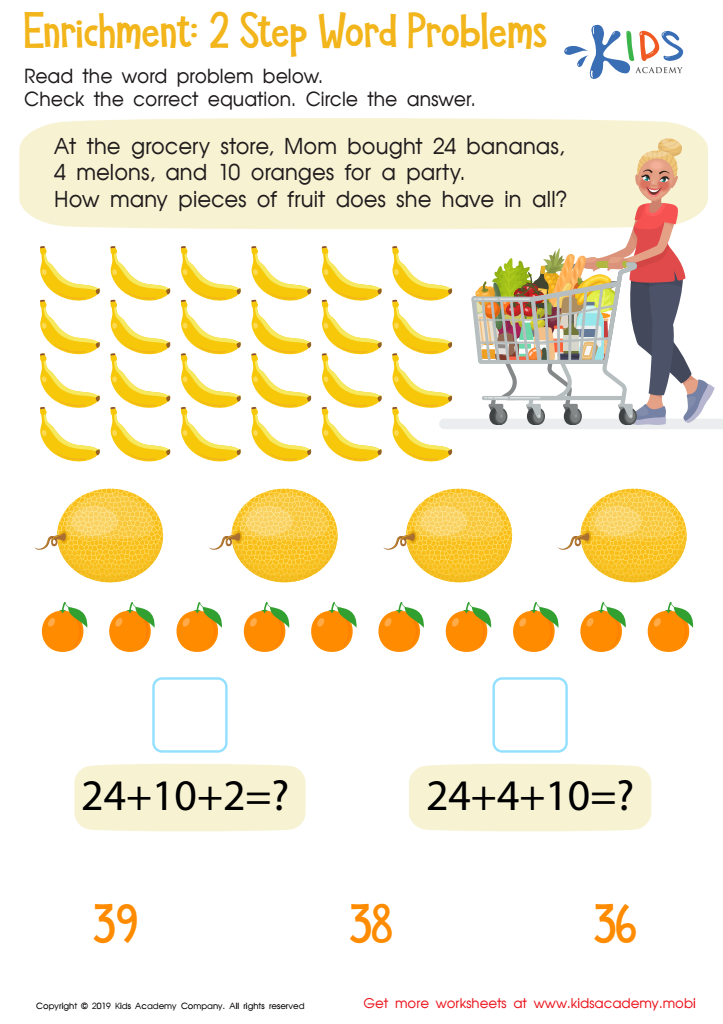
Enrichment -2 Step Word Problems Worksheet
 Assign to My Students
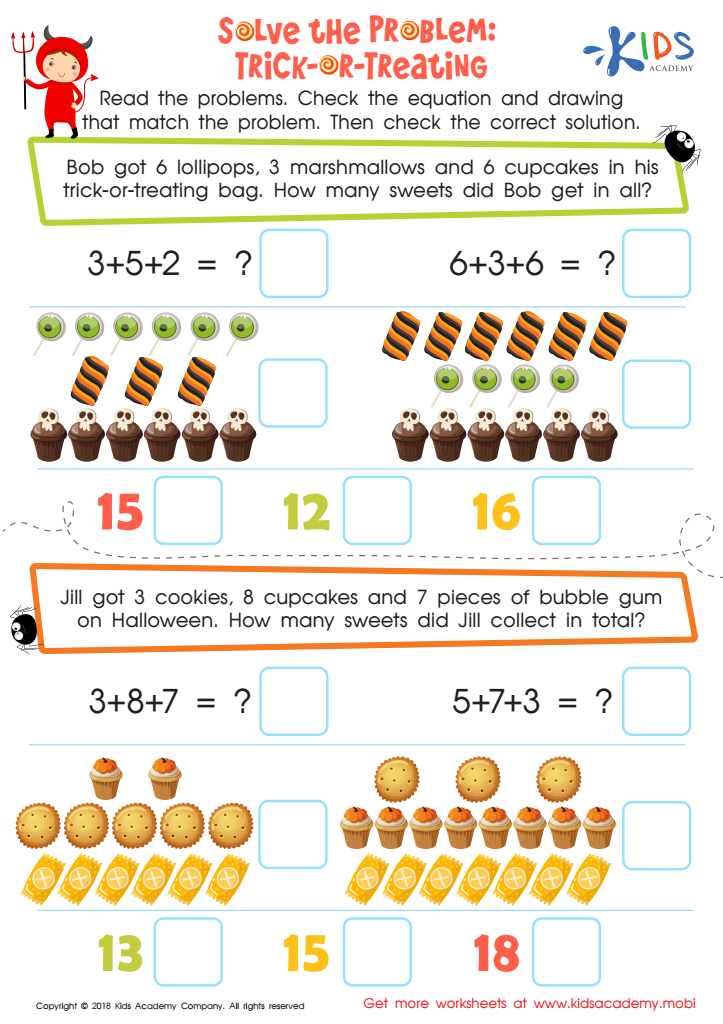
Solve the Problem: Trick–or–treating Worksheet
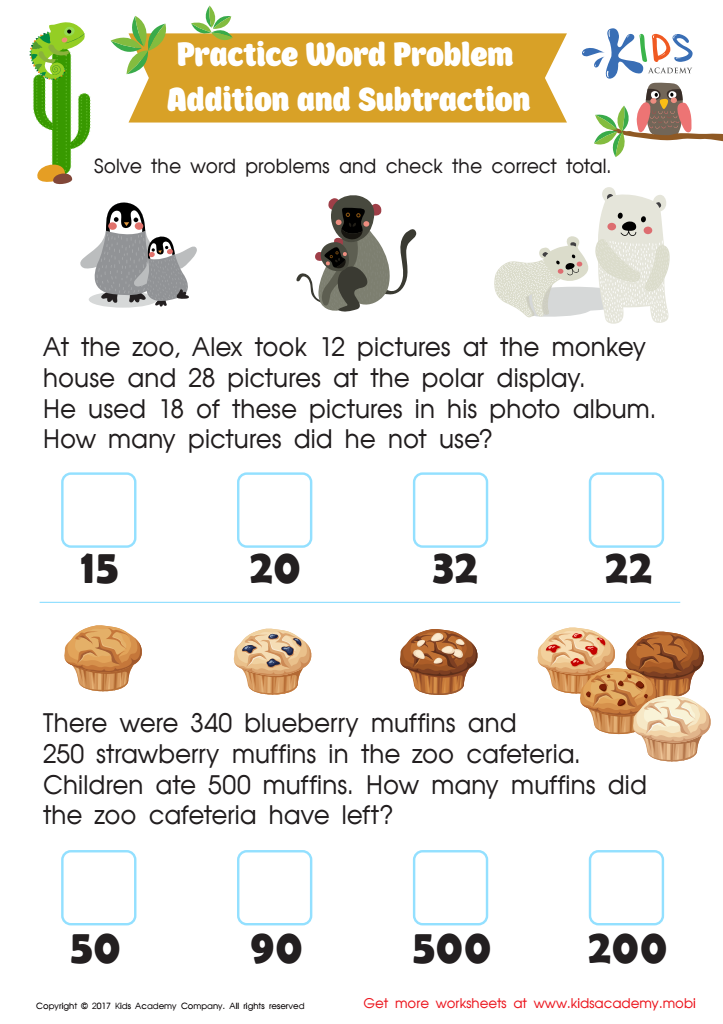
Addition and Subtraction: Word Problems Worksheet



Logical reasoning two-step word problems are essential for children ages 5-7, laying the foundation for critical thinking and problem-solving skills. These skills are indispensable not only for mathematics but for overall academic and life success. Engaging with two-step problems challenges young learners to think beyond basic calculations, requiring them to comprehend a scenario, interpret information, and strategize solutions. This cognitive process nurtures logical thinking, encouraging children to break down complex tasks into manageable parts – an essential life skill.
Additionally, these problems build resilience and perseverance. When children encounter difficulties in solving two-step problems, they learn how to approach problems from different angles, developing a growth mindset. With guidance, they can learn to view challenges as opportunities to learn rather than insurmountable obstacles.
Moreover, integrating two-step word problems into everyday learning fosters communication skills, as children need to articulate their thought processes and reasoning. This interaction benefits both parents and teachers, facilitating discussions that deepen understanding.
In essence, focusing on logical reasoning two-step word problems empowers children to acquire crucial skills that will serve them well academically and in everyday scenarios, ultimately shaping them into confident and capable problem solvers.