
Color Identification Building Vocabulary Worksheets for Ages 5-7
5 filtered results
Difficulty Level
Grade
Age
-
From - To
Subject
Activity
Standards
Introduce your child to the vibrant world of colors while enhancing their vocabulary with our "Color Identification Building Vocabulary Worksheets." Perfectly suited for ages 5-7, these engaging worksheets foster essential learning skills, merging fun and education seamlessly. Each activity is designed to help young learners identify, name, and use colors accurately while enriching their descriptive language abilities. Through playful exercises and visually stimulating tasks, your child will strengthen their reading and cognitive skills. An ideal resource for parents and educators aiming to nurture a strong foundation in early literacy and color recognition. Explore our worksheets to make learning colorful and exciting!
Favorites
With answer key
Interactive
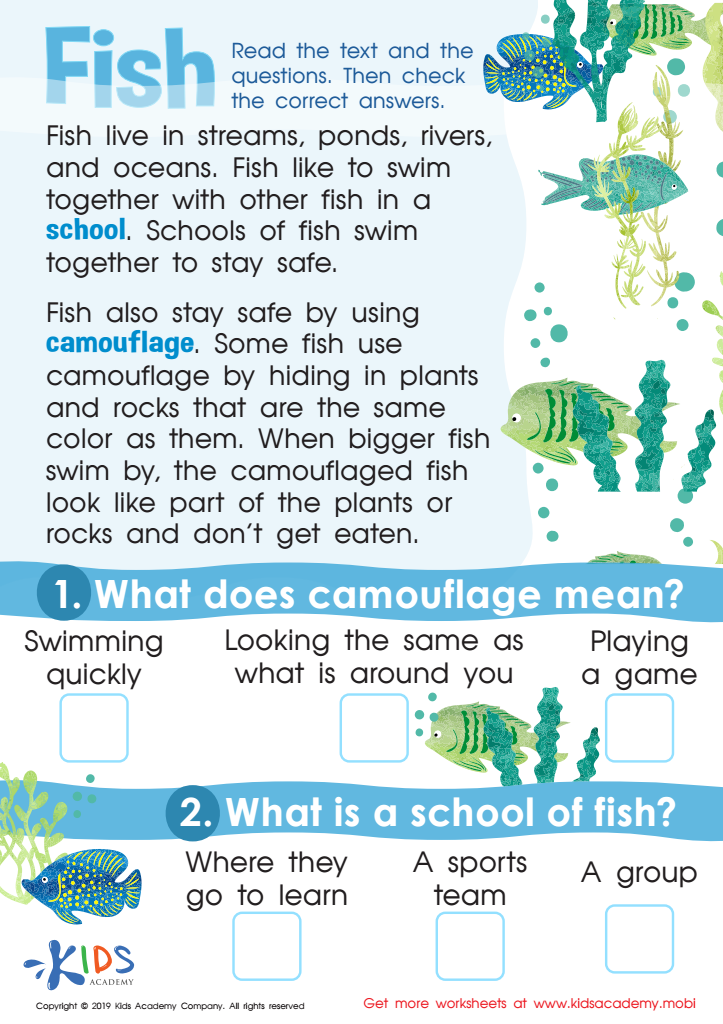
Fish Worksheet
Kids love learning about the creatures that live in water! This free PDF worksheet covers fish, teaching kids larger vocabulary and contextual reading comprehension. Questions prompt them to choose the right answer from multiple choices, just like in a classroom. It's a fun way to boost their reading skills and comprehension without them even realizing it!
 Assign to My Students
Fish Worksheet
Worksheet











Join Kids Academy for Free
Who is primarily going to use this learning content?



.jpg)


.jpg)

Color identification is an essential developmental skill for young children aged 5-7, and it plays a crucial role in their cognitive and language development. Recognizing and naming colors helps children categorize and describe the world around them, enhancing their observational skills and attention to detail. As children learn to identify and label colors, they simultaneously build vocabulary skills, which are foundational for effective communication and literacy.
Moreover, color identification activities encourage the use of descriptive language, supporting children's ability to form sentences and articulate their thoughts more clearly. This early exposure to a varied vocabulary fosters crucial language development that contributes to better reading and comprehension skills later in life.
For parents and teachers, incorporating color-specific activities into daily routines isn't just about learning colors; it strengthens cognitive connections and enhances memory. Interactive games, stories, and hands-on activities that focus on colors can make learning engaging and fun, ensuring a positive and supportive environment for skill development.
Importantly, colors are often linked to emotions and moods, helping children express their feelings more accurately. By valuing color identification and vocabulary building, parents and teachers equip children with the cognitive tools and emotional intelligence they'll need for future educational success and personal growth.








