
Improve reading skills Building Vocabulary Worksheets for Ages 5-7
11 filtered results
Difficulty Level
Grade
Age
-
From - To
Subject
Activity
Standards
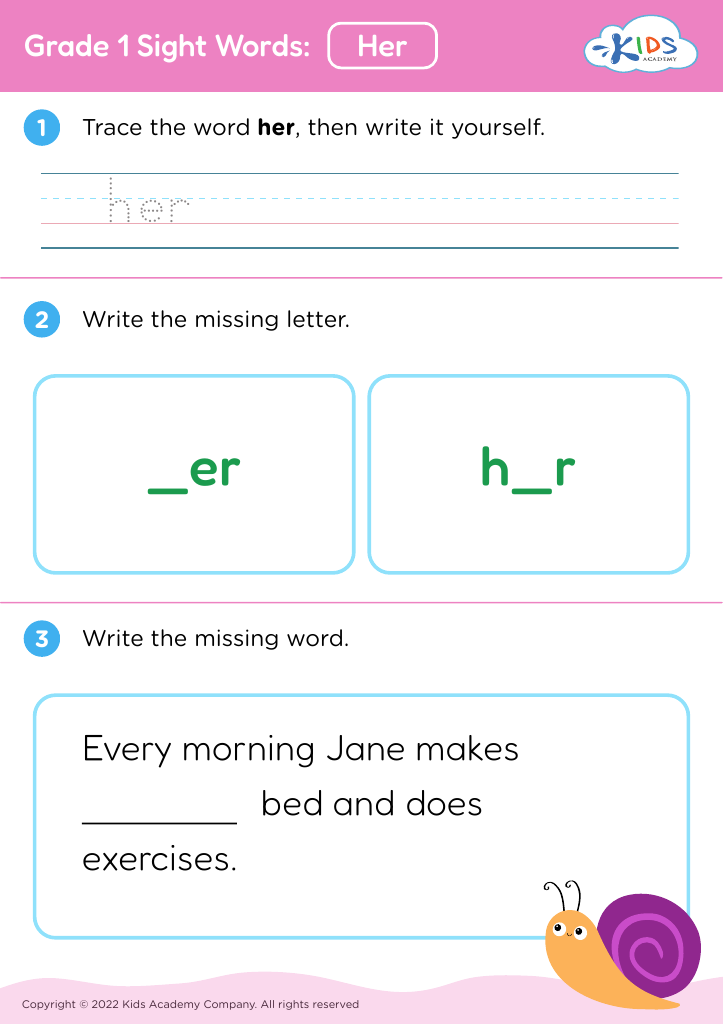
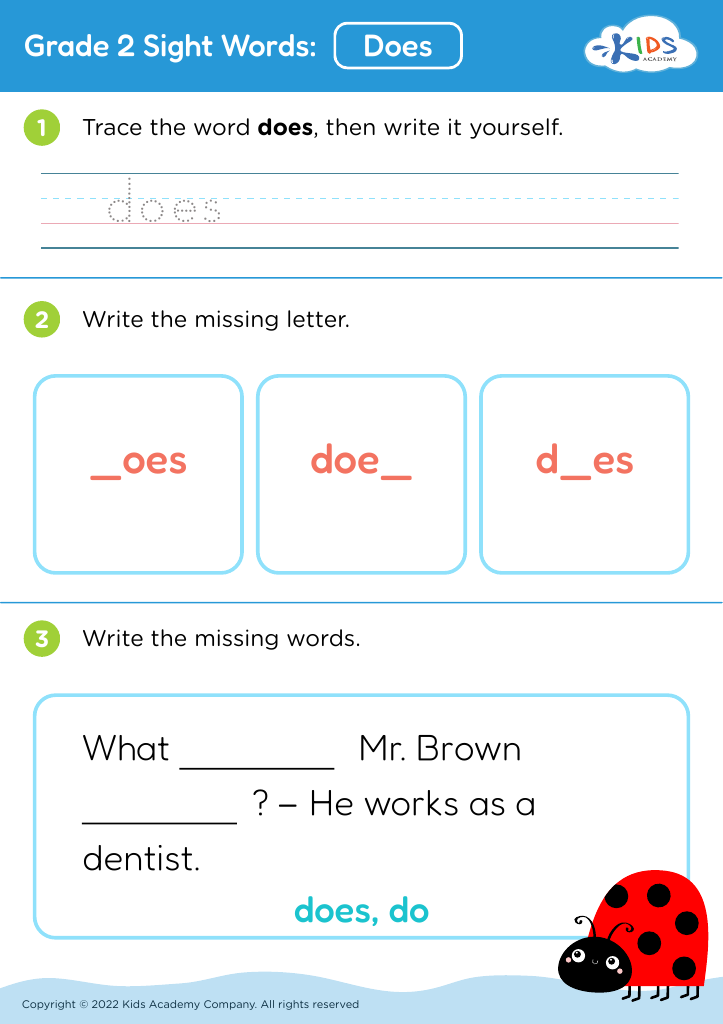
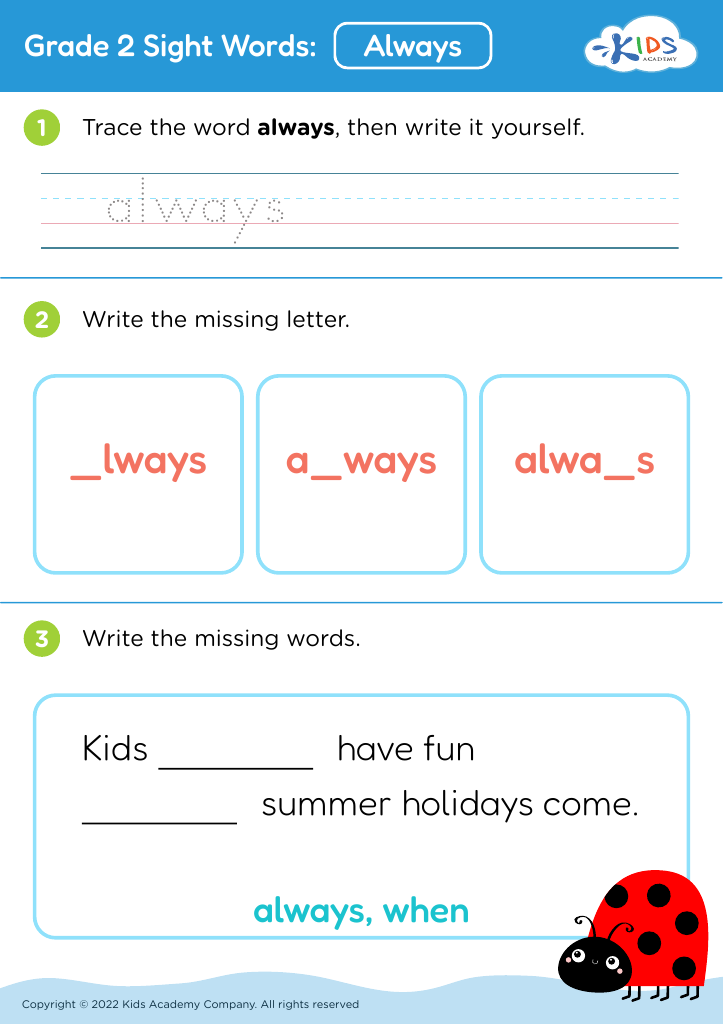
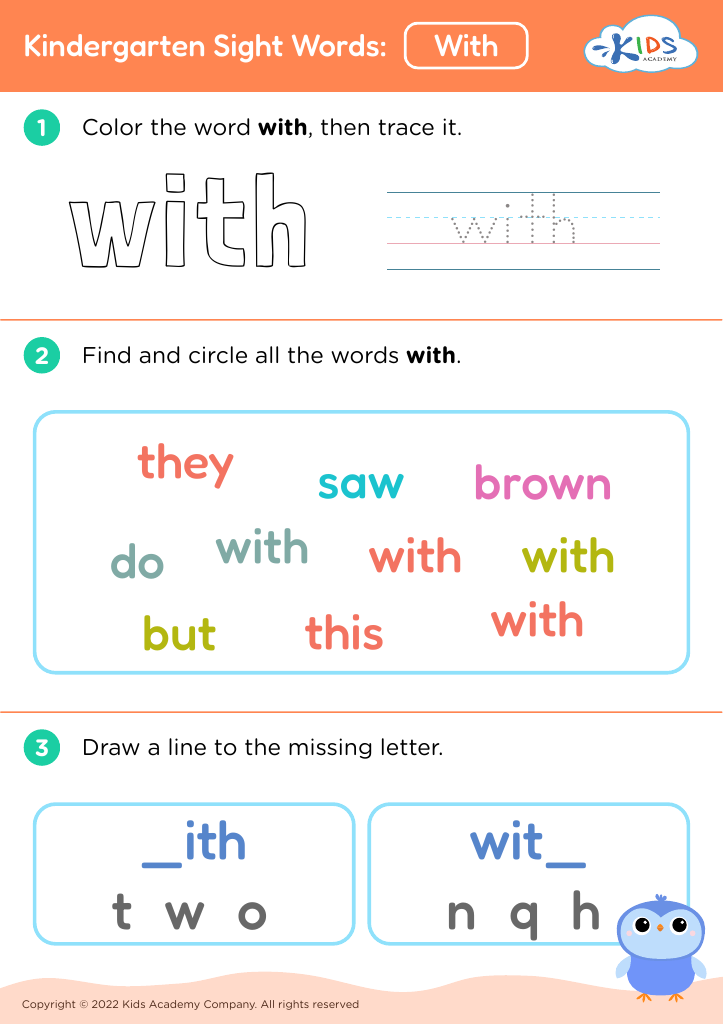
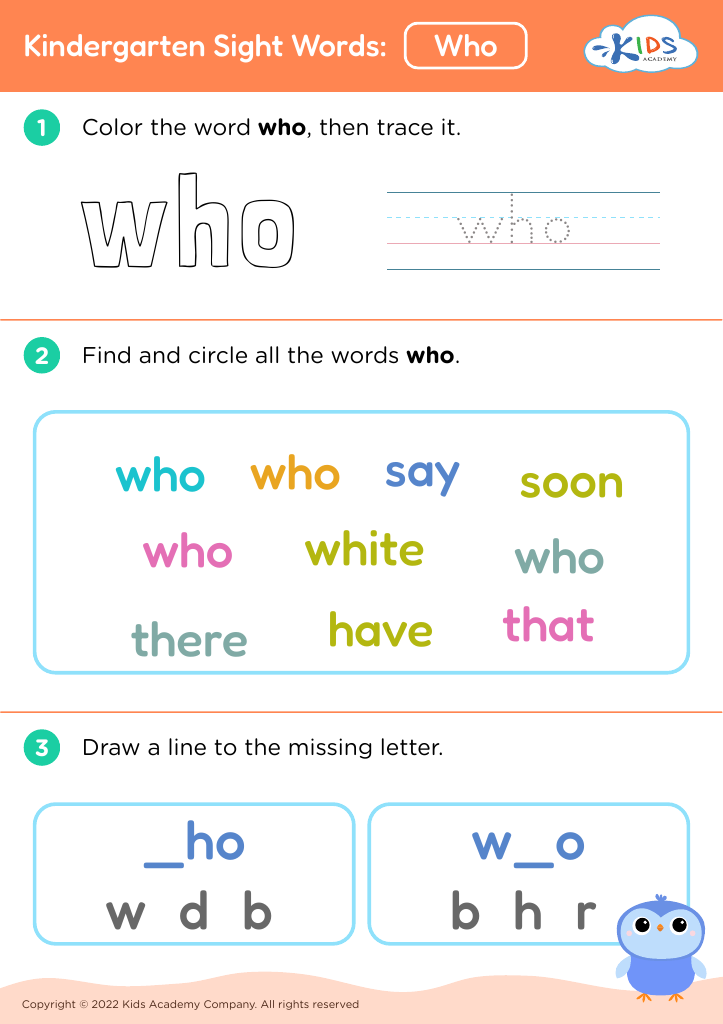
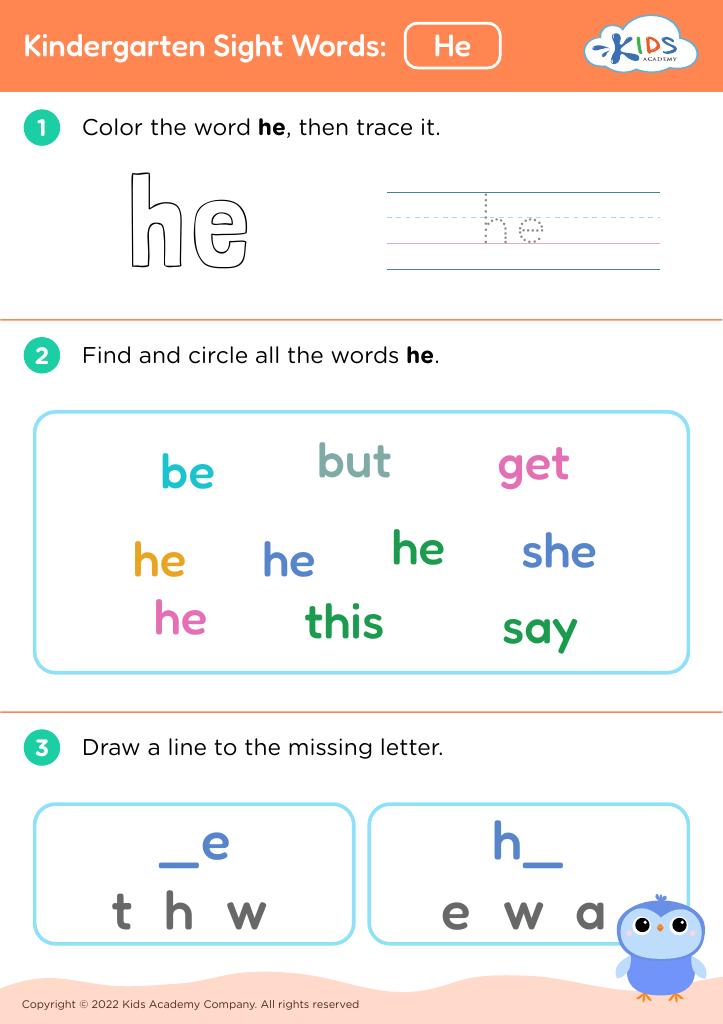
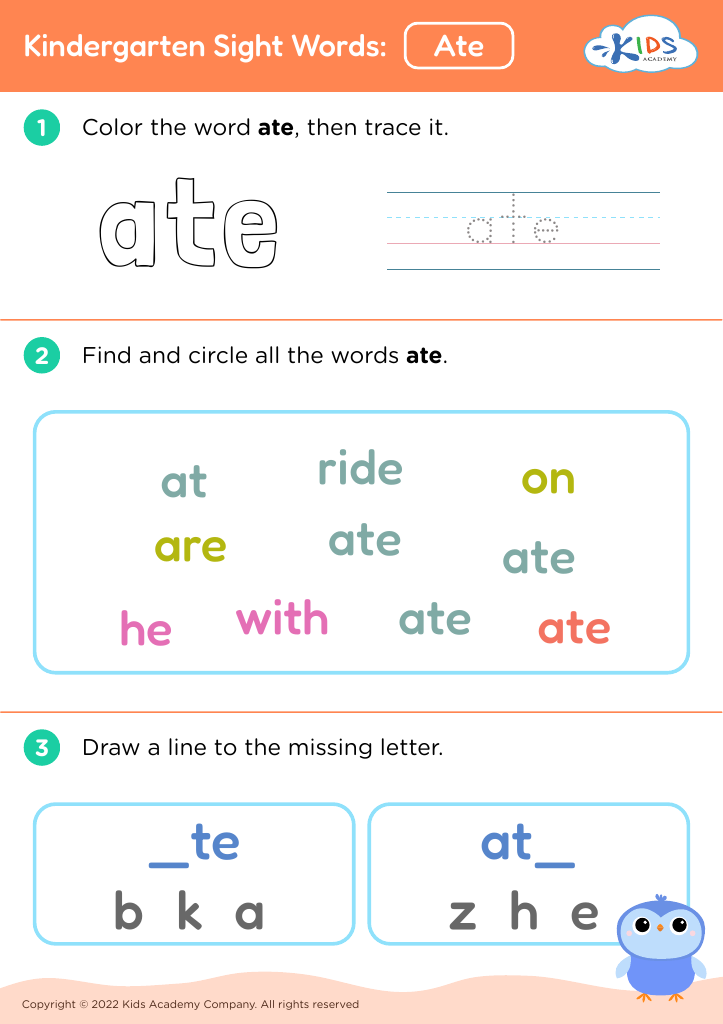
Unlock your child's potential with our "Improve Reading Skills: Building Vocabulary Worksheets" designed specifically for ages 5-7. These engaging worksheets are tailored to enhance vocabulary development through fun activities, games, and exercises. As children explore new words, they'll boost their comprehension and reading fluency in a playful manner. Ideal for parents and educators alike, these resources foster interactive learning and critical thinking. Monitor your child's progress and see them gain confidence in their reading abilities while enjoying the journey of discovering language. Start enriching your child’s literacy skills today with our effective and entertaining vocabulary-building worksheets!
Favorites
With answer key
Interactive
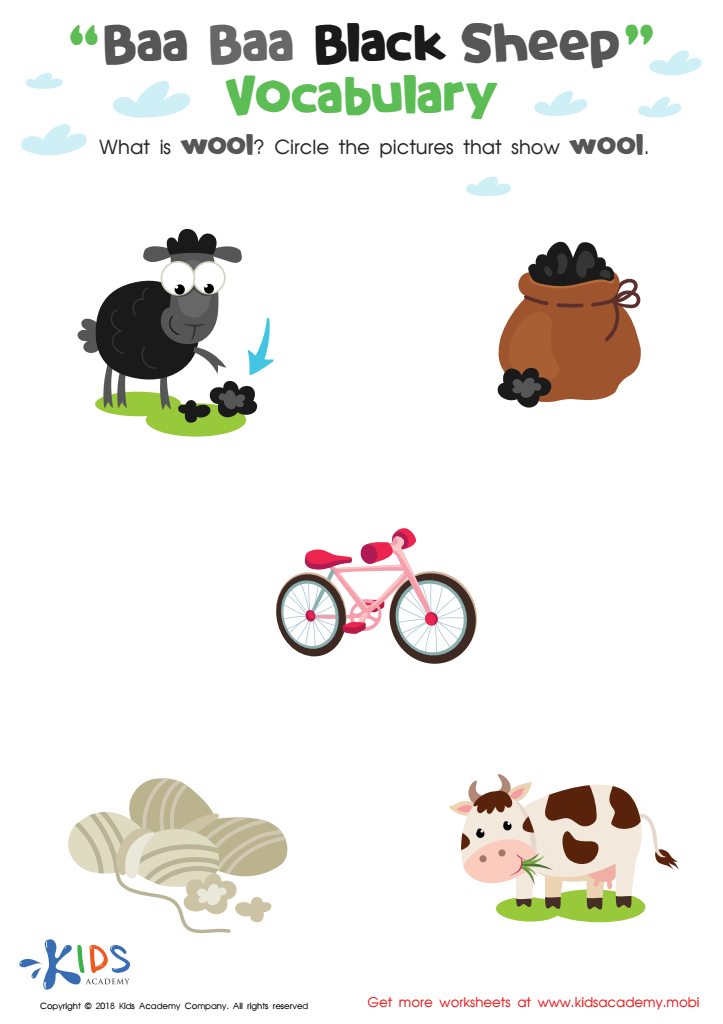
Baa Baa Black Sheep: Vocabulary Worksheet
Exposing readers to various vocab helps their reading abilities grow. This cheery worksheet uses pictures to show what wool is and isn't, helping readers with visual discrimination. Having concrete images for new words is essential for emerging readers, and this is an enjoyable way to strengthen the skill.
 Assign to My Students
Baa Baa Black Sheep: Vocabulary Worksheet
Worksheet











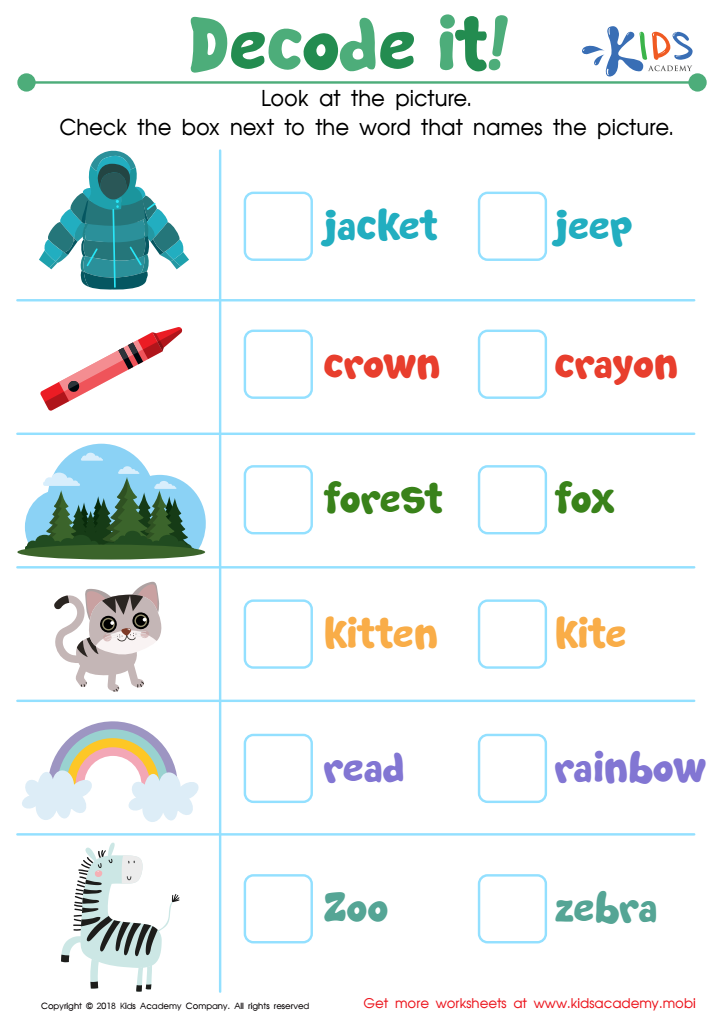
Reading: Decode It Worksheet
Look at the picture and circle the word that names it. This exercise helps kids practice picture cues and decoding words, with the same beginning sound. It builds their fluency and comprehension, giving them the skills to read unfamiliar words.
Reading: Decode It Worksheet
Worksheet
Join Kids Academy for Free
Who is primarily going to use this learning content?




.jpg)
.jpg)


Developing reading skills and building vocabulary in children aged 5-7 is crucial for their academic and social success. At this early stage, foundational reading skills are not just about decoding words; they lay the groundwork for lifelong learning. A robust vocabulary enhances comprehension, allowing children to understand and engage with a variety of texts. When children recognize and can use a wide range of words, they are better equipped to express themselves and participate in discussions, leading to increased confidence.
Furthermore, teachers and parents play a vital role in fostering a love for reading by creating a rich linguistic environment. Engaging activities, such as reading aloud, storytelling, and playing word games, can significantly stimulate a child's interest in language. It’s important to integrate new words into everyday conversations, making learning dynamic and relevant.
Moreover, developing these skills now can help mitigate future challenges in more complex subjects like math and science, which often rely on a strong language foundation. By prioritizing reading and vocabulary during these formative years, parents and teachers foster critical thinking, creativity, and the ability to navigate social interactions—all essential skills for success in school and beyond. Investing time into these areas creates a ripple effect that supports a child’s overall development.








