Motor skills development Building Vocabulary Worksheets for Ages 5-7
3 filtered results
-
From - To
Enhance your child's motor skills while expanding their vocabulary with our specially designed Building Vocabulary Worksheets for ages 5-7. These worksheets combine engaging language exercises with fun activities to support fine motor development, including tracing, coloring, and cutting tasks. By blending vocabulary learning with hands-on tasks, children refine their ability to manipulate small objects, improving handwriting, coordination, and dexterity. Engaging graphics and interactive tasks make learning enjoyable, seamlessly integrating fine motor practice with essential reading skills. Designed by experts, our worksheets foster a love for learning, ensuring your child gains crucial skills for future academic success. Start building brilliance today!
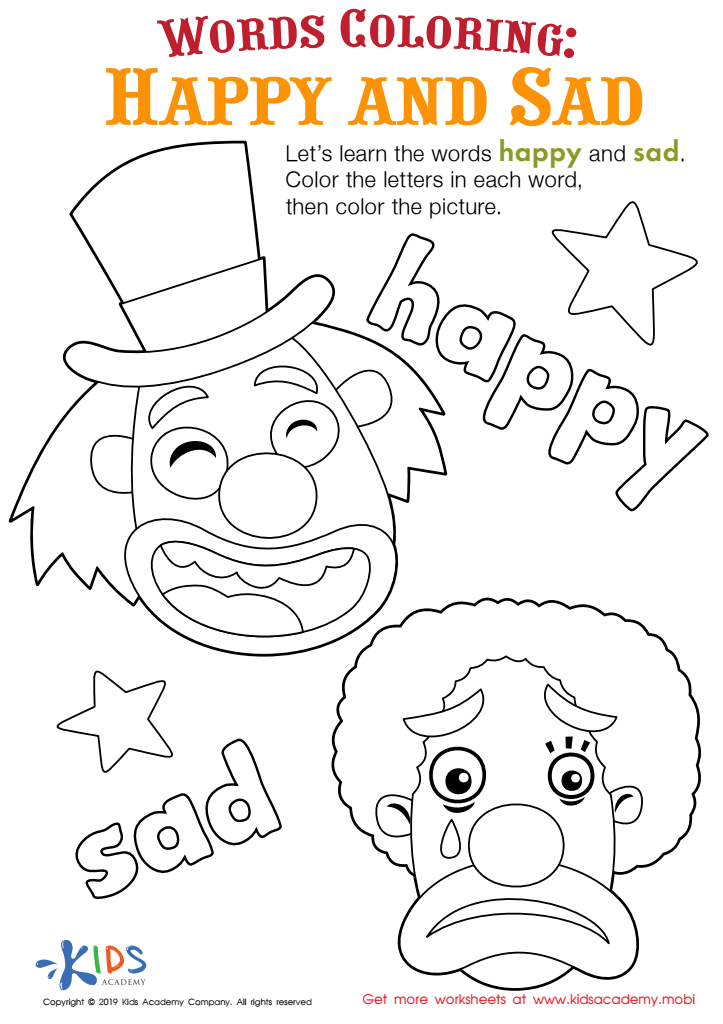
Happy and Sad Words Coloring Worksheet
 Assign to My Students











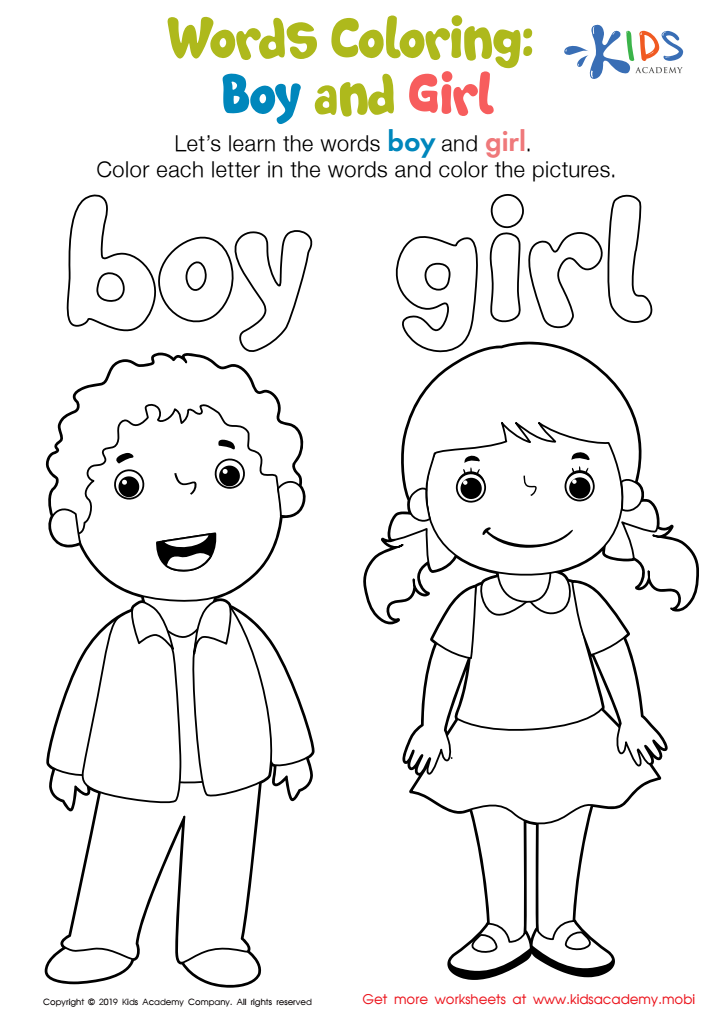
Boy and Girl Words Coloring Worksheet
Assign to My Students
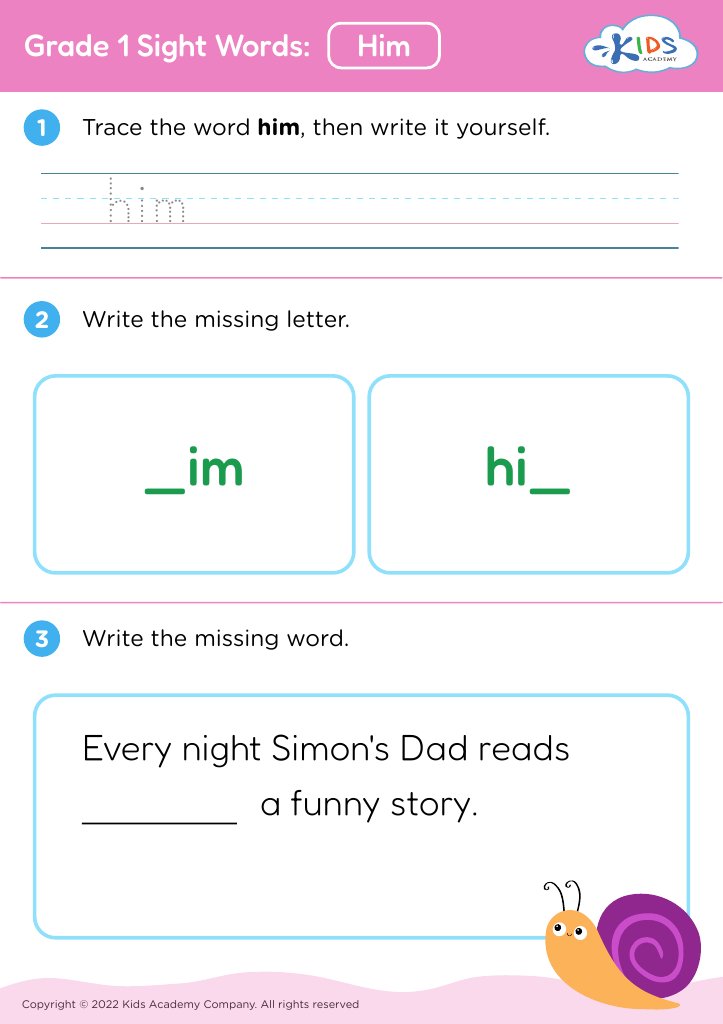








Motor skills development and vocabulary building are critical components of early childhood education that play a pivotal role in a child's overall growth. For children aged 5-7, refining both fine and gross motor skills ensures they can effectively navigate and interact with their environment. Fine motor skills enable precise movements like drawing, writing, and buttoning clothes, promoting independence and boosting self-confidence. Gross motor skills, involving larger muscle groups, are essential for activities like running, jumping, and playing, which are vital for physical health and socialization.
Concurrently, vocabulary development dramatically enhances communication abilities and cognitive function. Building a strong vocabulary equips children with the tools to express their thoughts, emotions, and needs clearly. This foundation supports reading comprehension and academic success as they progress through school. A robust vocabulary also enhances social interactions, allowing children to engage more meaningfully with peers and adults.
For parents and teachers, fostering these skills through playful, engaging activities enriches both physical and intellectual development. Encouraging children in these areas aids them in becoming well-rounded individuals, prepared for future challenges both in and out of school. Thus, investing time in motor skills and vocabulary growth is reassuringly beneficial, laying the groundwork for lifelong learning and well-being.








