
Sound Association Building Vocabulary Worksheets for Ages 5-7
4 filtered results
Difficulty Level
Grade
Age
-
From - To
Subject
Activity
Standards
Sound Association Building Vocabulary Worksheets for Ages 5-7 are designed to enhance young learners' reading and language skills through engaging and interactive exercises. These worksheets establish connections between sounds, letters, and words, fostering phonemic awareness and vocabulary development. Ideal for children in kindergarten and early elementary grades, the activities promote auditory discrimination and word recognition. These printable worksheets include fun and educational activities like matching sounds to words and exploring beginning sounds. Perfect for both classroom and home use, these resources help children build a strong foundation in reading and language arts, setting them up for academic success.
Favorites
With answer key
Interactive
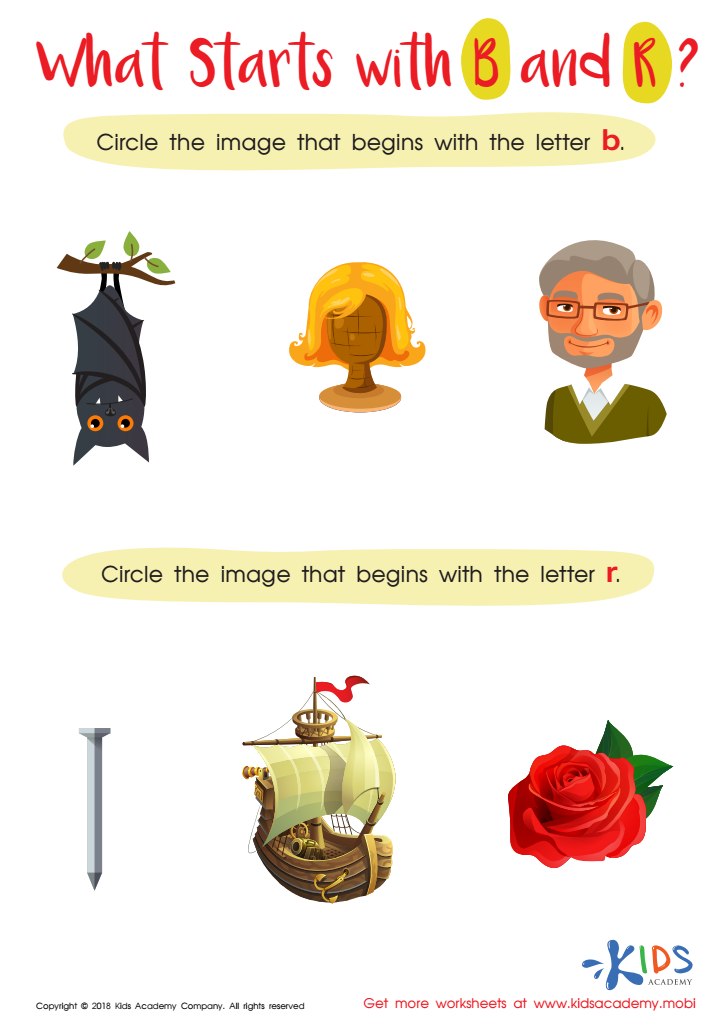
What Starts with B and R? Worksheet
Download this worksheet to help young readers practice visual and motor skills! They'll enjoy matching pictures with "B" and "R" letters while tracing the images. Bright and colorful, this engaging activity will help kids differentiate between words and have fun doing it.
 Assign to My Students
What Starts with B and R? Worksheet
Worksheet











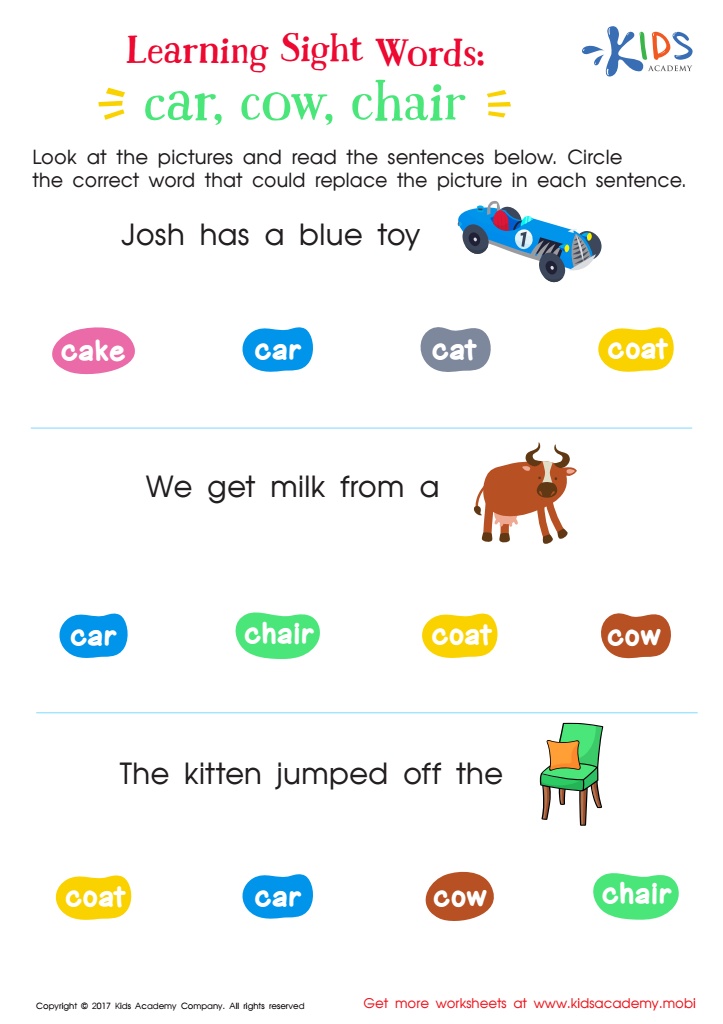
Car, Cow, Chair Worksheet Sight Words Worksheet
Reading can be difficult, so these assignment sheets can help kids stay on track. This one with the words 'Car', 'Cow' and 'Chair' will help your child choose the right words to complete a sentence, strengthen their literacy and give them more confidence in reading.
Car, Cow, Chair Worksheet Sight Words Worksheet
Worksheet
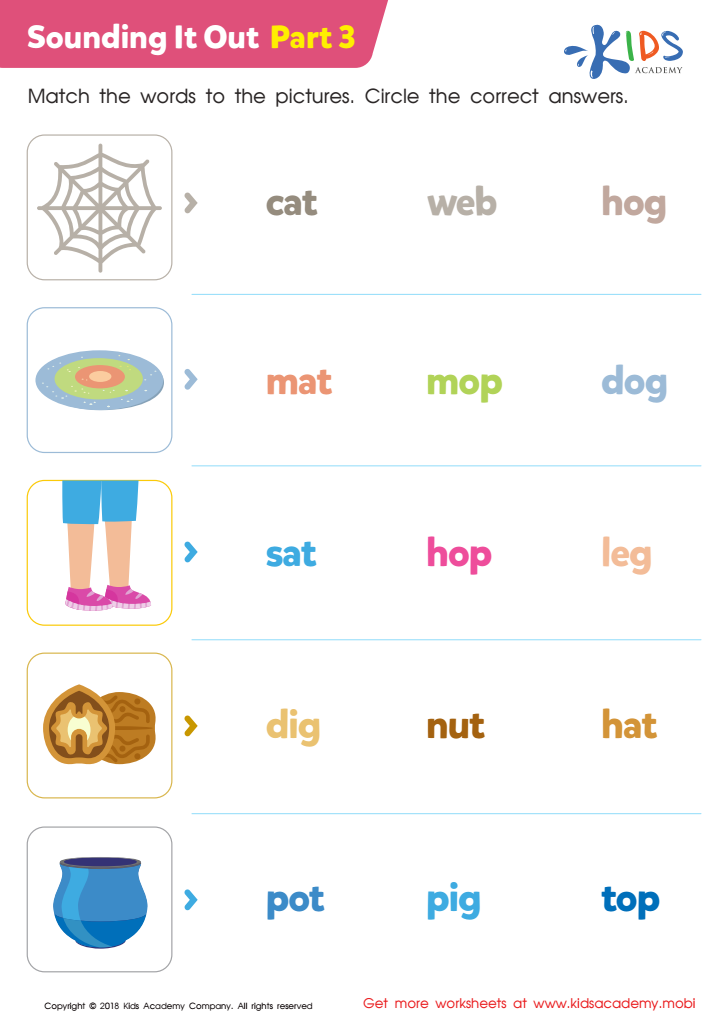
Sounding it Out: Part 3 Worksheet
Once Parts 1 and 2 are complete, this printable phonics worksheet will help kids take their reading skills to the next level! As they gain confidence, give them hints less often and direct their attention to three words in a row. Ask them to read and circle the correct word to complete!
Sounding it Out: Part 3 Worksheet
Worksheet
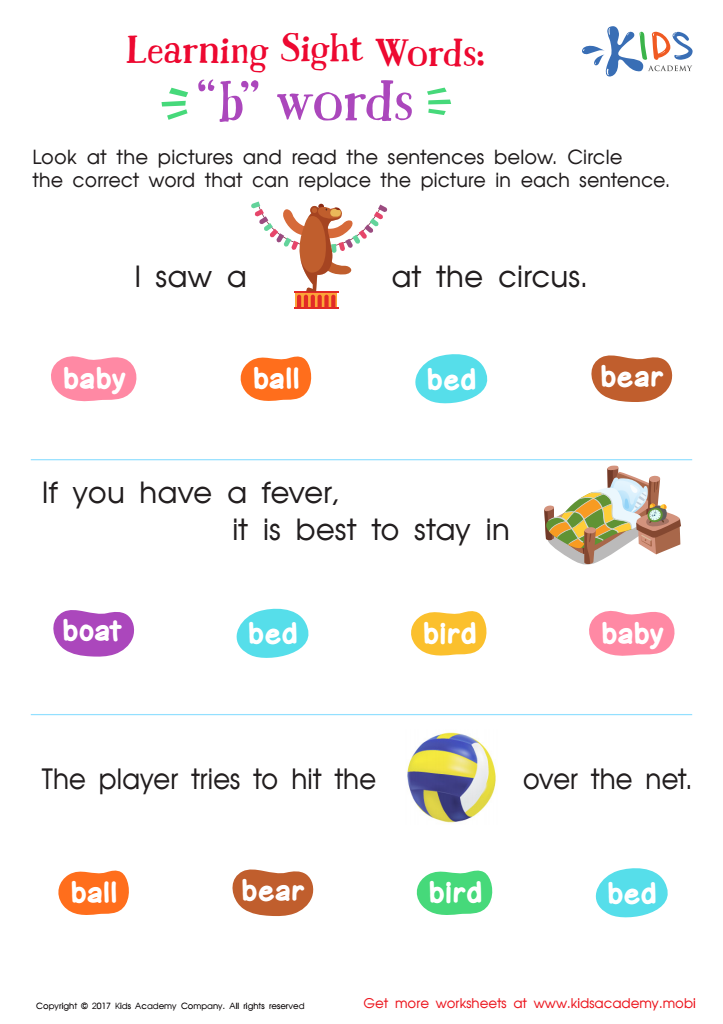
"B" Words Printable Sight Words Worksheet
Kids will learn sight words quickly with this fun worksheet! "B" Words offers guided practice with simple sentences and pictures. Build your child's reading confidence with this helpful worksheet and watch them become a master!
"B" Words Printable Sight Words Worksheet
Worksheet
Join Kids Academy for Free
Who is primarily going to use this learning content?








Sound association is a key component in building vocabulary for children aged 5-7, and it is crucial for both parents and teachers to prioritize this aspect of early education. During these formative years, children are developing phonemic awareness, which is the ability to hear, identify, and manipulate individual sounds in spoken words. This skill is foundational for reading and spelling.
By focusing on sound association, children learn to connect letters and groups of letters with their corresponding sounds. This makes it easier for them to decode new words, enhancing both their reading fluency and comprehension. Moreover, a strong vocabulary aids in more effective communication, boosting children’s confidence and their ability to express thoughts and ideas clearly.
When parents and teachers actively engage children in sound association activities, such as reading aloud, playing phonics games, or using rhymes, they help make learning engaging and fun. This interactive approach fosters a positive attitude toward learning, encouraging a lifelong love for reading.
Investing time in building sound associations and vocabulary also equips children with better problem-solving skills and higher academic performance in all subjects. In summary, prioritizing this aspect of early language development sets children up for future academic success, social interactions, and effective communication.








