Moral understanding Reading Fiction Worksheets for Ages 5-7
4 filtered results
-
From - To
Discover our engaging Moral Understanding Reading Fiction Worksheets designed for children ages 5-7! These carefully crafted worksheets promote critical thinking and ethical reasoning through enjoyable stories. As young learners explore fictional narratives, they will develop the ability to identify moral lessons, discern right from wrong, and understand characters’ emotions and actions. Each activity encourages discussions about values and empathy, fostering a deeper connection to the stories. Perfect for classrooms or at-home learning, these worksheets support early literacy skills while nurturing important social-emotional development. Equip your child with the tools to comprehend and appreciate moral themes as they embark on their reading adventure!
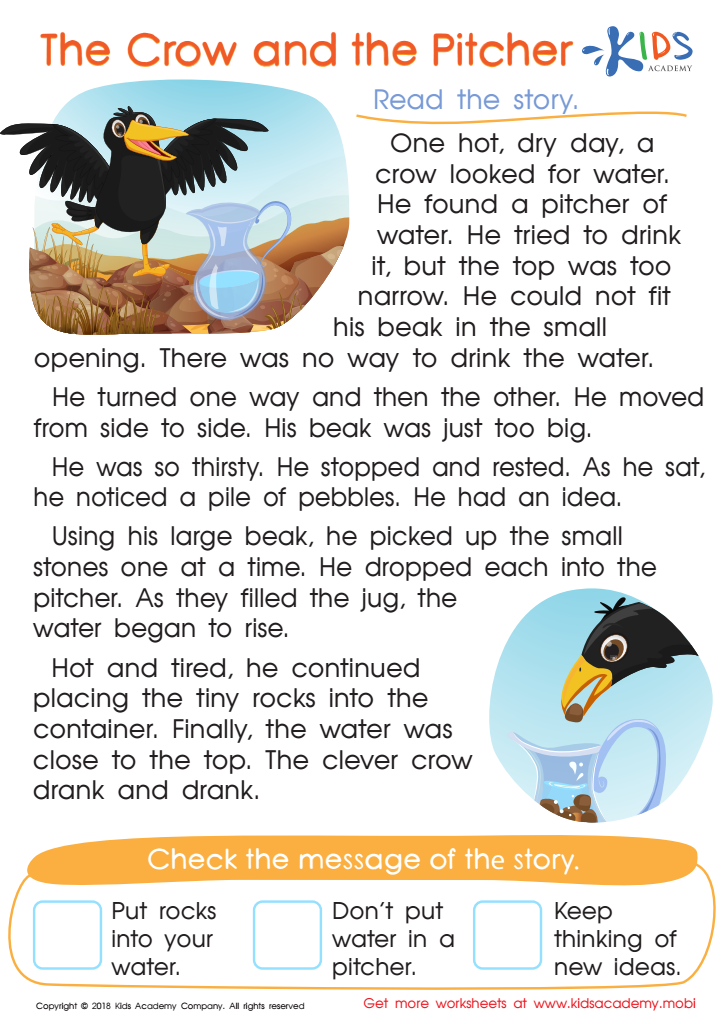
The Crow and the Pitcher Worksheet
 Assign to My Students
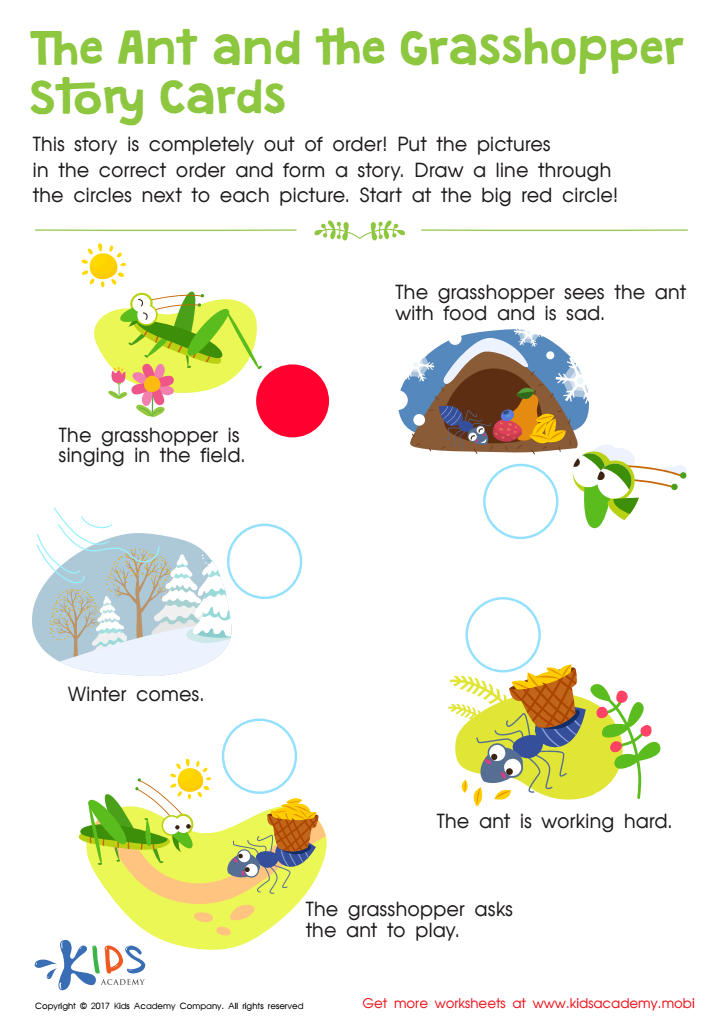
The Ant and The Grasshopper Worksheet
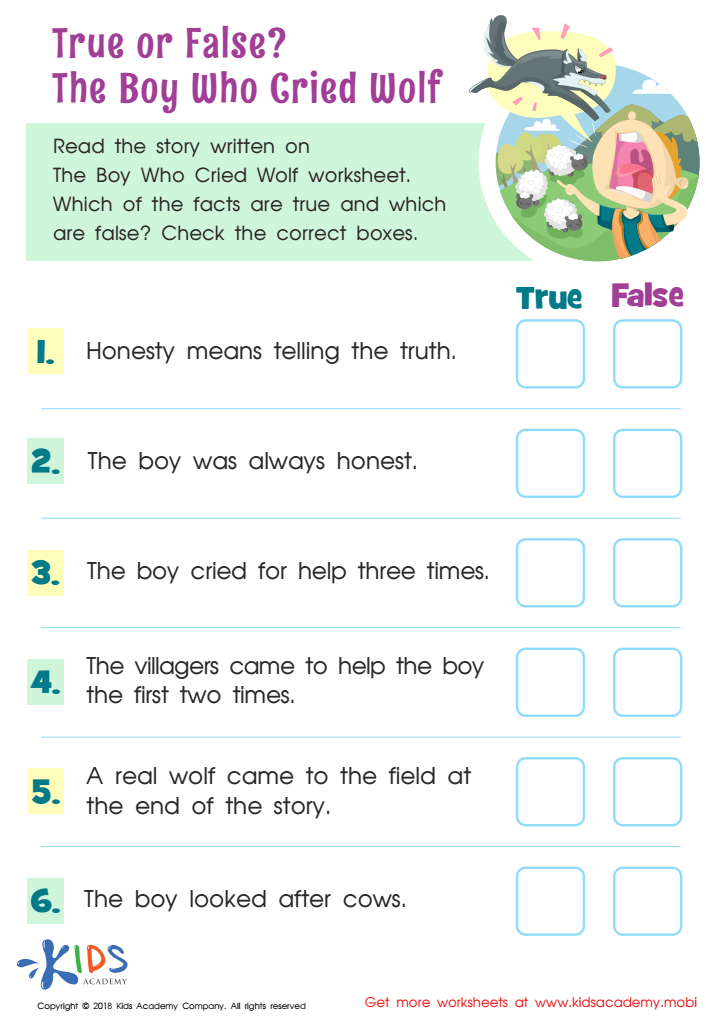
True or False? The Boy Who Cried Wolf Worksheet
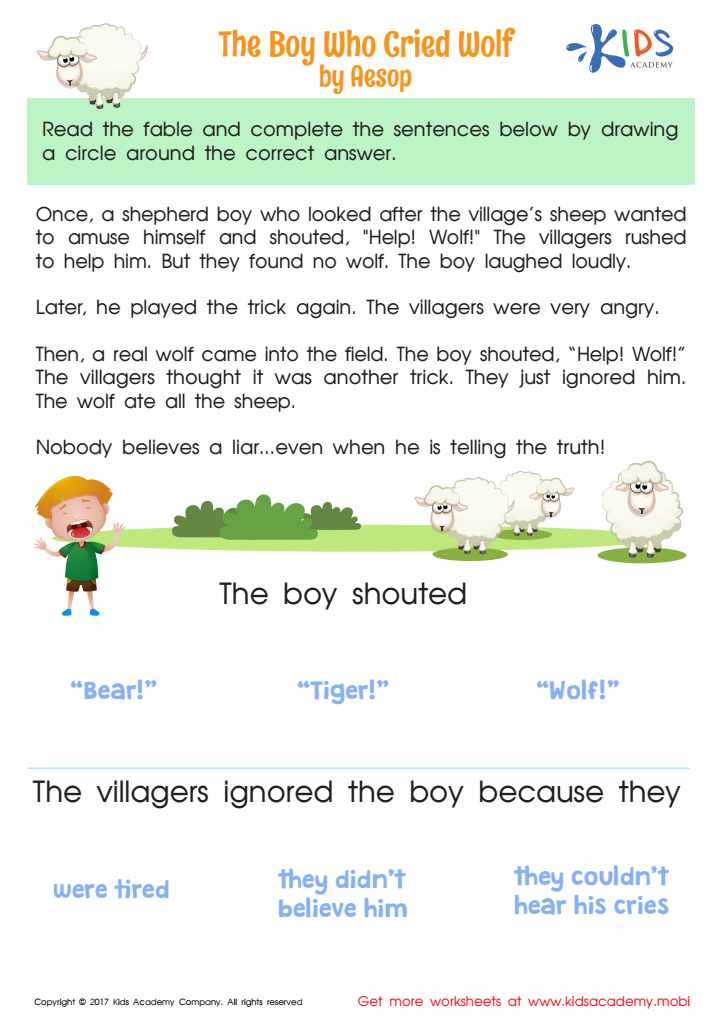
The Boy Who Cried Wolf Worksheet







Moral understanding is a crucial aspect of child development, and reading fiction is an effective way to cultivate this in children aged 5 to 7. Young readers are naturally curious about the world and often use stories to make sense of complex emotions and societal norms. Fictional narratives provide opportunities for children to explore moral dilemmas, empathize with diverse characters, and understand the consequences of different choices.
When parents or teachers encourage reading fiction, they offer children valuable lessons in empathy and ethical reasoning. Through stories, children encounter scenarios that challenge them to think critically about right and wrong, helping them develop their moral compass. For example, they may read about a character who faces a tough decision between honesty and lying, stimulating discussion about honesty's importance.
Furthermore, fiction fosters emotional intelligence, as children relate to characters' experiences, cultivating their ability to understand and manage their feelings. This emotional connection not only enhances reading comprehension but also promotes social skills, making children more compassionate and understanding individuals.
In summary, moral understanding through fictional reading empowers young children to navigate their social world with empathy, fostering positive relationships and nurturing future responsible citizens. It’s a powerful tool for developing both character and cognitive skills.








