Understanding context Reading Fiction Worksheets for Ages 5-7
4 filtered results
-
From - To
Enhance your child's reading comprehension with our engaging "Understanding Context Reading Fiction Worksheets" designed for ages 5-7. These thoughtfully crafted worksheets help young learners grasp the important skill of contextual understanding within fictional stories. Through fun and interactive exercises, children will learn to interpret story elements, infer meaning and understand the background, which strengthens their overall reading abilities. Ideal for both classroom and home use, these worksheets support beginning readers in their literacy journey, making reading enjoyable and educational. Foster a love of reading by unlocking the secrets of context with these essential learning tools!
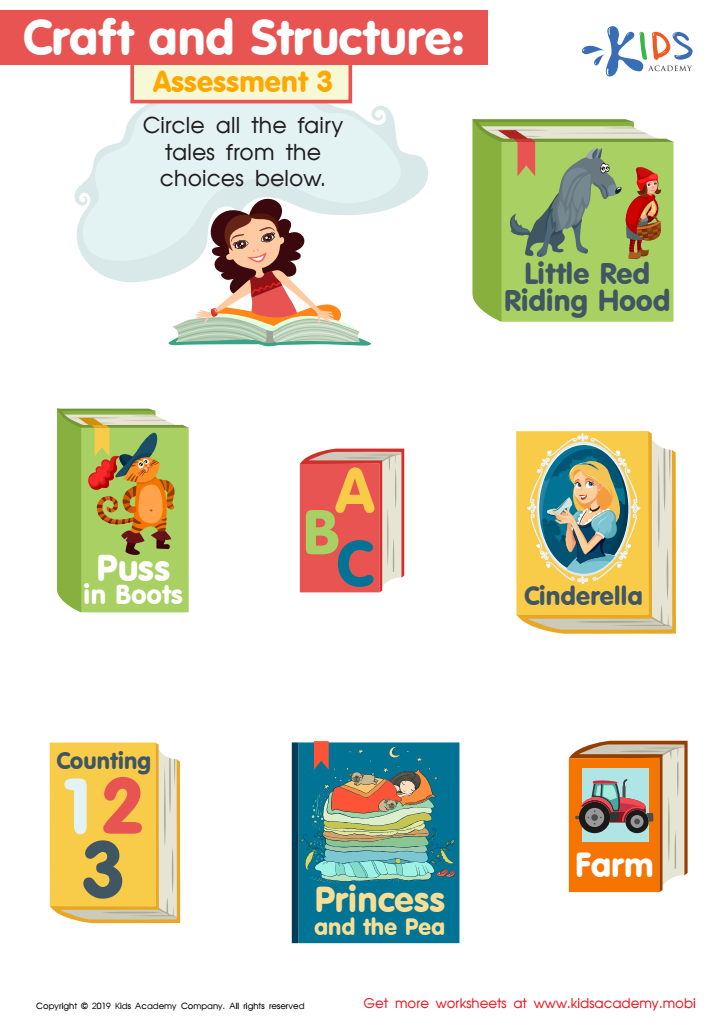
Craft and Structure: Assessment 3 Worksheet
 Assign to My Students
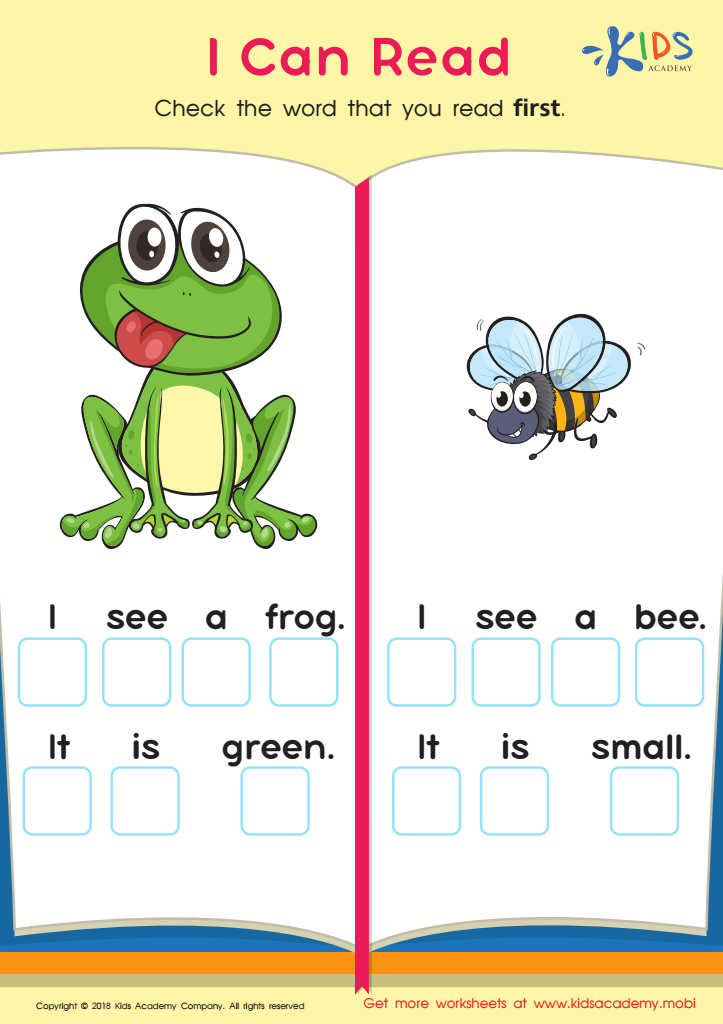
I Can Read Worksheet
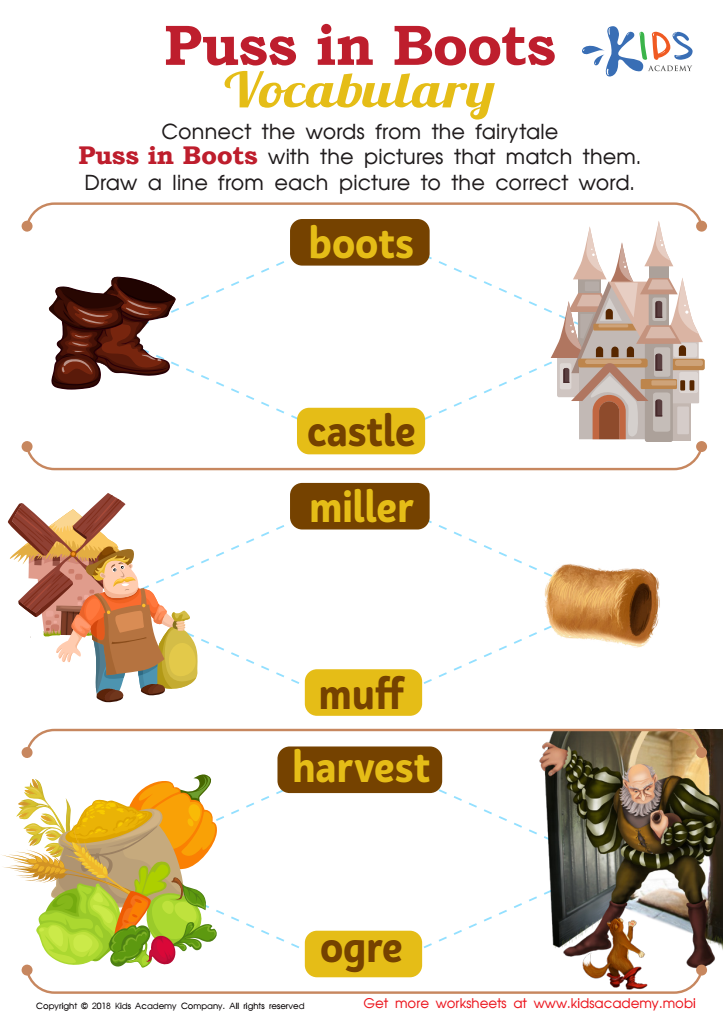
Puss in Boots Vocabulary Worksheet
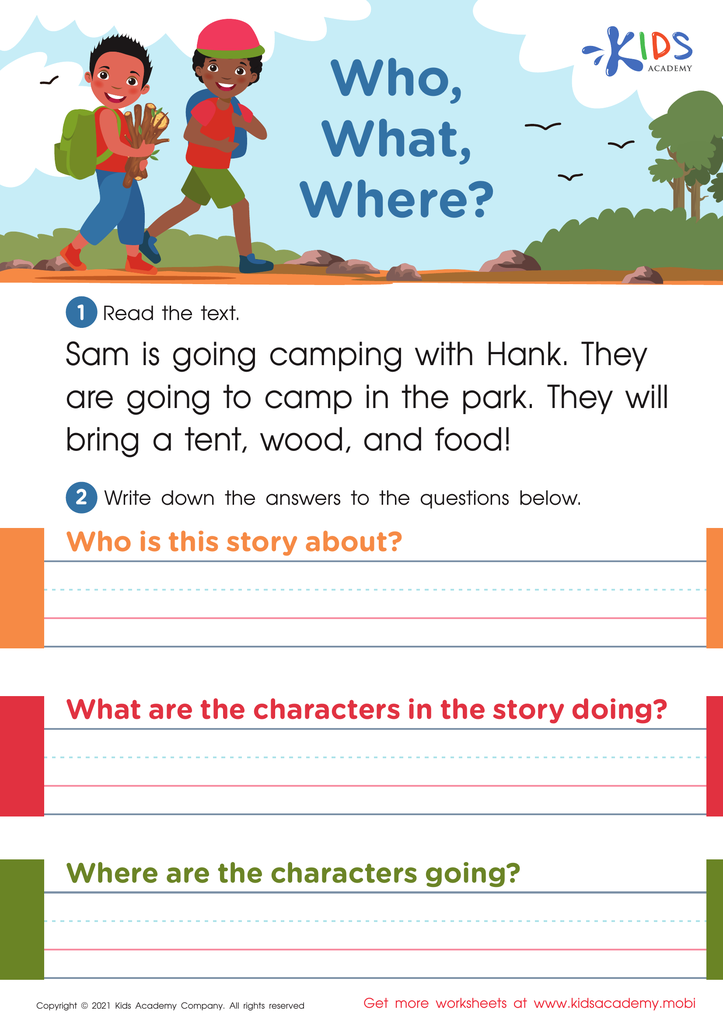
Who, What, Where? Worksheet






.jpg)

Parents and teachers should prioritize helping children aged 5-7 understand the context when reading fiction because it lays a critical foundation for literacy and overall cognitive development. Comprehending the context of a story involves grasping the setting, characters, and plot, all of which enhance critical thinking and empathy skills. At this formative stage, children learn to predict outcomes, understand cause-and-effect relationships, and relate certain aspects of the story to their personal experiences. This not only makes reading a more engaging and enjoyable activity but also improves retention and comprehension.
As children make connections between the story context and real-world scenarios, they develop deeper language skills, including vocabulary, grammar, and syntax. Furthermore, understanding context helps in honing emotional intelligence. Fiction often presents characters with diverse motivations, feelings, and perspectives, enabling children to cultivate empathy and social awareness.
From an academic standpoint, early and contextualized reading boosts cognitive capabilities such as attention span and problem-solving skills, setting the stage for future educational success. Teachers and parents who guide young readers through these contextual layers encourage a lifelong love for reading and learning, paving the way for critical academic and personal development milestones.








