Reading comprehension Sight Words Worksheets for Ages 5-7
11 filtered results
Difficulty Level
Grade
Age
-
From - To
Subject
Activity
Standards
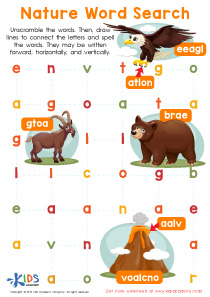
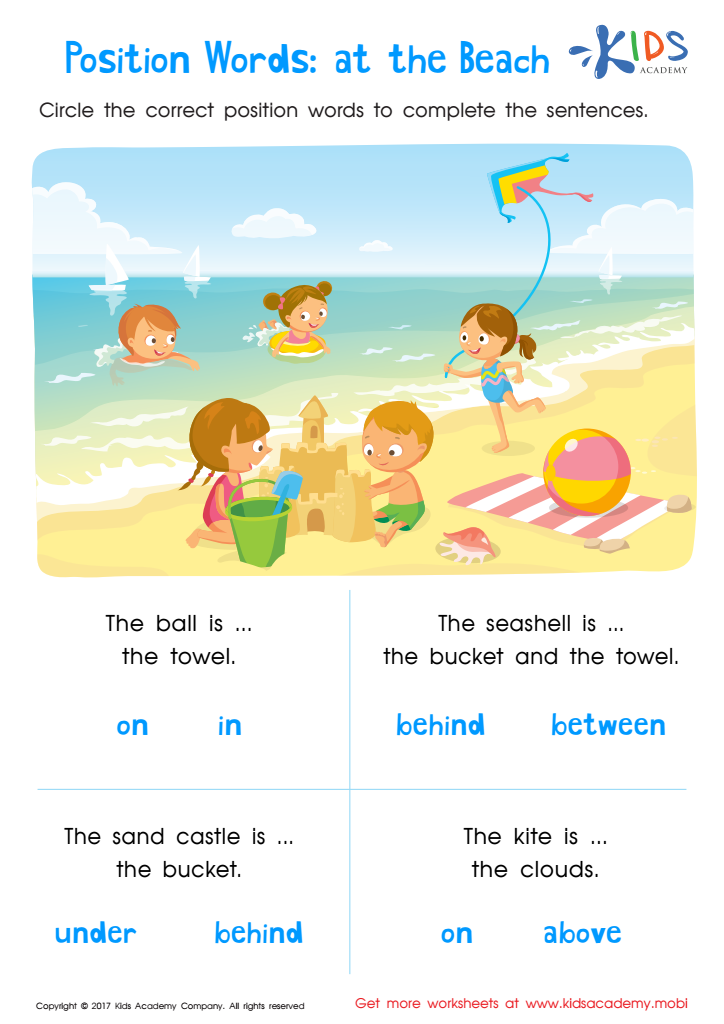
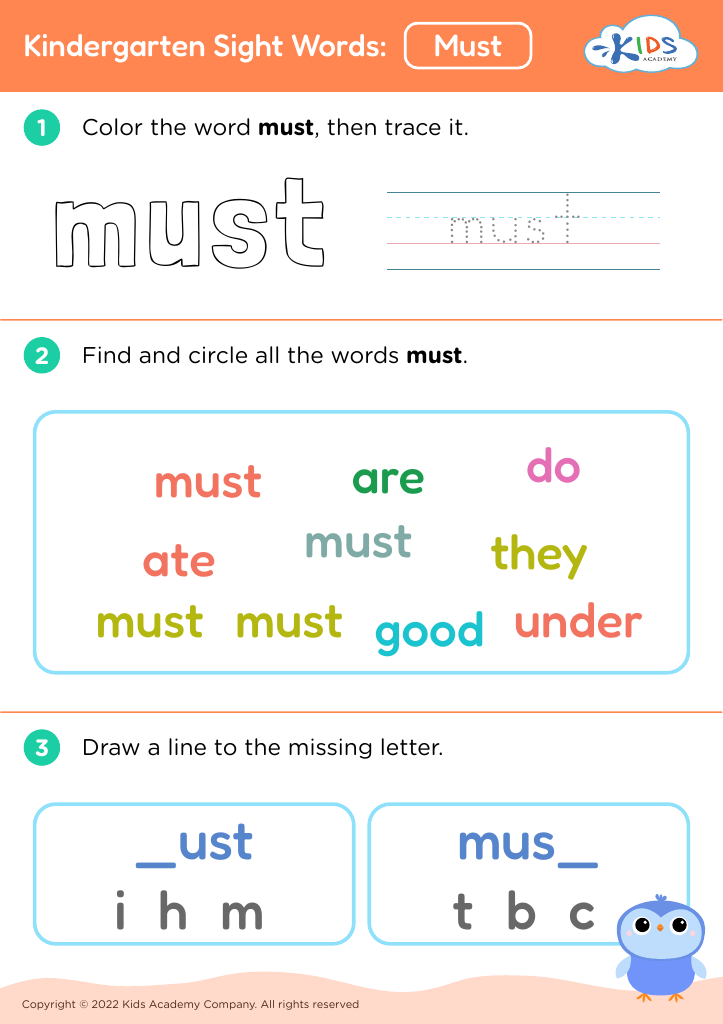
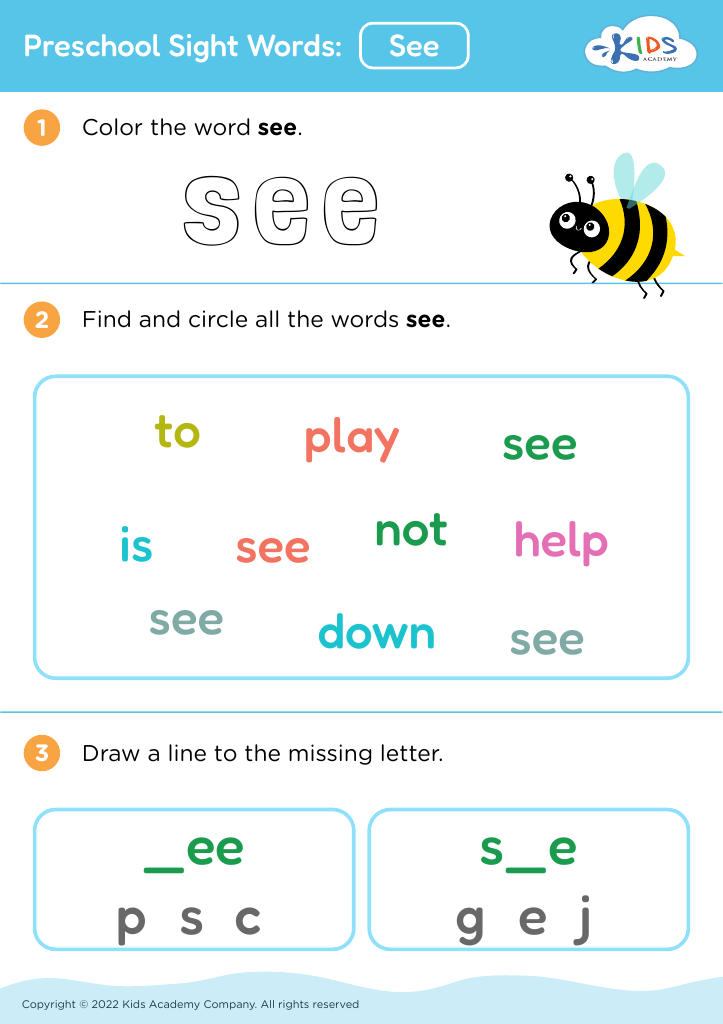
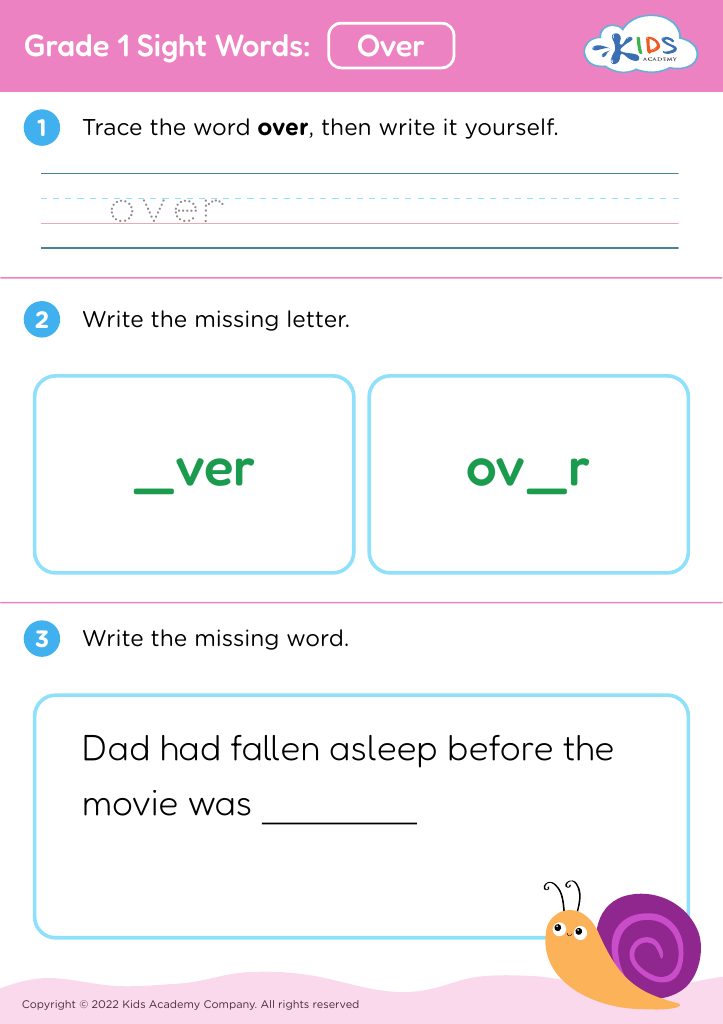
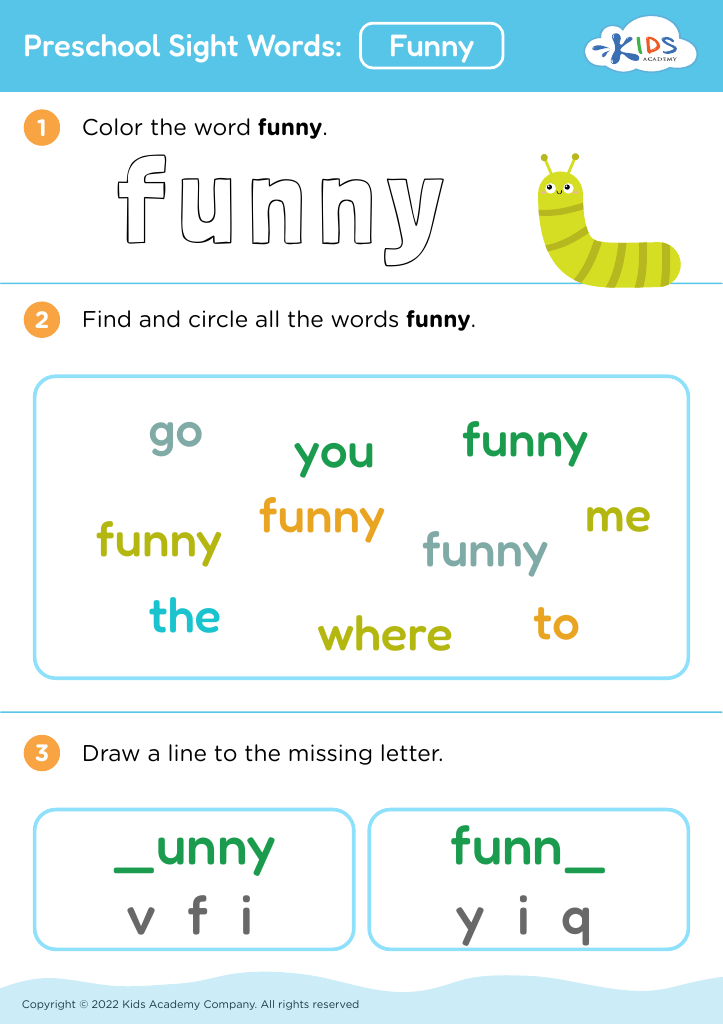
Enhance your child's reading journey with our Reading Comprehension Sight Words Worksheets tailored for ages 5-7. Perfect for early learners, these engaging printables focus on commonly used sight words, bolstering reading fluency and comprehension skills. Each worksheet includes fun activities like matching, fill-in-the-blanks, and short reading passages, making learning seamless and enjoyable. Foster confidence in young readers by helping them master essential sight words, critical for their success in reading. Explore our carefully designed worksheets to unlock the potential of emerging readers, both in the classroom and at home. Accessible, effective, and educational—start today!
Favorites
With answer key
Interactive
 Assign to My Students
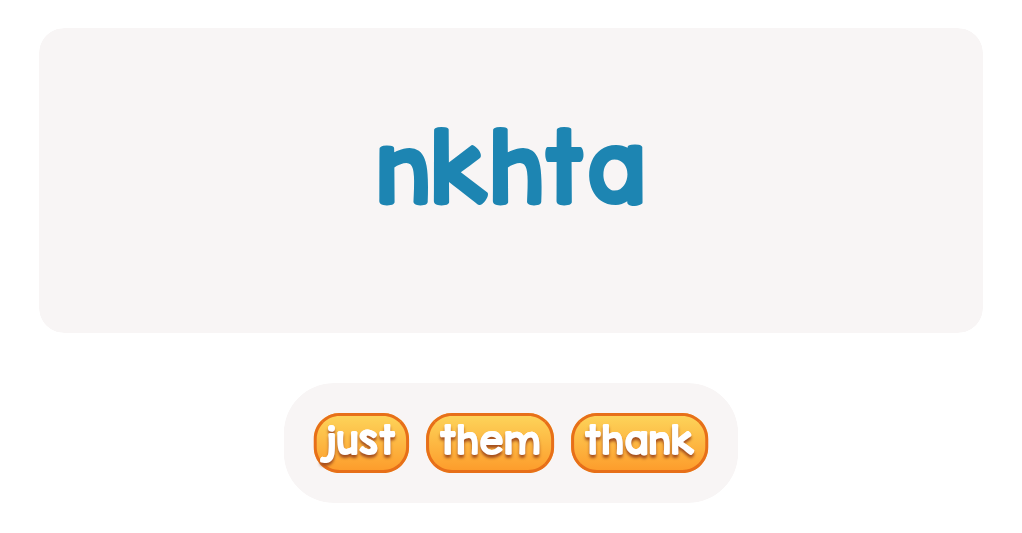

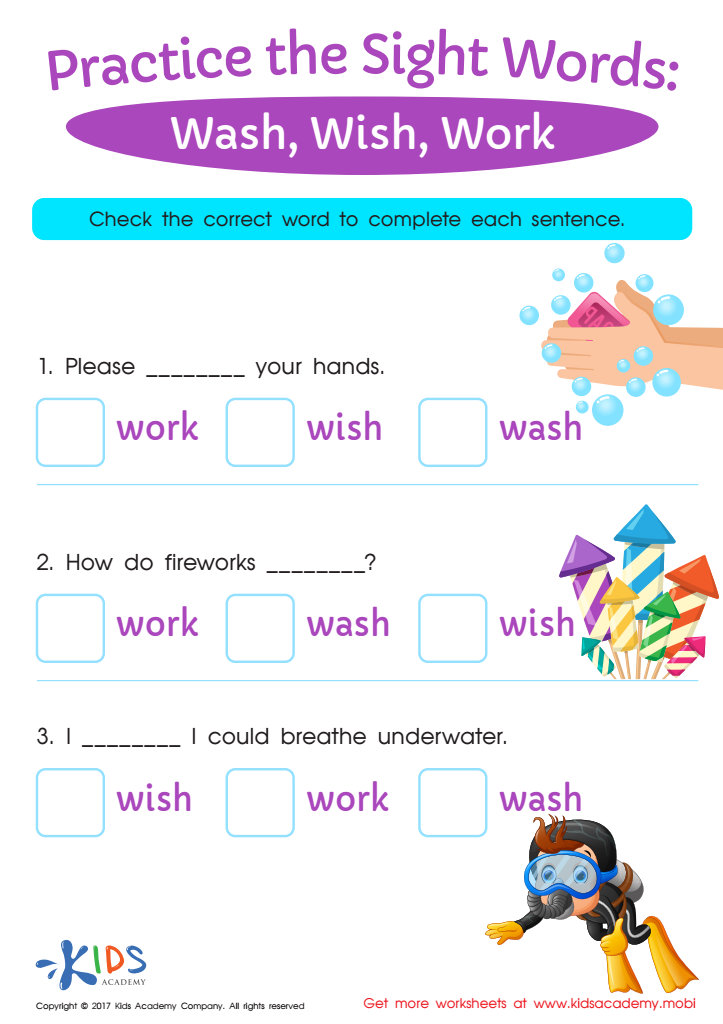
Wash, Wish, Work Sight Words Worksheet
Help your child distinguish between 'wash', 'wish' and 'work' with this sight words printable worksheet. It features sentences with the words and colorful images that aid your child's memory. Help them get one step closer to becoming a confident reader!
Wash, Wish, Work Sight Words Worksheet
Worksheet
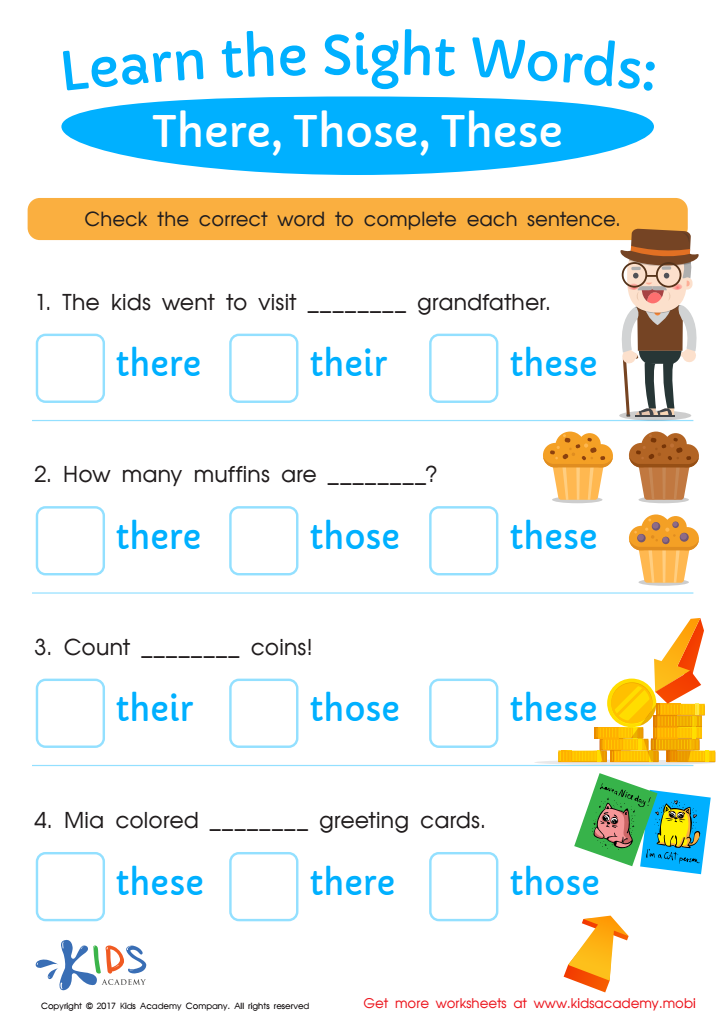
There, Those and These Sight Words Worksheet
Help teach your child to read and use tricky demonstrative pronouns. Use this 2nd grade sight words worksheet: there, those, these. Have them read each sentence and choose the right pronoun by looking at the pictures.
There, Those and These Sight Words Worksheet
Worksheet
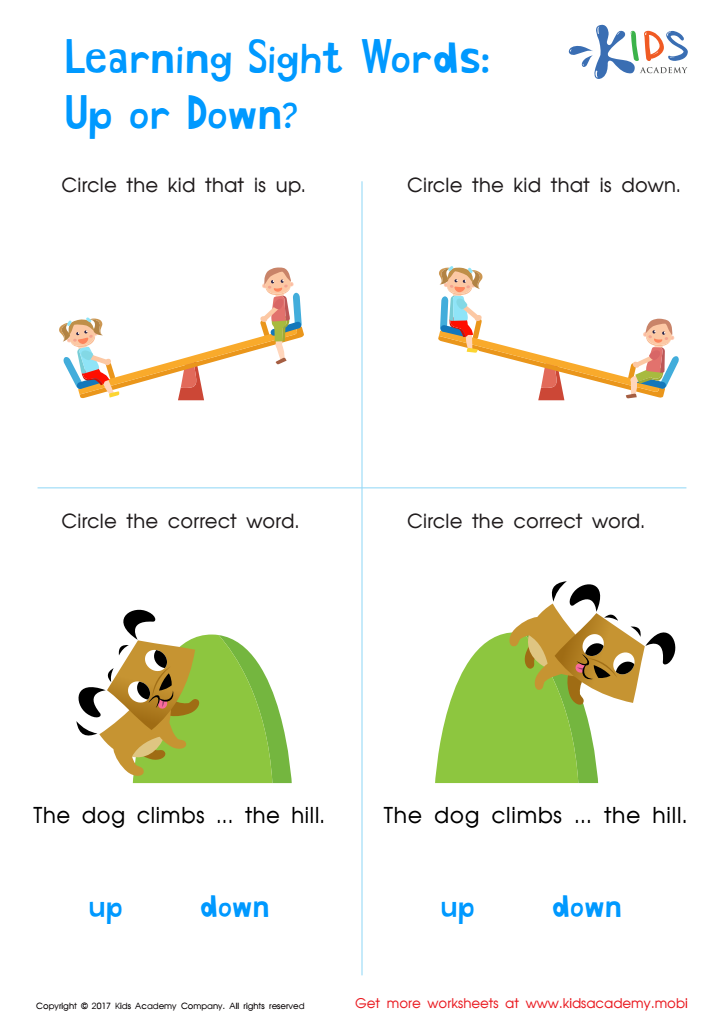
Up or Down Printable Sight Words Worksheet
Help your child identify up and down in print with this sight words worksheet. It has simple sentences, vibrant images and easy-to-read language that allow your little learner to practice these essential sight words. Perfect for early readers!
Help your early reader identify and read up and down with this sight words worksheet. It provides simple sentences, clear language and vibrant images to help them practice these essential sight words. Perfect for toddlers!
Up or Down Printable Sight Words Worksheet
Worksheet
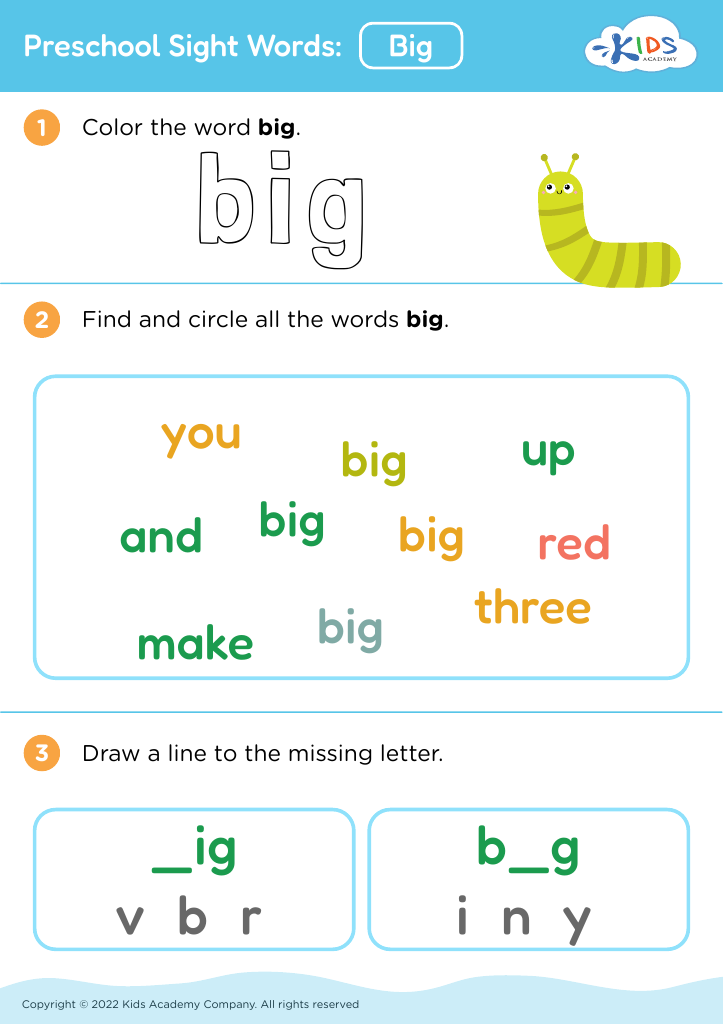
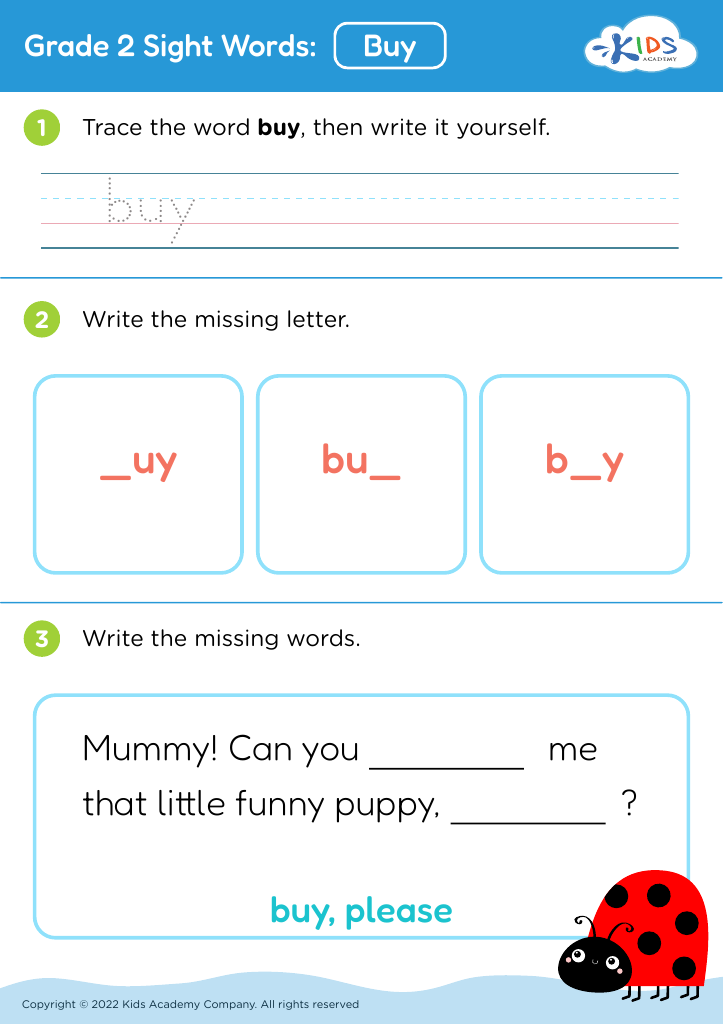
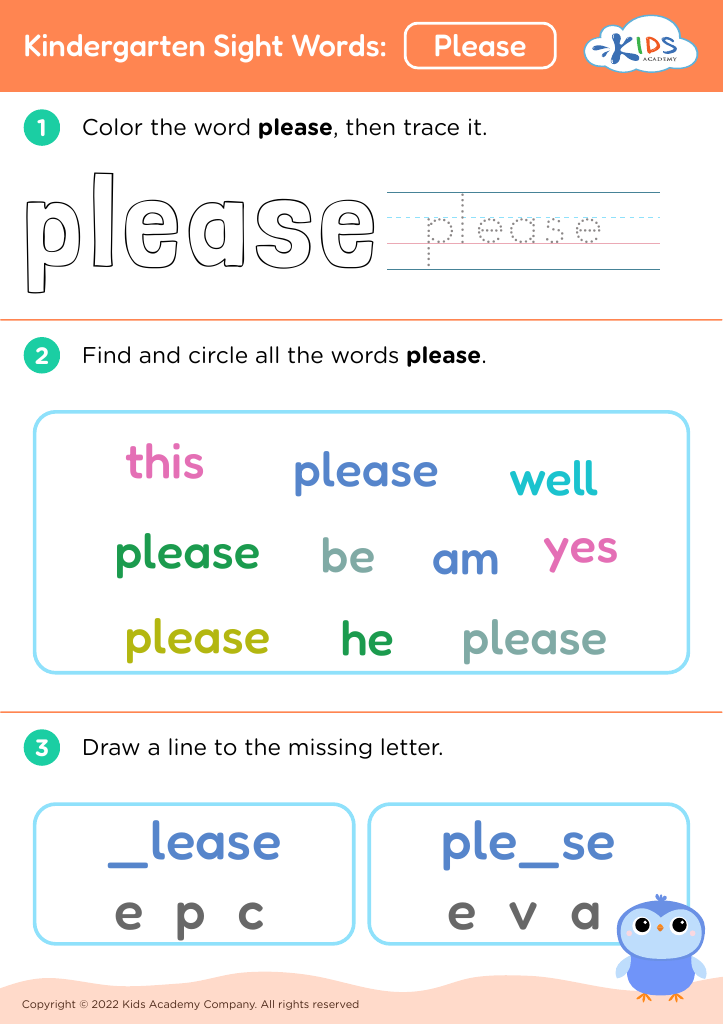
Join Kids Academy for Free
Who is primarily going to use this learning content?






.jpg)

Parents and teachers play a crucial role in developing reading skills in young children, and focusing on sight words significantly impacts reading comprehension for ages 5-7. Sight words are commonly used words that children should recognize instantly without needing to decode them phonetically. When children can quickly identify these words, it allows them to read more fluently and comprehend texts with greater ease.
The early introduction and mastery of sight words help build a strong foundation for reading success. These words often make up a large portion of the texts children encounter in early literacy stages. By recognizing sight words automatically, children can focus cognitive resources on understanding the meaning of the text rather than getting bogged down in decoding each word. This fluency enhances their confidence and fosters a love for reading.
Moreover, children who are proficient in reading sight words tend to have better vocabulary, pronunciation, and spelling skills, all of which are essential for academic success. For educators and parents, encouraging sight word recognition can streamline the learning process, making reading more enjoyable and less stressful for young learners. As children progress, their improved reading comprehension will aid in more advanced learning across subjects, highlighting the long-term benefits of investing in sight word proficiency during these formative years.