Categorization skills Animals Worksheets for Ages 5-7
4 filtered results
-
From - To
Enhance your child's learning experience with our engaging Categorization Skills Animals Worksheets, designed specifically for ages 5-7. These interactive worksheets encourage kids to explore the fascinating world of animals while developing essential categorization skills. Through fun activities, young learners will classify animals by various attributes such as habitat, diet, and size, promoting critical thinking and cognitive development. Perfect for at-home learning or classroom activities, these worksheets make discovering the animal kingdom enjoyable and educational. Facilitate your child's growth in science and organization with our thoughtfully curated resources, ensuring a solid foundation in essential learning skills for future academic success!
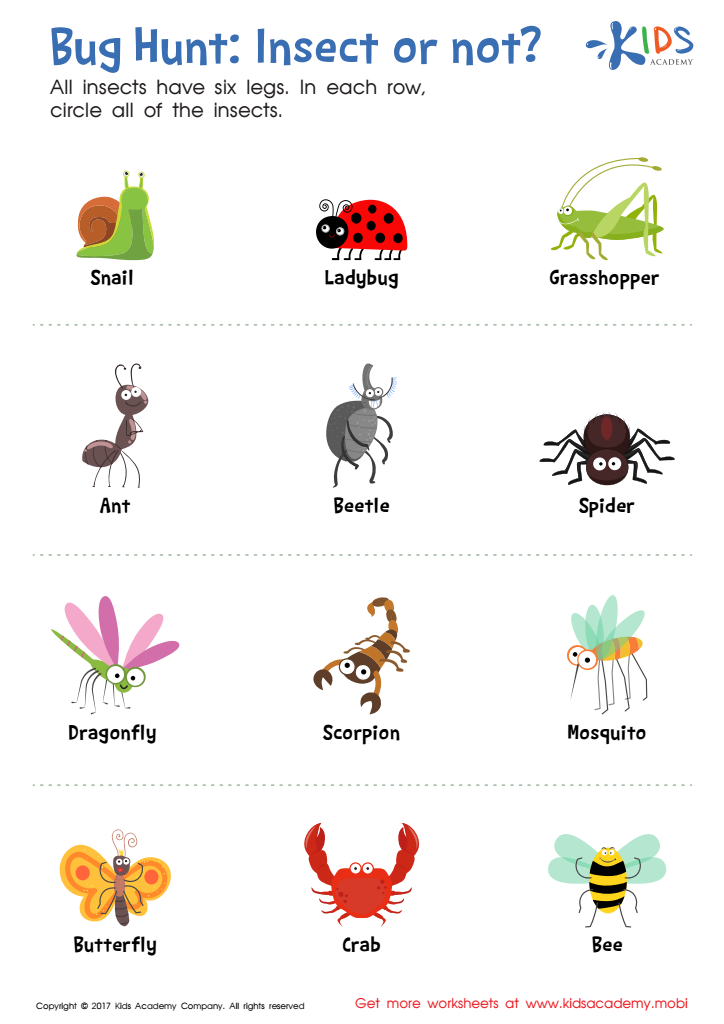
 Assign to My Students
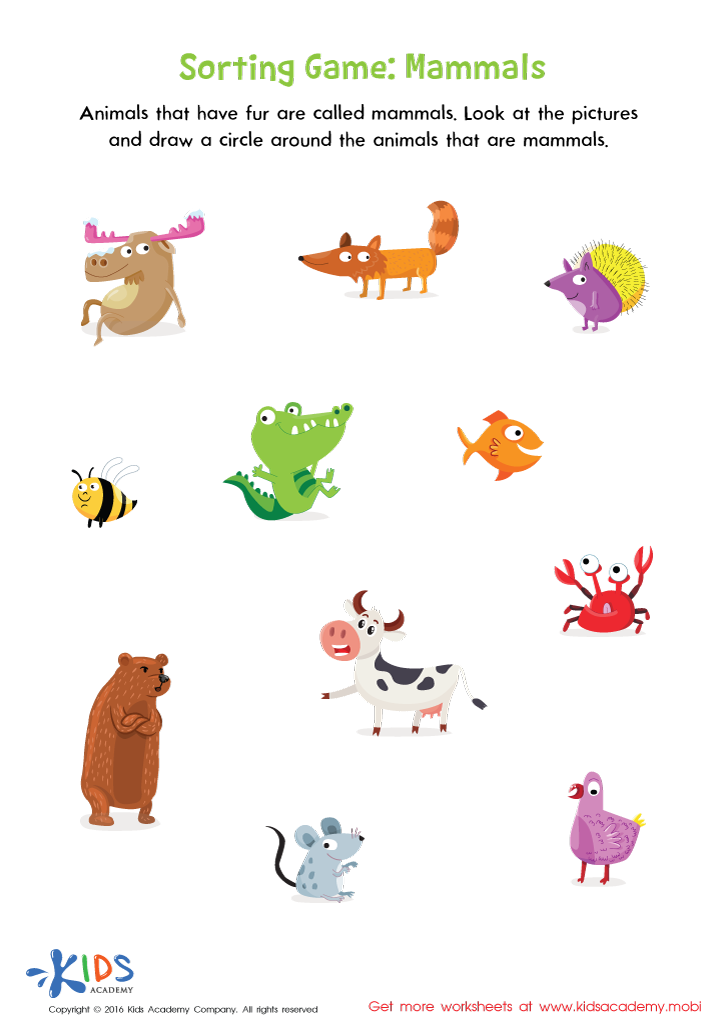
Mammals Sorting Worksheet
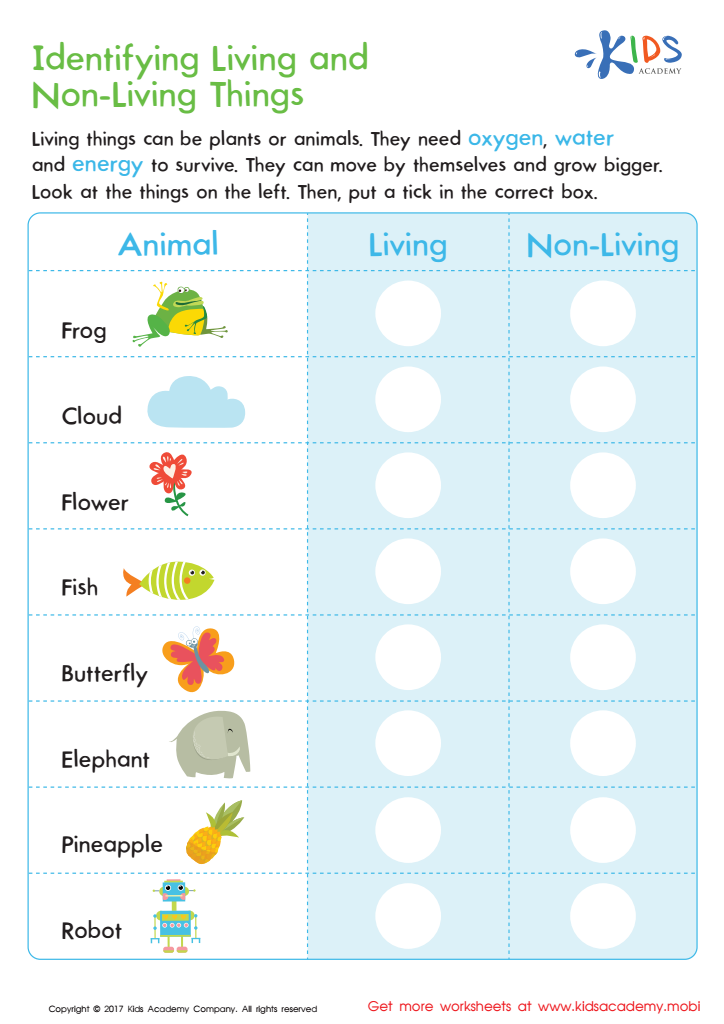
Identifying Living or Non–living Worksheet
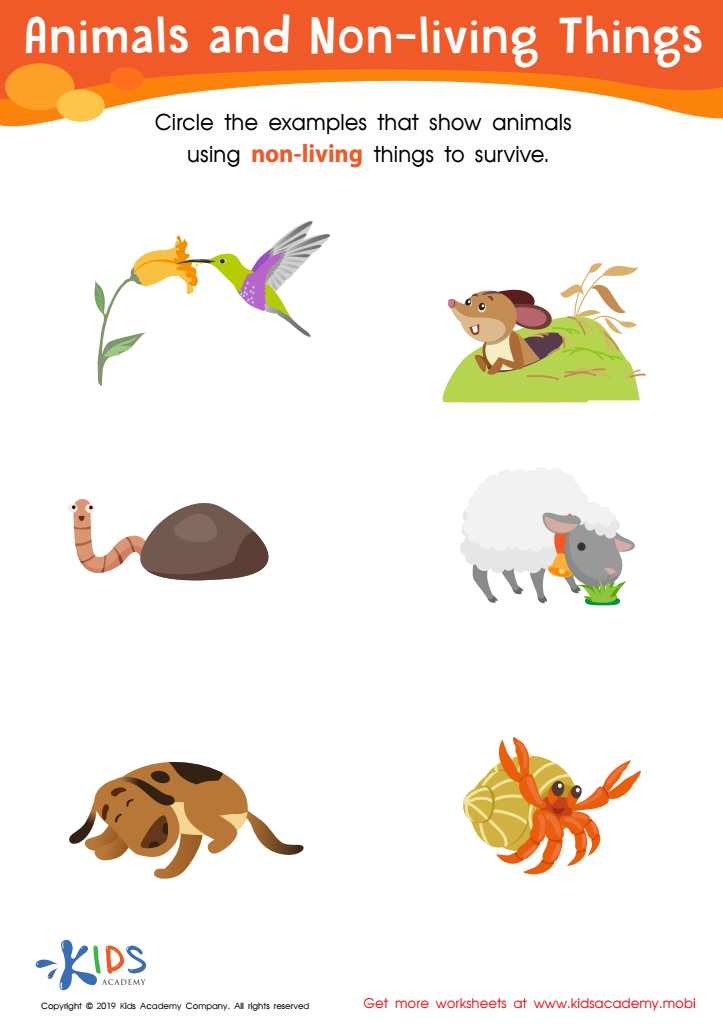
Animals and Non-Living Things Worksheet





%20(1).jpg)


Categorization skills are crucial for young learners, particularly regarding animals, as they help children develop essential cognitive abilities and foundational knowledge. For children aged 5-7, categorizing animals aids in enhancing critical thinking and problem-solving skills. By understanding how animals can be grouped - such as by habitat (aquatic, terrestrial), type (mammals, birds, reptiles), or diet (herbivores, carnivores, omnivores) - children refine their abilities to recognize patterns and make connections between concepts.
Moreover, categorizing animals fosters language development. As children learn to classify animals, they also expand their vocabulary and understanding of language structures. This practice—discussing characteristics, similarities, and differences—enhances verbal communication and boosts confidence.
Teachers and parents should care about this skill because it contributes to overall academic readiness. With a strong foundation in categorization, kids can tackle more advanced subjects in later grades, including biology and environmental science. Additionally, understanding animals promotes empathy and awareness of nature, fostering responsible attitudes toward the environment. Ultimately, supporting the development of categorization skills in young children lays the groundwork for their lifelong learning and critical reasoning abilities.








