Weather Vocabulary Weather Worksheets for Ages 5-7
3 filtered results
-
From - To
Unlock the wonders of weather for young learners with our engaging "Weather Vocabulary Weather Worksheets for Ages 5-7"! Designed specifically for curious minds, these printable worksheets help kids explore essential weather terms through fun and interactive activities. From sunny skies to rainy days, children will learn to identify and describe various weather conditions, enhancing their vocabulary and comprehension skills. Perfect for classroom or home use, each worksheet is tailored to keep little ones interested while building a strong foundation in weather-related language. Encourage your child's natural curiosity and love for learning with these delightful educational resources!
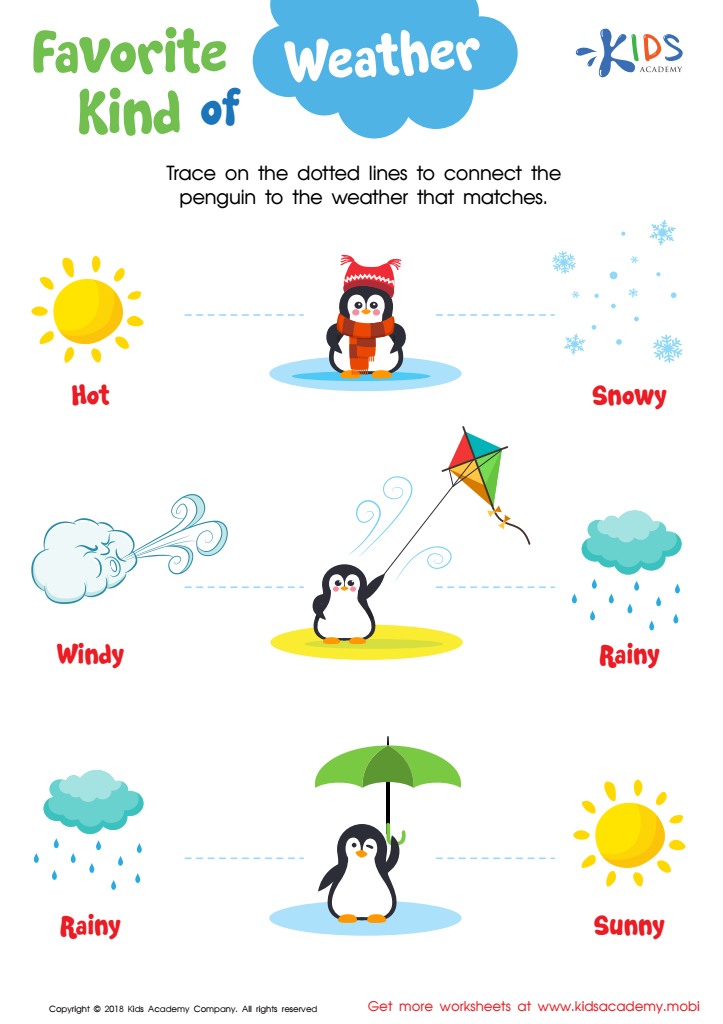
Favorite Kind of Weather Worksheet
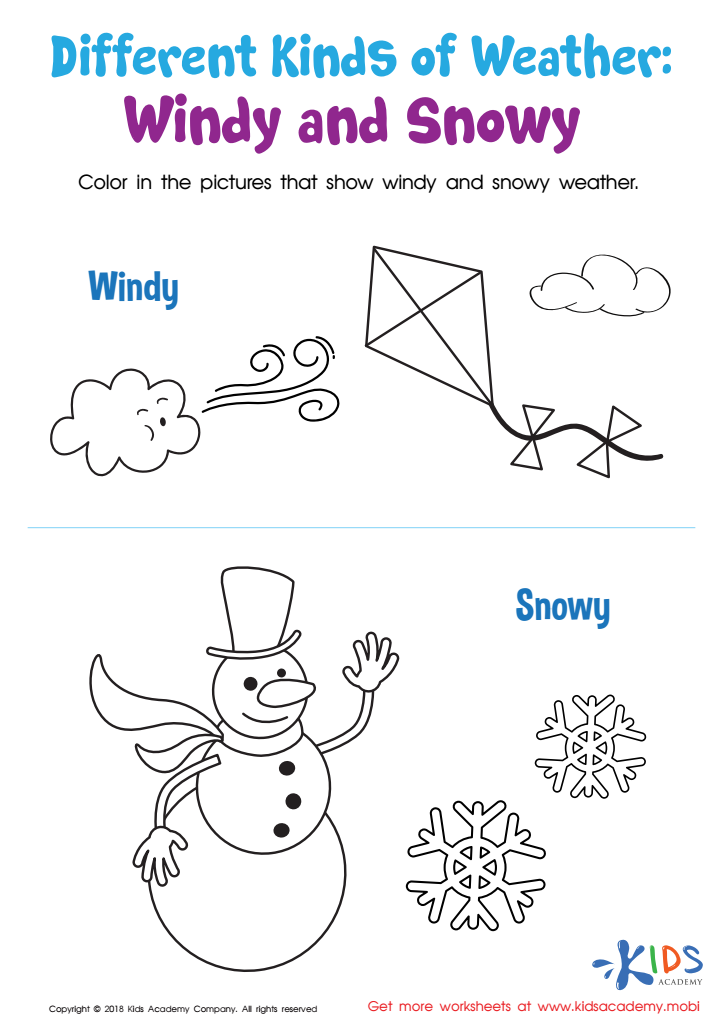
Different Kinds of Weather: Windy and Snowy Worksheet
 Assign to My Students








Teaching weather vocabulary to children ages 5-7 is crucial for several reasons. Firstly, it enhances their understanding of the world around them. Knowing basic weather terms like "sunny," "cloudy," "rainy," and "windy" helps children make sense of their daily experiences, whether it’s deciding what to wear or understanding outdoor activities.
Secondly, weather vocabulary is often a part of early science education. Introducing these terms lays the foundation for more complex scientific concepts in the future. By grasping basic weather terms, children can begin to understand larger patterns and processes such as seasons, climate, and natural phenomena.
Incorporating weather vocabulary also enhances language skills. Children in this age group are in a critical stage of language development. Learning and using weather-related terms expands their vocabulary and aids in their overall linguistic development, which has long-standing benefits for reading and communication skills.
Moreover, discussing weather conditions promotes safety awareness. Understanding weather warnings and recognizing signs of severe weather can help children know when to seek shelter and follow safety instructions.
Lastly, engaging with weather vocabulary can be a fun and interactive way to stimulate curiosity and a love for learning. Parents and teachers can incorporate weather charts, games, and stories into the learning process, making education exciting and dynamic for young minds.