Adjective identification Grammar Worksheets for Ages 5-7
3 filtered results
-
From - To
Welcome to our engaging Adjective Identification Grammar Worksheets designed specifically for children aged 5-7! These interactive resources help young learners embrace the exciting world of adjectives through fun activities and colorful visuals. Your child will enhance their vocabulary and grammar skills as they practice identifying adjectives in sentences, boosting their writing abilities and language comprehension. Each worksheet is tailored to provide age-appropriate challenges that encourage creativity and critical thinking. Foster a love for learning and support your child’s educational journey with our delightful adjective identification exercises, perfect for at-home practices or classroom use. Let's make grammar fun together!
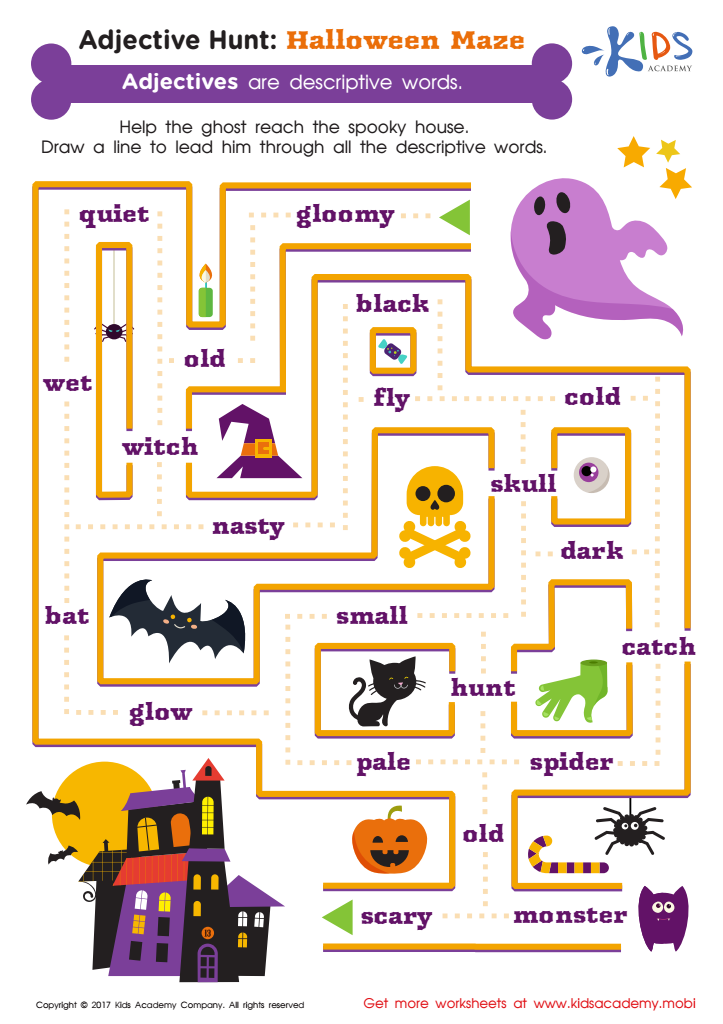
Adjective Hunt Printable
 Assign to My Students
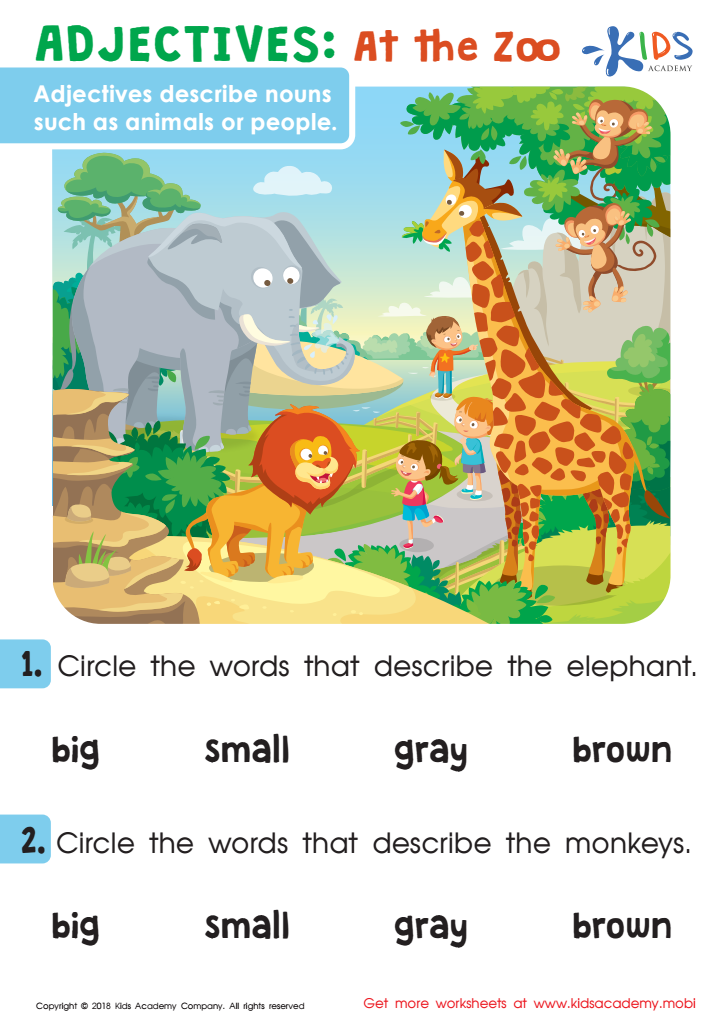
Adjectives: At The Zoo Worksheet
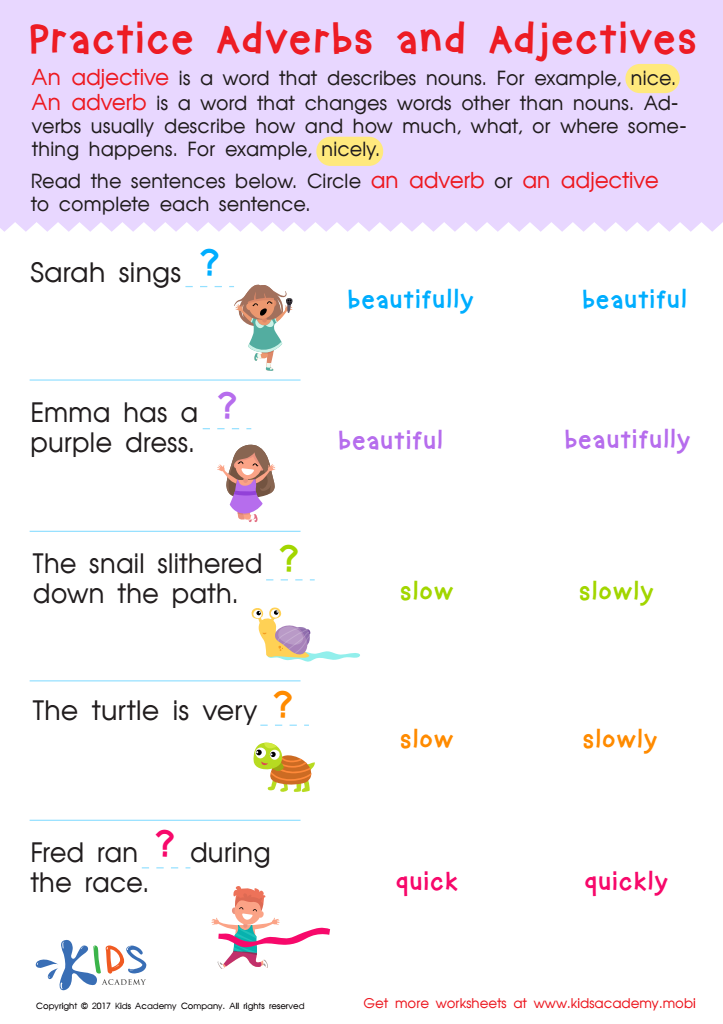
Adverbs and Adjectives Worksheet






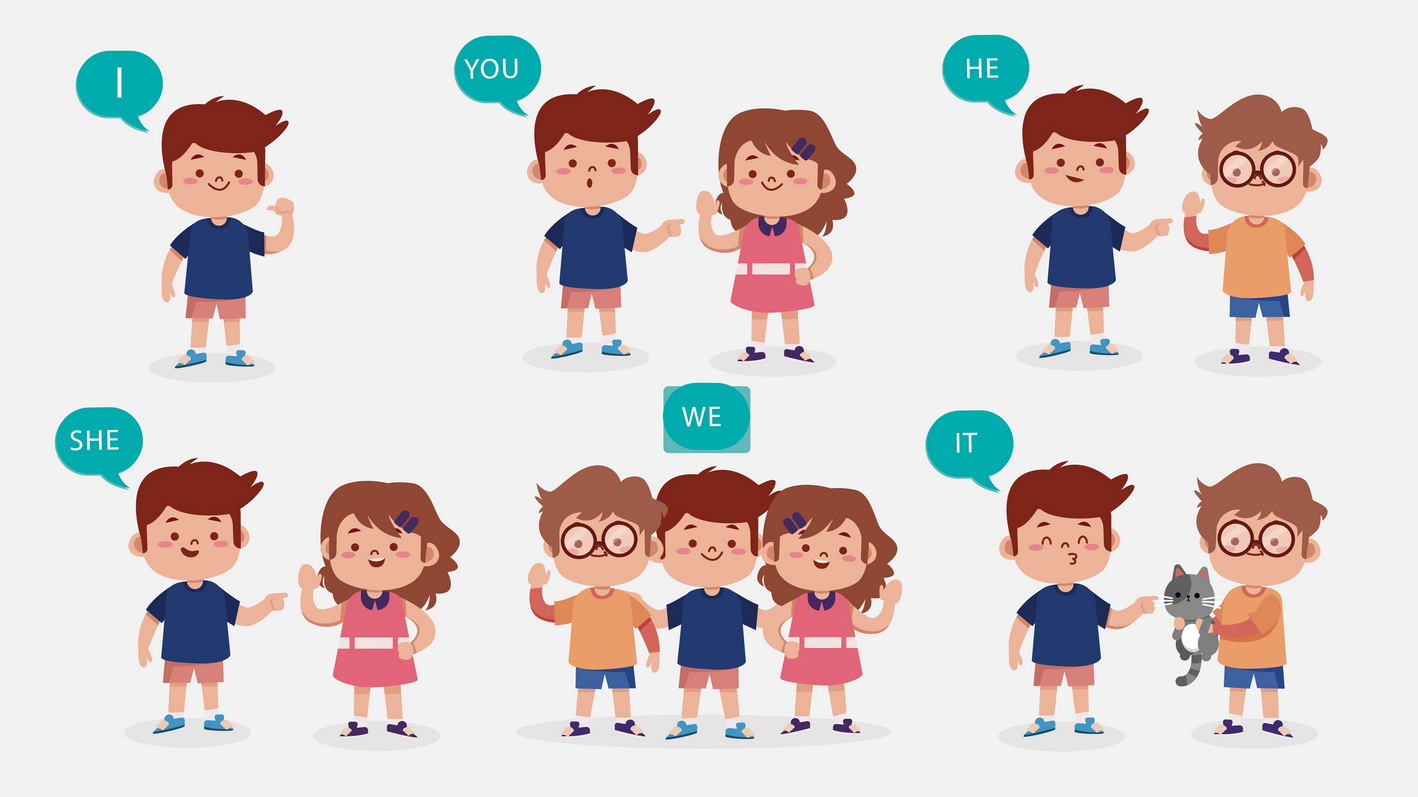

Adjective identification is a crucial aspect of language development for children aged 5-7, as it plays a significant role in enhancing their communication skills and expanding their cognitive abilities. Teaching children to recognize and use adjectives helps them understand how to describe themselves, others, and their surroundings effectively. This skill fosters creativity and imagination, allowing children to convey their thoughts and feelings more vividly.
Furthermore, mastering adjectives is fundamental for literacy development. As children learn to identify adjectives in reading materials, they enhance their comprehension by recognizing descriptive words that give context to the characters, settings, and events. This understanding assists them in crafting richer sentences when writing, ultimately promoting better overall writing skills.
Additionally, teaching adjective identification nurtures critical thinking skills. Children begin to evaluate and compare objects or ideas, making connections that are essential for problem-solving and analytical thinking. Engaging with adjectives enriches vocabulary acquisition, making language more engaging and helping children articulate their thoughts more confidently.
In summary, parents and teachers should prioritize adjective identification in early education as it supports essential language skills, improves literacy, enhances creativity, and cultivates critical thinking, all of which are vital components for a well-rounded education.








