
Contextual understanding Grammar Worksheets for Ages 5-7
6 filtered results
Difficulty Level
Grade
Age
-
From - To
Subject
Activity
Standards
Enhance your child's grammar skills with our "Contextual Understanding Grammar Worksheets" designed specifically for ages 5-7. These engaging worksheets focus on helping young learners grasp grammar concepts in context, promoting better comprehension and retention. Each activity encourages children to apply their knowledge through interactive exercises tailored for their cognitive development. By exploring various sentences and scenarios, kids discover how grammar shapes meaning, fun, and creativity in language. Ideal for enhancing classroom learning or providing valuable home practice, our worksheets empower young minds to become confident communicators. Explore our collection today and make grammar learning an enjoyable adventure!
Favorites
With answer key
Interactive
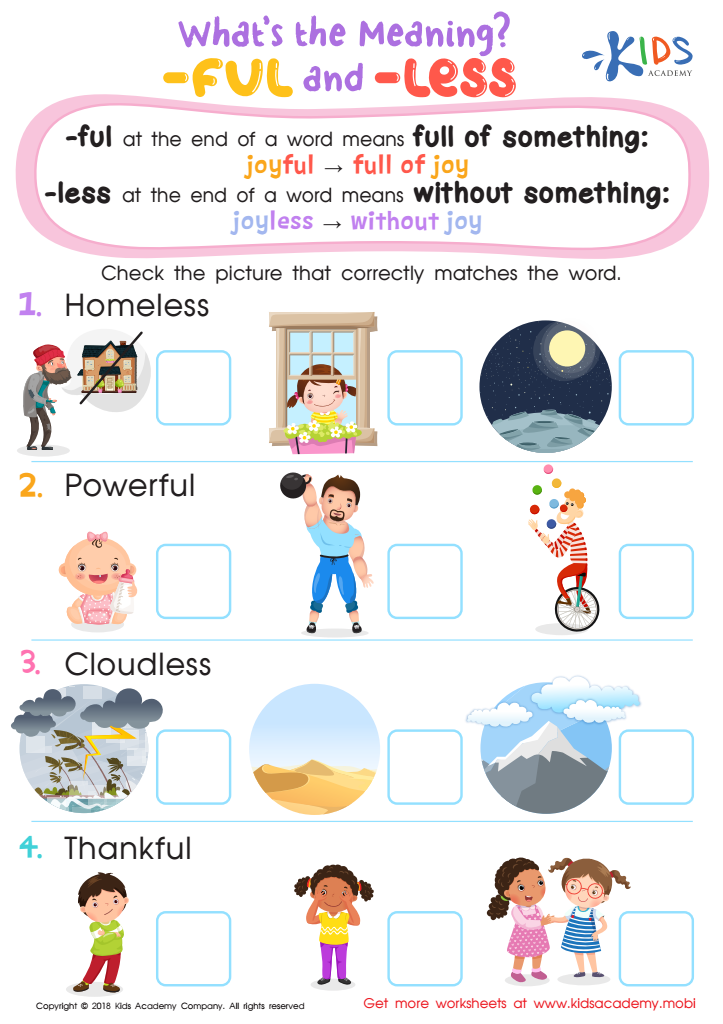
What's the Meaning? Worksheet
Look with your youngster through this colorful worksheet and match the pictures to the words at the top. These words have different meanings due to either a prefix or suffix being added, such as "ful" or "less".
 Assign to My Students
What's the Meaning? Worksheet
Worksheet
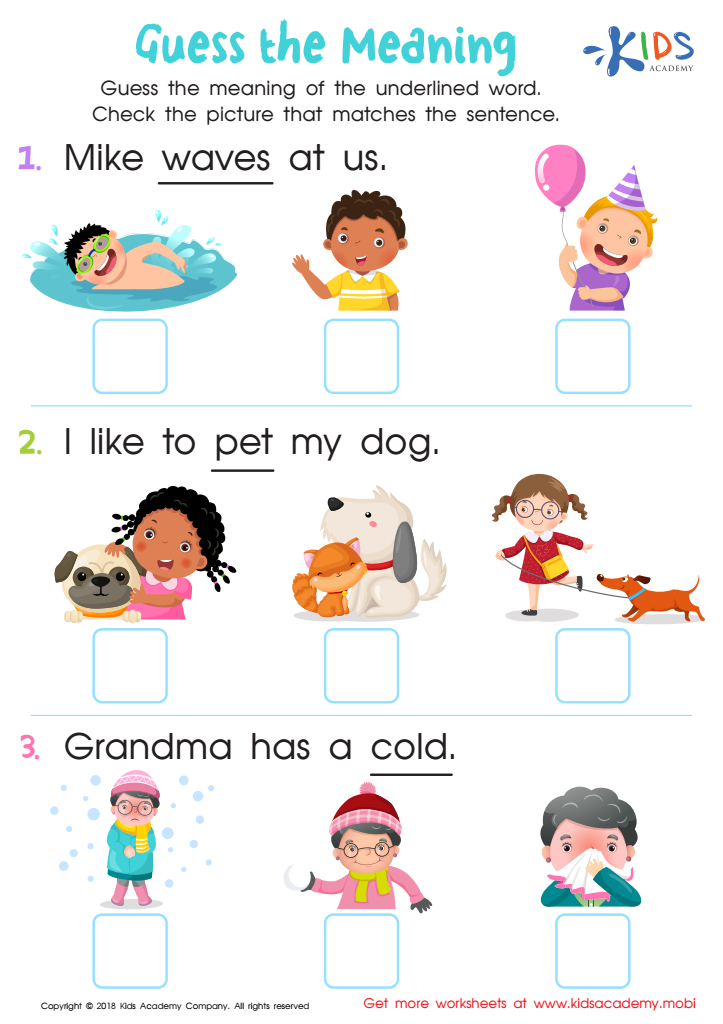
Guess the Meaning Worksheet
Help your child learn the meanings of words in different contexts by using this colourful, free worksheet. What is the meaning of the underlined words in each sentence? Look at the images and pick the one that accurately describes the word's context.
Guess the Meaning Worksheet
Worksheet
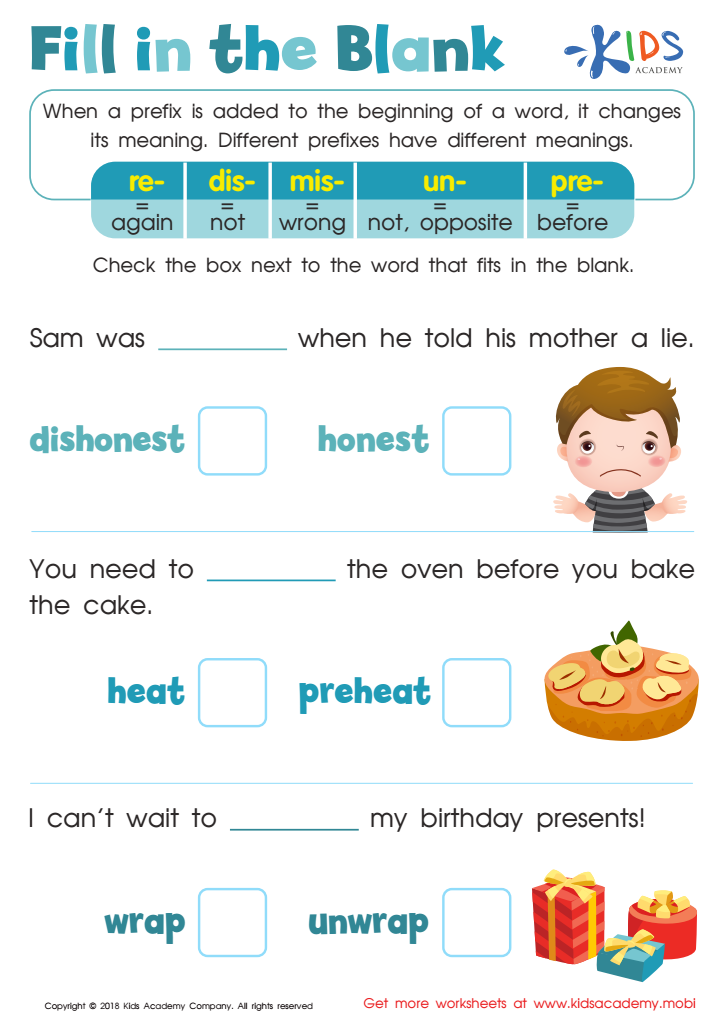
Reading: Fill in the Blank Worksheet
Students can practice understanding the meaning of common prefixes with this worksheet. They read sentences and pick the correct word with the appropriate prefix to complete it. Downloadable and a great addition to reading and vocabulary resources, this helps improve comprehension with mastery of the skill!
Reading: Fill in the Blank Worksheet
Worksheet
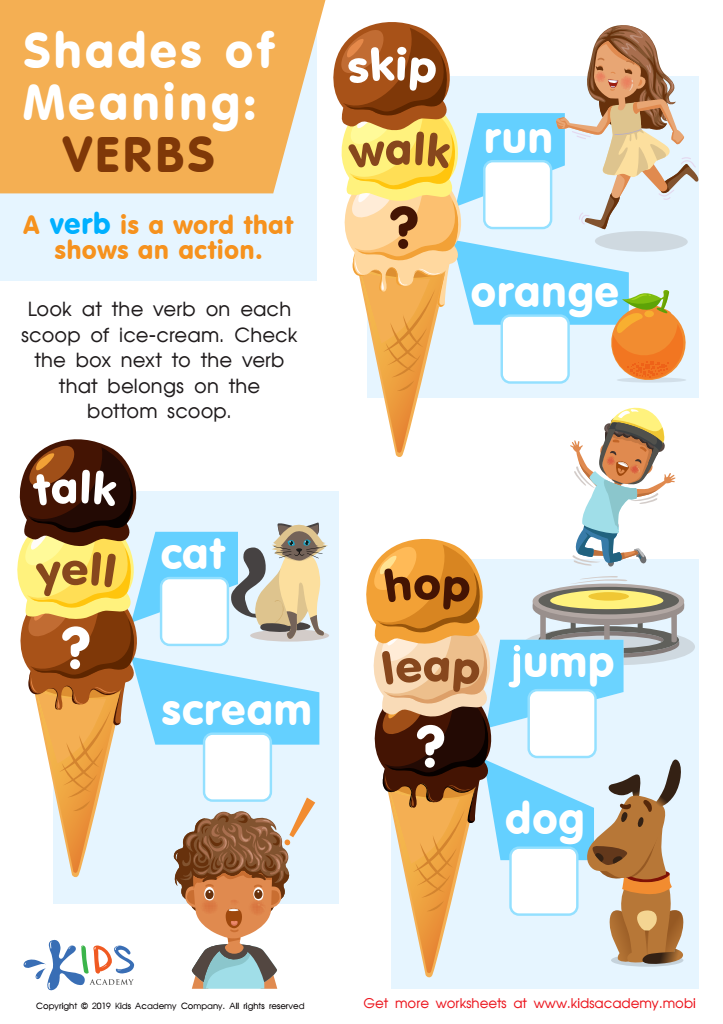
Shades of Meaning: Verbs Worksheet
Verbs are words that show action. Introduce kindergartners to verbs by having them check the box next to the verb that belongs on the bottom scoop in a worksheet. This is a great way to teach them this important part of speech and help them learn to write proper sentences and speak correctly.
Shades of Meaning: Verbs Worksheet
Worksheet
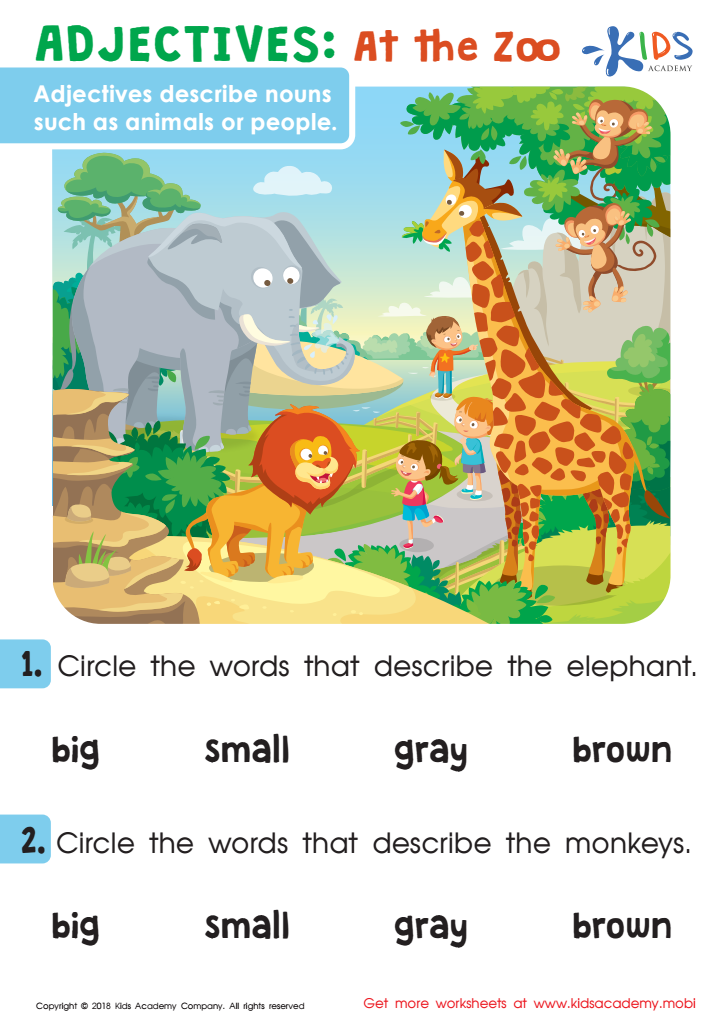
Adjectives: At The Zoo Worksheet
Take your kids to the zoo and ask them about their favorite activities and animals. This worksheet is a great way for kids to learn about adjectives. Explain that adjectives describe nouns like people or animals (e.g. big, tall, dark). Look at the printout with your kids and help them circle words that describe the animals in the picture.
Adjectives: At The Zoo Worksheet
Worksheet
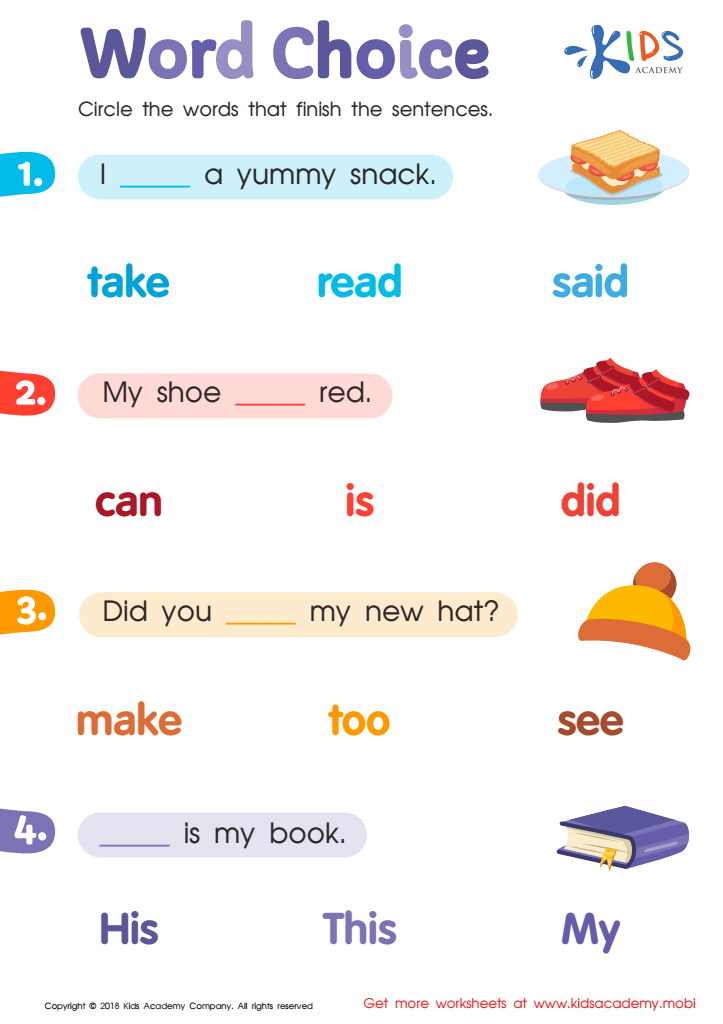
Word Choice Worksheet
This worksheet can help your children become better readers. By now, you should have an idea of their reading level. Read the incomplete sentences aloud and point to the missing piece. Have your students pick the correct word they think best fits the sentence out of the options given.
Word Choice Worksheet
Worksheet
Join Kids Academy for Free
Who is primarily going to use this learning content?





.jpg)
Contextual understanding of grammar is crucial for children aged 5-7 as it forms the foundation for effective communication and literacy skills. At this age, children are rapidly developing their language abilities, and understanding grammar in context helps them comprehend and produce sentences more accurately.
Firstly, teaching grammar in context allows children to see how language works in real-life situations, making learning more relevant and engaging. Rather than memorizing rules in isolation, they can relate grammar to their daily experiences, stories, and conversations. This enhances their comprehension and retention of language concepts.
Secondly, children who understand grammar contextually are better equipped to express their thoughts and feelings. They can navigate conversations and written communication more competently, fostering confidence in their abilities. This skill is integral not only for academic success but also for building interpersonal relationships.
Lastly, parents and teachers play a vital role in creating a rich linguistic environment. By encouraging discussions, storytelling, and collaborative writing, they support contextual learning and grammar understanding. This collaborative effort lays a solid foundation for lifelong learning and effective communication, ultimately contributing to children's overall cognitive development and academic achievements.








