Sentence structure Grammar Worksheets for Ages 5-7
3 filtered results
-
From - To
Unlock your child’s potential with our comprehensive Sentence Structure Grammar Worksheets for Ages 5-7! Tailored specifically for young learners, these printable worksheets help children grasp the fundamentals of sentence construction while enhancing their grammar skills. Featuring engaging exercises and colorful illustrations, our worksheets make learning fun and effective. Designed by educators, these resources aid in developing reading and writing proficiency, setting a strong foundation for future academic success. Whether for classroom use or at-home practice, ensure your child excels in their literacy journey with our expertly crafted sentence structure grammar worksheets. Start today and watch your child’s skills soar!
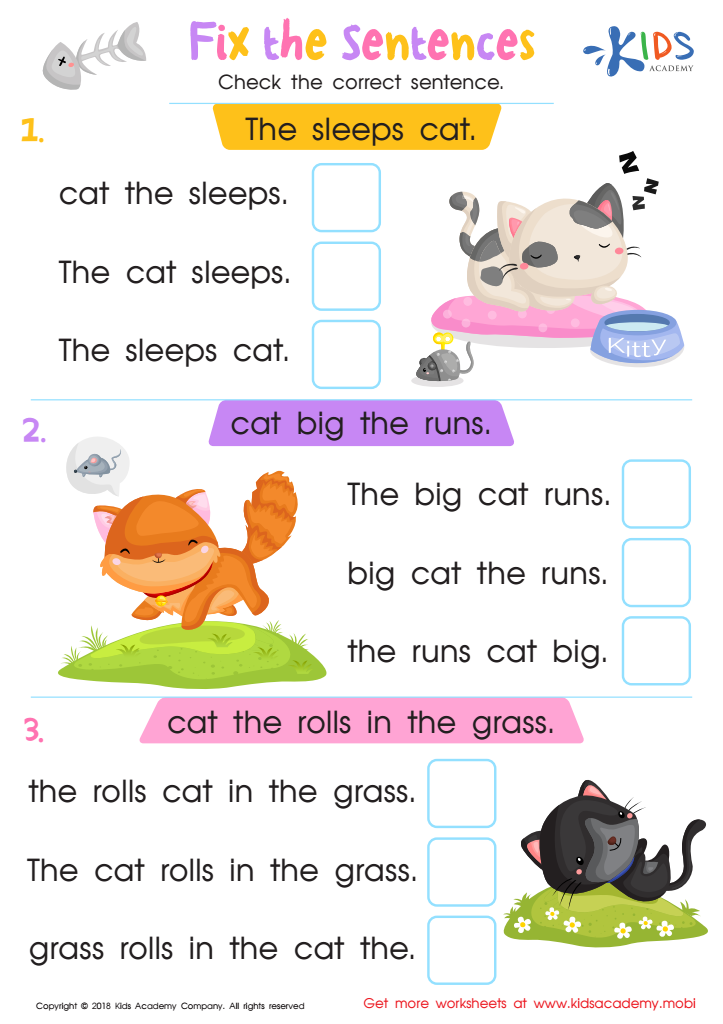
Fix the Sentences Worksheet
 Assign to My Students
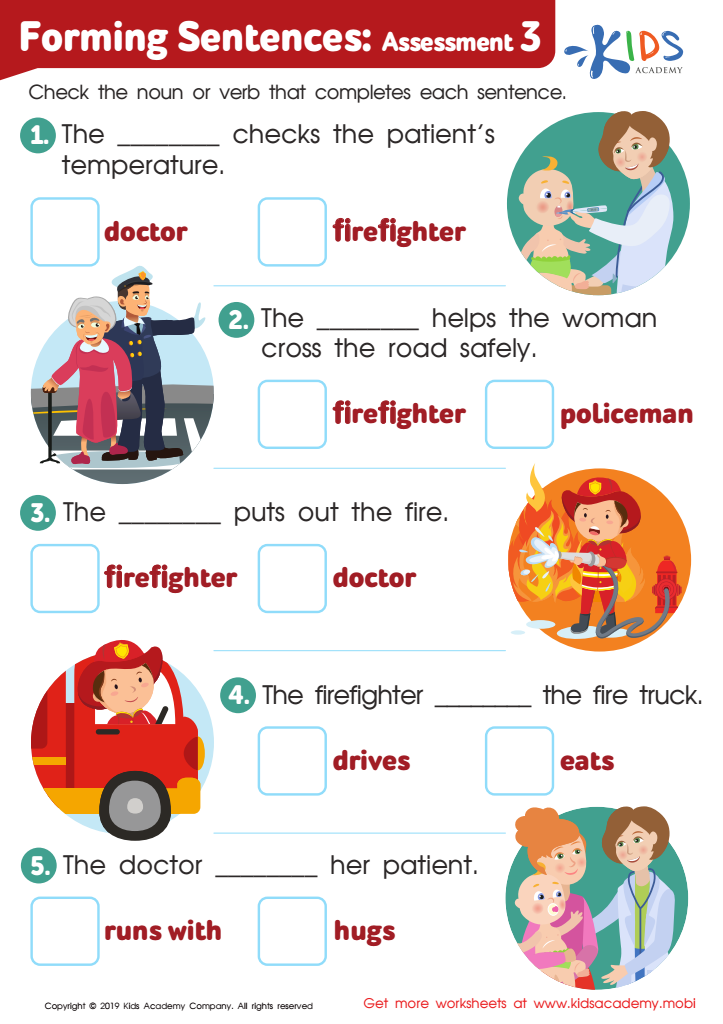
Forming Sentences: Assessment 3 Worksheet
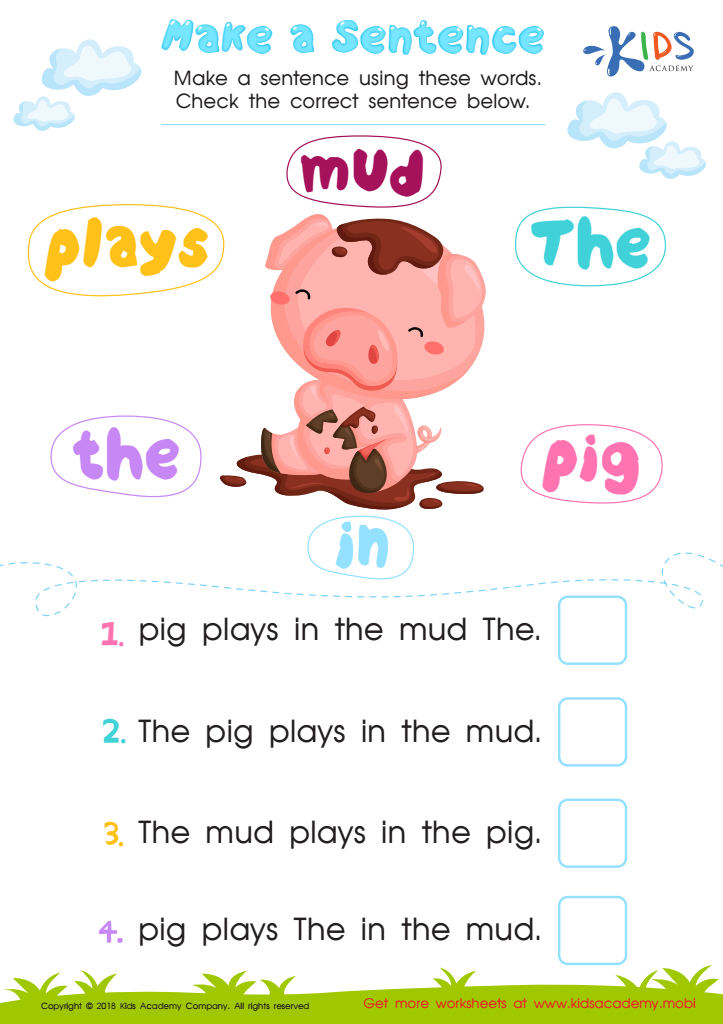
Assessment: Make a Sentence Worksheet


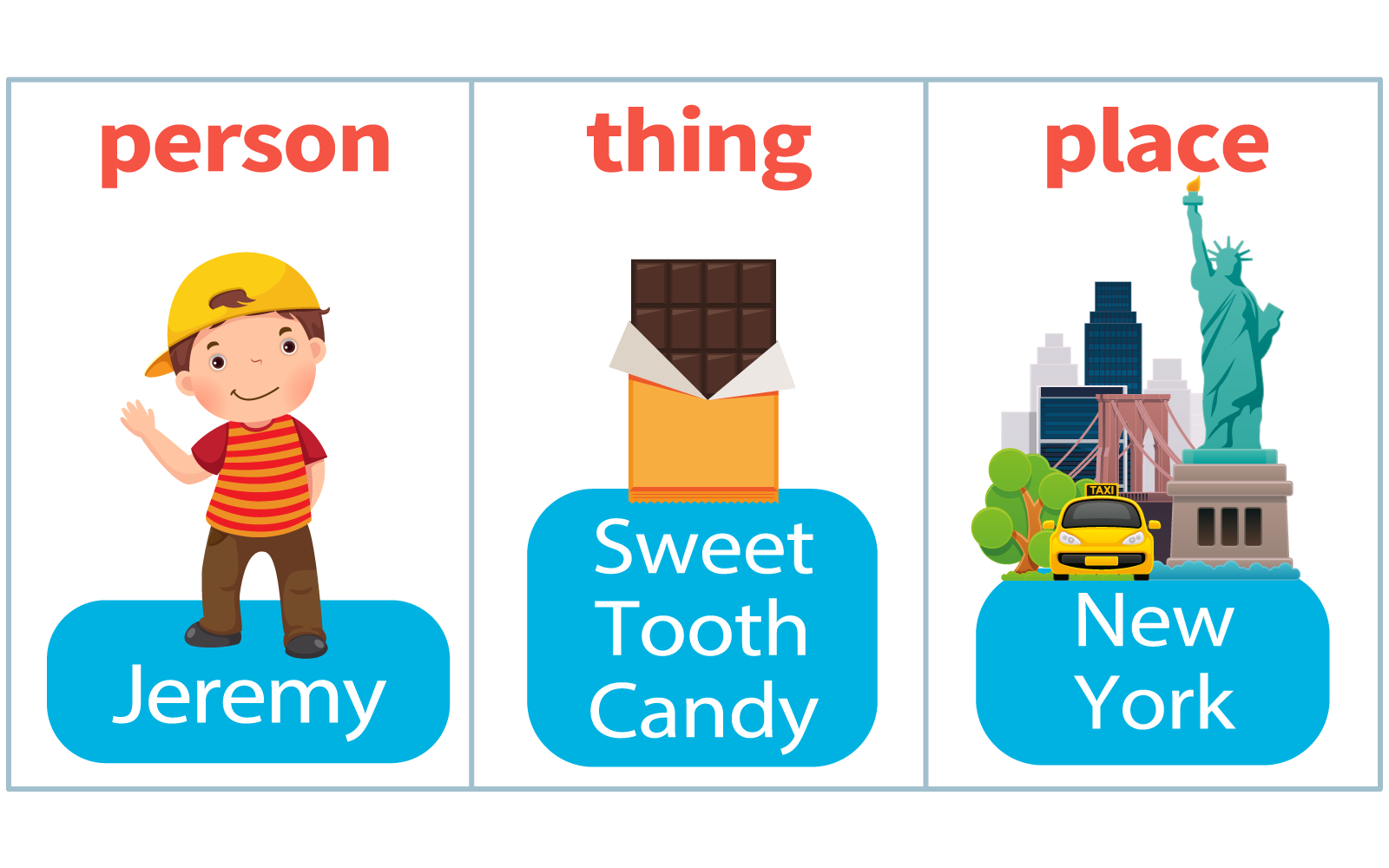


.jpg)


Understanding sentence structure and grammar at ages 5-7 is crucial for several key reasons. First, it lays the foundation for effective communication. Mastering basic sentence construction enables young children to articulate their thoughts clearly, making it easier for them to convey their needs, ideas, and stories.
Second, early grammar skills significantly contribute to academic success. Language development is closely linked to reading and writing abilities. When children grasp how sentences are formed, they can better understand reading materials and express their knowledge in writing, which is essential for overall academic performance.
Third, proficiency in sentence structure fosters cognitive development. As children learn to manipulate different parts of speech within a sentence, they enhance their understanding of logical sequences and cause-effect relationships, thereby boosting critical thinking skills.
Additionally, good grammar habits formed early can impact social interactions. Children who speak and write well can participate more confidently in conversations, collaborate more effectively with peers, and are more likely to develop strong interpersonal relationships.
Finally, consistent exposure to proper grammar at a young age helps in the long-term acquisition of language rules, reducing the likelihood of fossilizing incorrect usage patterns. Parents and teachers play a vital role in guiding children through these formative years, ensuring a robust linguistic foundation that supports lifelong learning and communication.








