Sound Association Alphabet Coloring Pages Worksheets for Ages 5-8
3 filtered results
-
From - To
Engage young learners with our "Sound Association Alphabet Coloring Pages Worksheets" tailored for ages 5-8. These vibrant, interactive pages not only teach the alphabet but also link each letter to its corresponding sound through fun illustrations and activities. Perfect for early learners, these worksheets enhance phonemic awareness, vocabulary development, and fine motor skills, making learning enjoyable and effective. With easy-to-follow instructions and captivating designs, children will love coloring while they learn. Parents and educators will appreciate the structured approach to helping kids connect letters with sounds, paving the way for strong reading and writing skills.
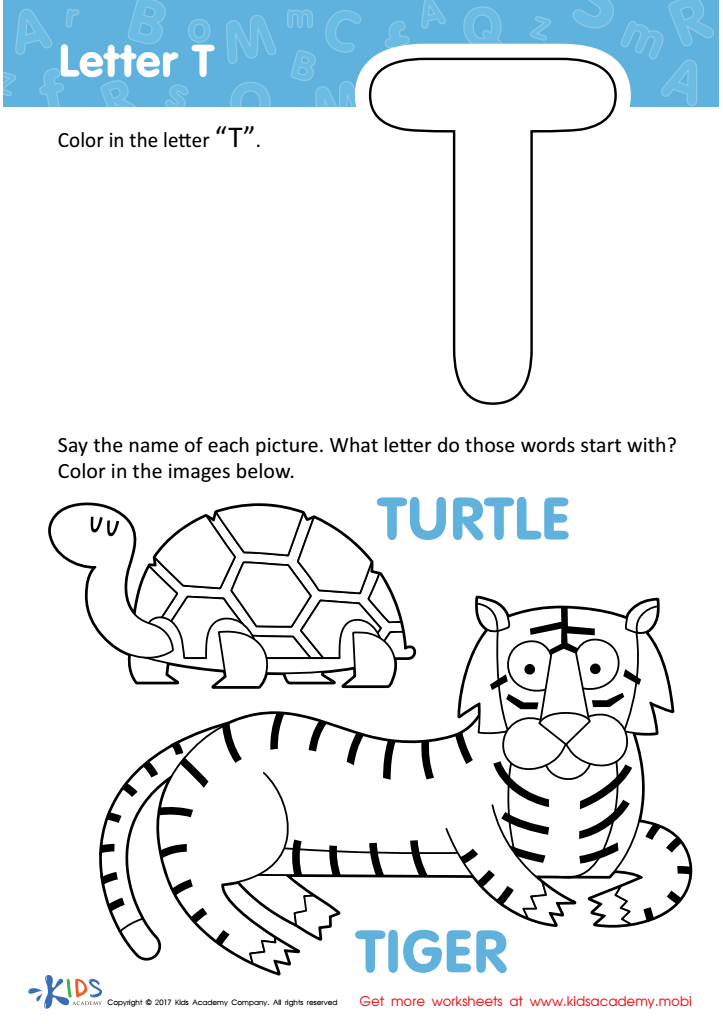
Letter T Coloring Sheet
 Assign to My Students
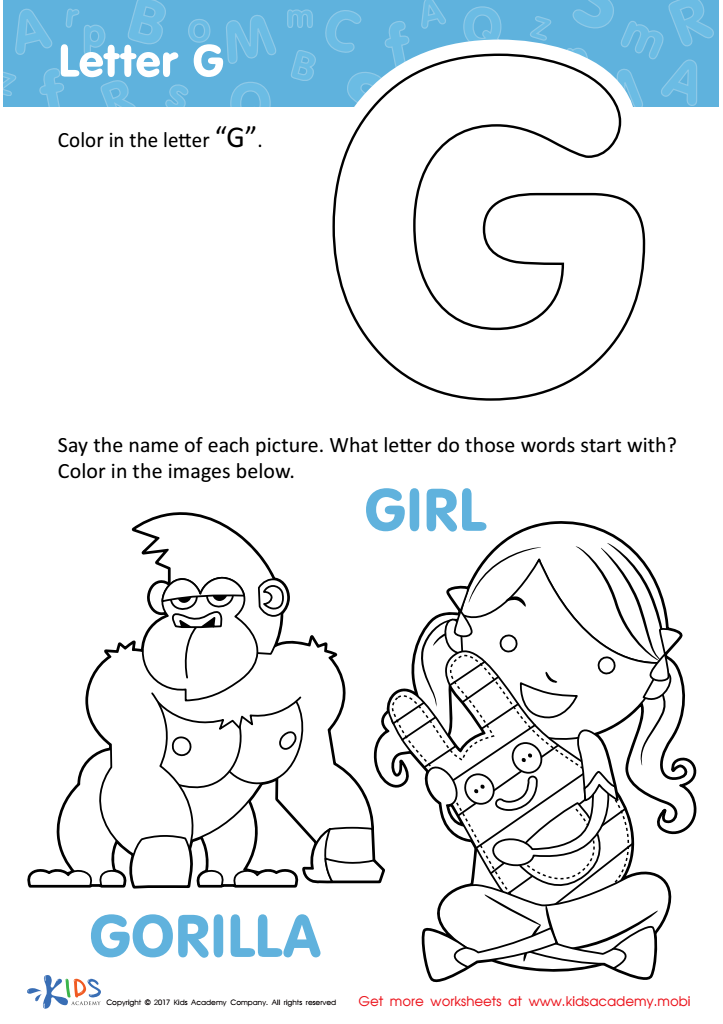
Letter G Coloring Sheet
Assign to My Students
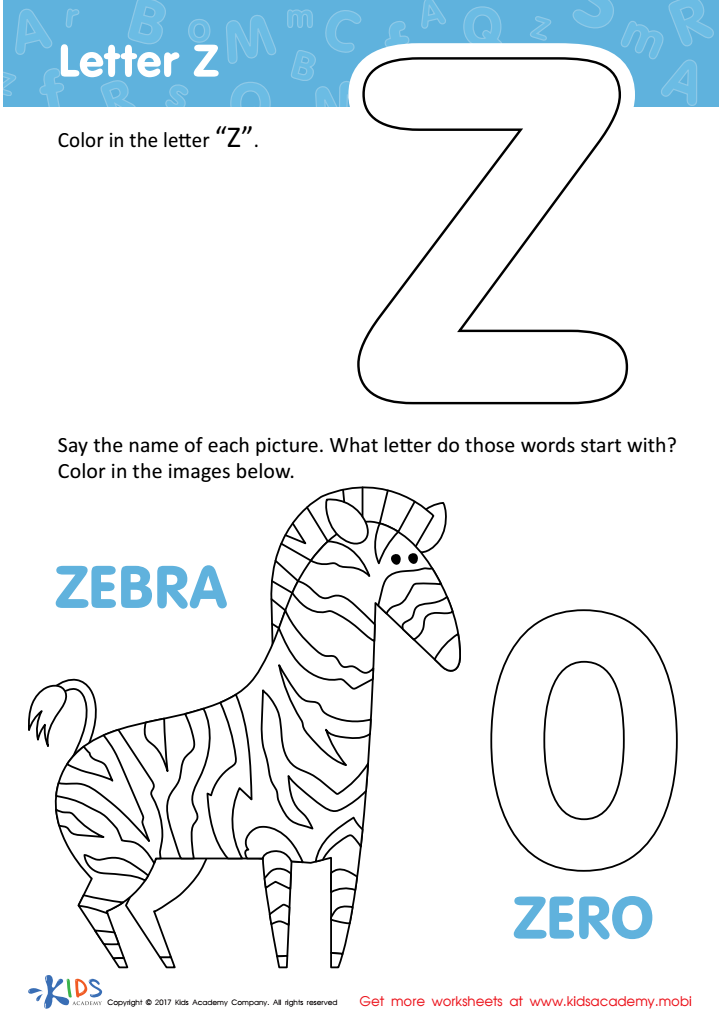
Letter Z Coloring Sheet
Assign to My Students





Sound Association Alphabet Coloring Pages mark a remarkable educational tool that benefits children aged 5-8 in multiple ways, making it essential for parents and teachers to incorporate them into early literacy development. These pages offer a fun and engaging medium for young learners to connect alphabet letters with corresponding sounds, fostering phonemic awareness, which is critical for reading and spelling skills. Associating each letter with a vivid illustration makes the learning process enjoyable and memorable, especially as children at this age exhibit strong visual and imaginative faculties.
Coloring activities themselves bolster fine motor skills, hand-eye coordination, and focus, preparing children for writing tasks. Moreover, as children engage with the content, they enhance their vocabulary, recognizing familiar and new words linked to each letter. This multi-sensory approach not only reinforces letter-sound relationships but also instills a love for learning.
For parents, these coloring pages provide a structured yet enjoyable way to support their child's education at home. Teachers, on the other hand, can integrate them seamlessly into lesson plans to create a balanced mix of instruction and play. In short, Sound Association Alphabet Coloring Pages offer a comprehensive educational experience essential for building strong literacy foundations, underscoring their relevance for both parents and educators.







