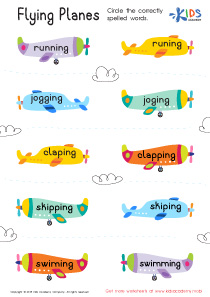
Improving reading skills Elementary Phonics Worksheets for Ages 5-8
3 filtered results
-
From - To
Discover our Elementary Phonics Worksheets designed to enhance reading skills in children ages 5-8. These expertly crafted worksheets focus on letter recognition, phonemic awareness, and sound blending. By engaging in these activities, young learners will develop a strong foundation in reading fluency and comprehension. Ideal for both classroom and at-home use, our resources provide essential practice to boost confidence and literacy skills. Make reading an enjoyable adventure with colorful, interactive exercises that cater to various learning styles. Start your child's reading journey today with our Elementary Phonics Worksheets and watch their skills blossom!
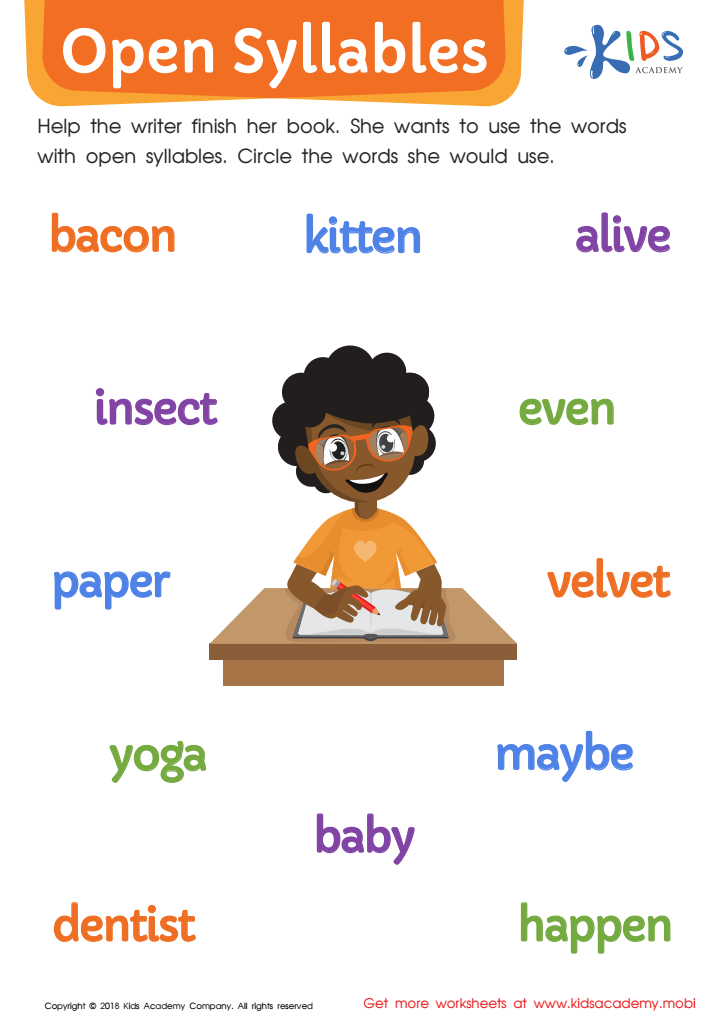
Open Syllables Worksheet
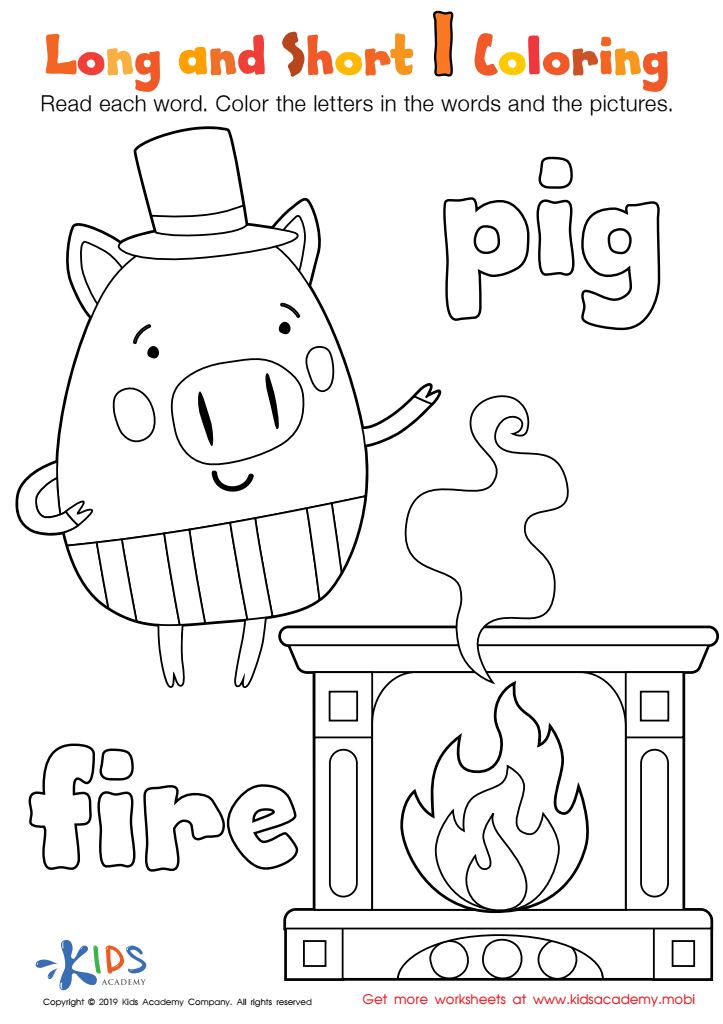
Long and Short I Worksheet
 Assign to My Students
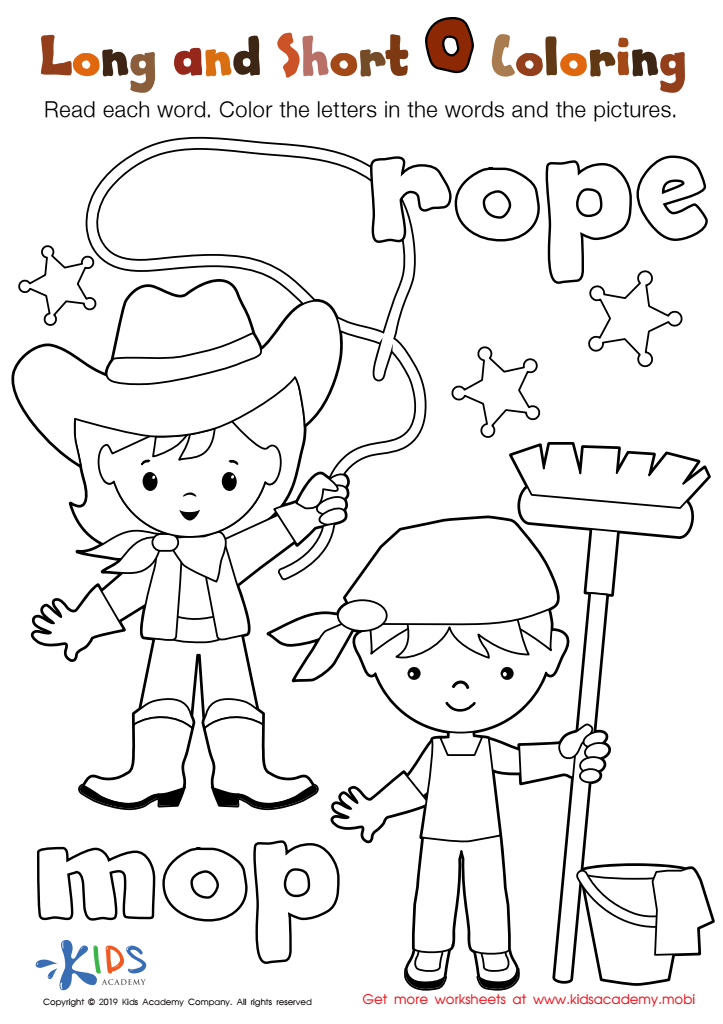
Long and Short O Worksheet
Assign to My Students




Improving reading skills through elementary phonics for children aged 5-8 is crucial for several key reasons. Firstly, phonics acts as the foundation of reading, allowing children to decode words by breaking them down into smaller sounds. This decoding ability is essential for independent reading and fluent comprehension, which are critical skills for all future learning.
At this developmental stage, children's brains are uniquely primed for language acquisition. Effective phonics instruction can take advantage of this window, helping young learners to map sounds to letters and letter combinations swiftly and accurately. This early proficiency in reading promotes self-confidence and motivation, fostering a love for learning and books.
Phonics also plays a significant role in vocabulary expansion. By understanding the building blocks of words, children can more easily recognize and comprehend new vocabulary, which in turn enhances their overall language skills. Additionally, kids with strong phonics foundations are better equipped to achieve in other academic areas, as reading is integral to knowledge acquisition across subjects like science, mathematics, and social studies.
Lastly, early intervention in reading skills minimizes the risk of future academic difficulties. Struggles with reading can lead to frustration, lower self-esteem, and reduced academic performance, whereas strong reading skills provide a solid groundwork for lifelong learning and success. Therefore, parents and teachers should prioritize and care deeply about developing robust phonics skills in young learners.