
Alphabet Learning Alphabet Worksheets for Ages 5-8
5 filtered results
Difficulty Level
Grade
Age
-
From - To
Subject
Activity
Standards
Discover the joy of learning with our engaging Alphabet Learning Worksheets designed specifically for children aged 5 to 8. Our carefully crafted worksheets help young learners recognize letters, improve their phonetic skills, and develop early writing abilities. Each printable worksheet features colorful illustrations and interactive activities that encourage kiddos to explore the world of letters in a fun and stimulating way. Whether practicing letter formation, identifying beginning sounds, or completing letter-related games, our resources create a solid foundation for literacy development. Embrace the journey of reading with our engaging activities, unlocking a world of imagination and learning for your child!
Favorites
With answer key
Interactive
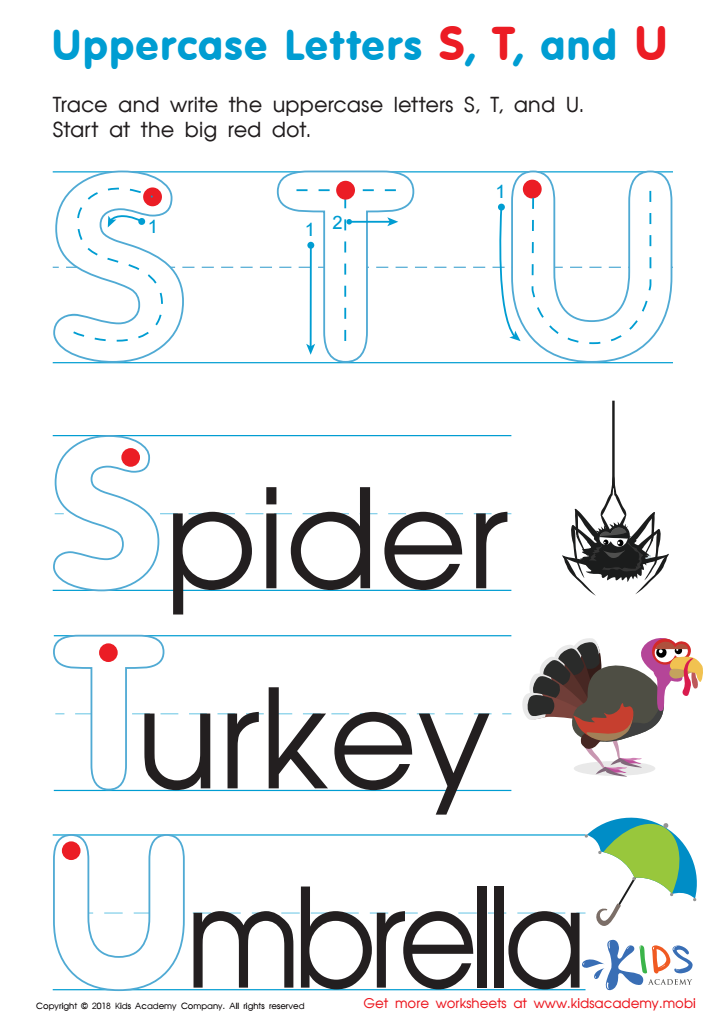
Uppercase Letters S, T, and U Worksheet
Help your kids learn to write upper-case letters with this fun tracing sheet. Start at the big red dot for each letter: S, T, and U. Show them the pictures and ask what letter each word starts with. Guide their hand and watch them learn!
Uppercase Letters S, T, and U Worksheet
Worksheet
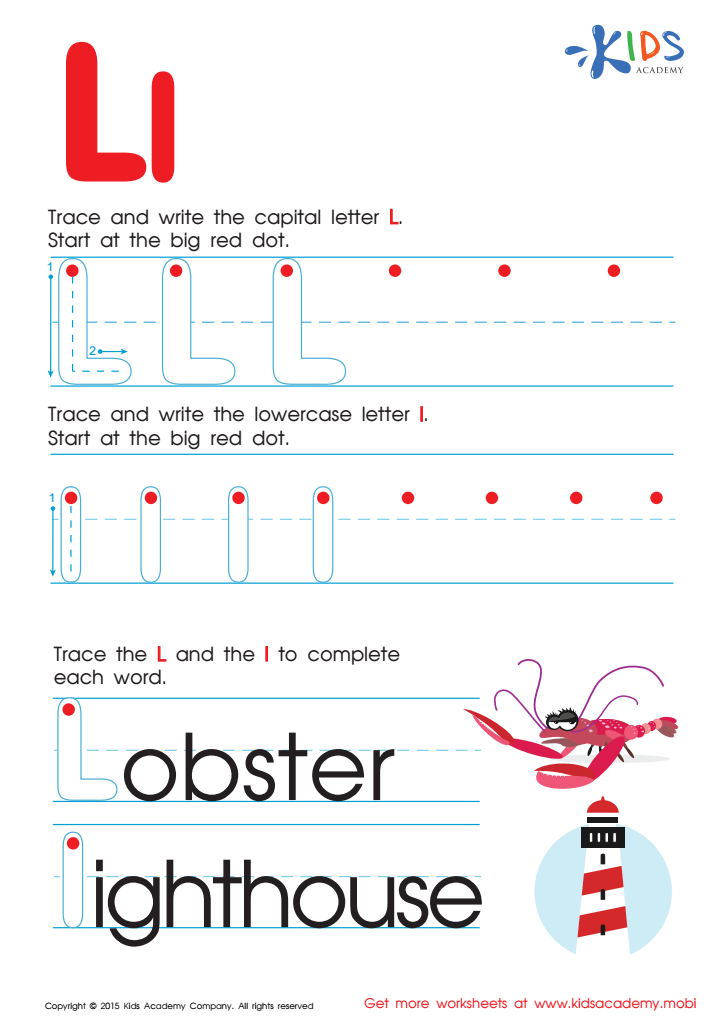
Letter L Tracing Page
Trace uppercase and lowercase letters to practice writing. Pay attention to the lowercase letters, like the "L", that are not as tall as an uppercase "I" or as short as a lowercase "i". Words like "lobster" and "lighthouse" are waiting to be completed. Enjoy!
Letter L Tracing Page
Worksheet
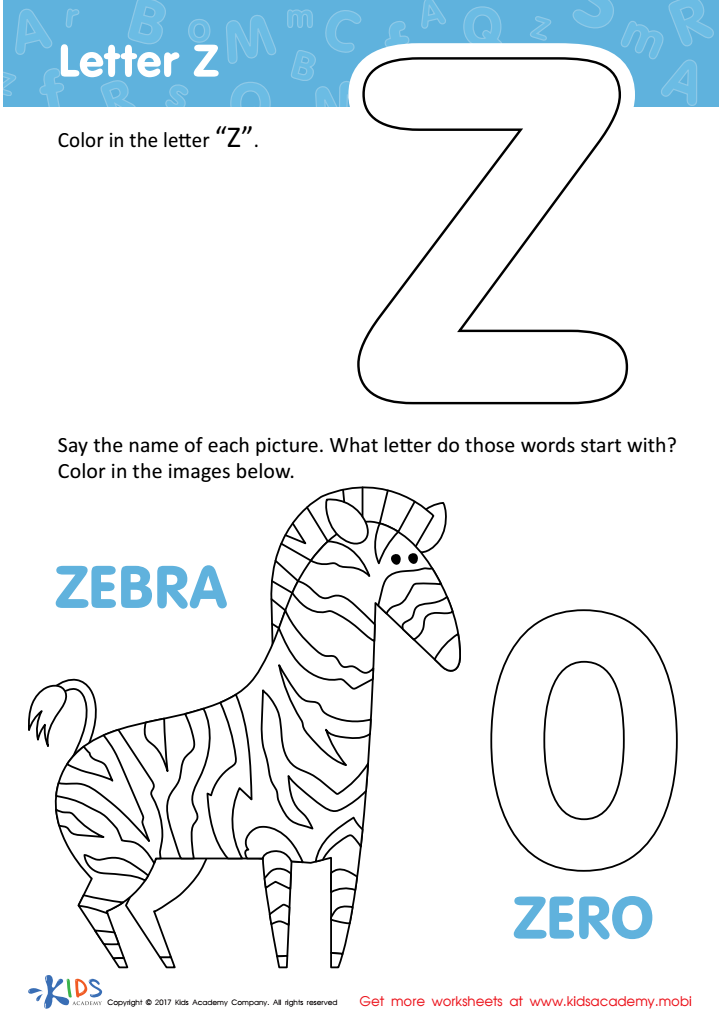
Letter Z Coloring Sheet
This coloring page featuring the letter "Z" is perfect for your child to practice letter recognition! Help them learn the unique sound it makes as they color. It'll be a fun and easy activity they won't have trouble with!
Download (PDF)
 Assign to My Students
Assign to My Students
Letter Z Coloring Sheet
Worksheet
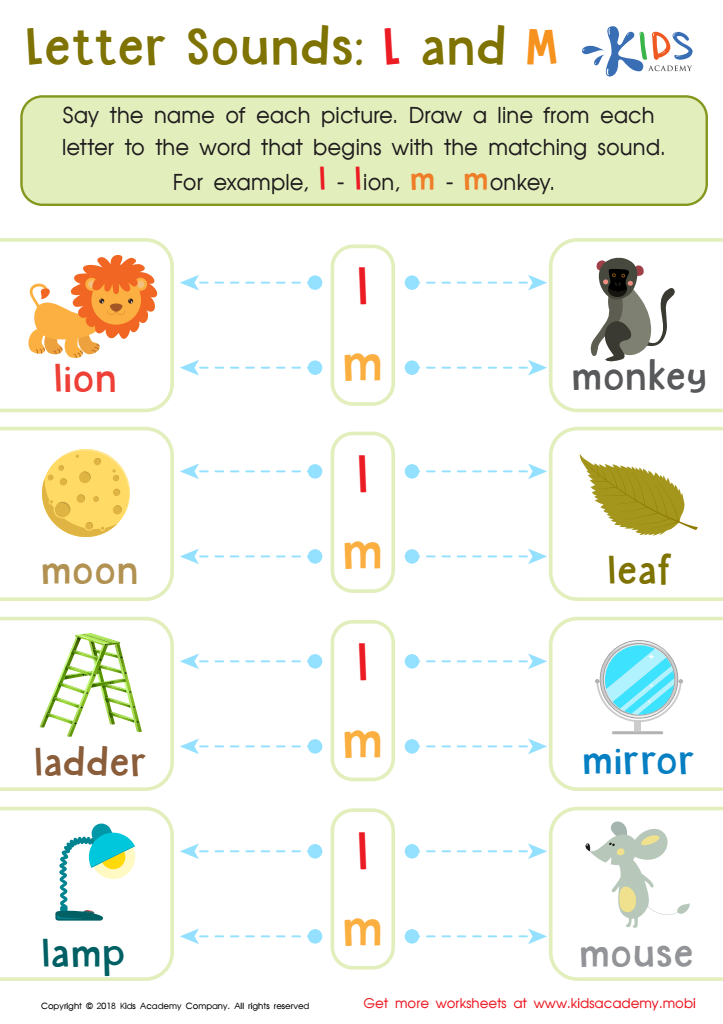
Letter l and M Sounds Worksheet
Our Kids Academy phonics practice pages give clear instructions and captivating pictures to pique children's interest. This fun worksheet helps kids identify a picture, then match its beginning sound. Listen and say each word - does it start with "L" or "M"? Trace the dotted line from the letter to the correct match and listen closely to the sound it makes.
Letter l and M Sounds Worksheet
Worksheet
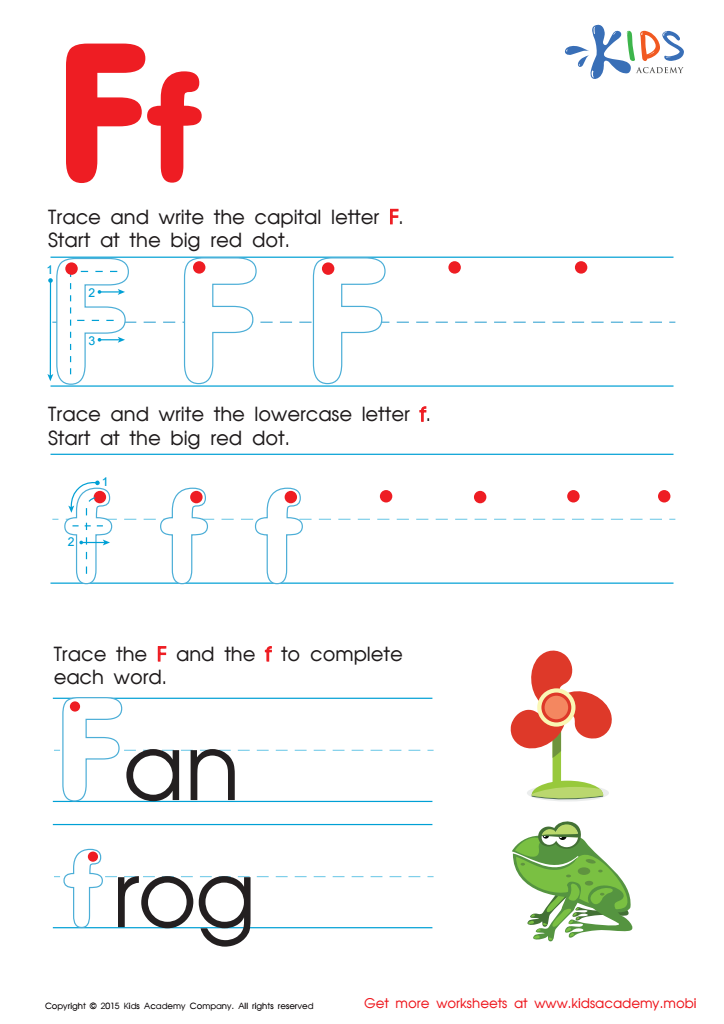
Letter F Tracing Page
Trace "F" with your pencil! Start at the red dot and draw lines — it's fun! Check it out — it looks great! Keep practicing to make it even better. Then, try completing words. Help out the broken fan and funny frog! Get free alphabet worksheets and activities for your kids. Come see our new tracing pages!
Letter F Tracing Page
Worksheet
Join Kids Academy for Free
Who is primarily going to use this learning content?







Alphabet learning is a critical foundation for literacy development in children aged 5-8. Mastering the alphabet equips young learners with essential skills that will support their reading and writing journeys. For parents and teachers, fostering phonemic awareness—the ability to recognize, manipulate, and utilize the individual sounds that make up words—is vital in building children's confidence and fluency in reading.
Understanding the alphabet also promotes cognitive growth, offering children tools for problem-solving and critical thinking. Engaging with letters and sounds can ignite a love for reading and learning, which can lead to improved academic performance across subjects. Moreover, early familiarity with the alphabet facilitates language development, enabling children to express themselves more clearly.
Parent and teacher involvement in alphabet learning isn’t just about dictation or rote memorization. It extends to interactive activities, games, songs, and storytelling that make learning enjoyable and effective. This support nurtures a robust environment where children can explore language fully.
Additionally, strong foundational skills in language can enhance a child’s social and emotional development, inspiring them to communicate better with peers. By prioritizing alphabet learning, parents and teachers can significantly influence their children's long-term educational success and personal growth.







