Rhyme recognition Alphabet Worksheets for Ages 5-8
5 filtered results
-
From - To
Discover our engaging Rhyme Recognition Alphabet Worksheets, designed specifically for children aged 5-8. These fun and educational printables help young learners explore the alphabet while boosting their phonemic awareness and reading skills. Each worksheet provides entertaining exercises that encourage kids to match letters and sounds through rhyming words, fostering crucial early literacy development. Ideal for classroom use or at-home practice, our worksheets transform learning into an enjoyable adventure, promoting confidence and a love for reading. Empower your child's education with these expertly crafted resources, and watch as they master the magic of rhymes and letters.
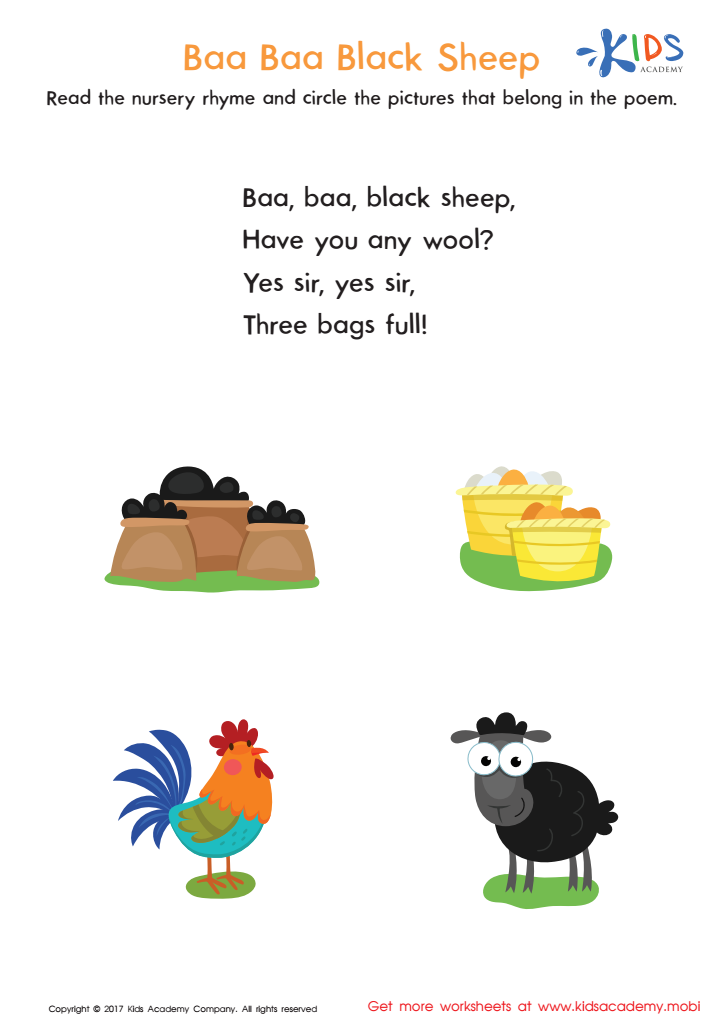
Baa Baa Black Sheep Printable
 Assign to My Students
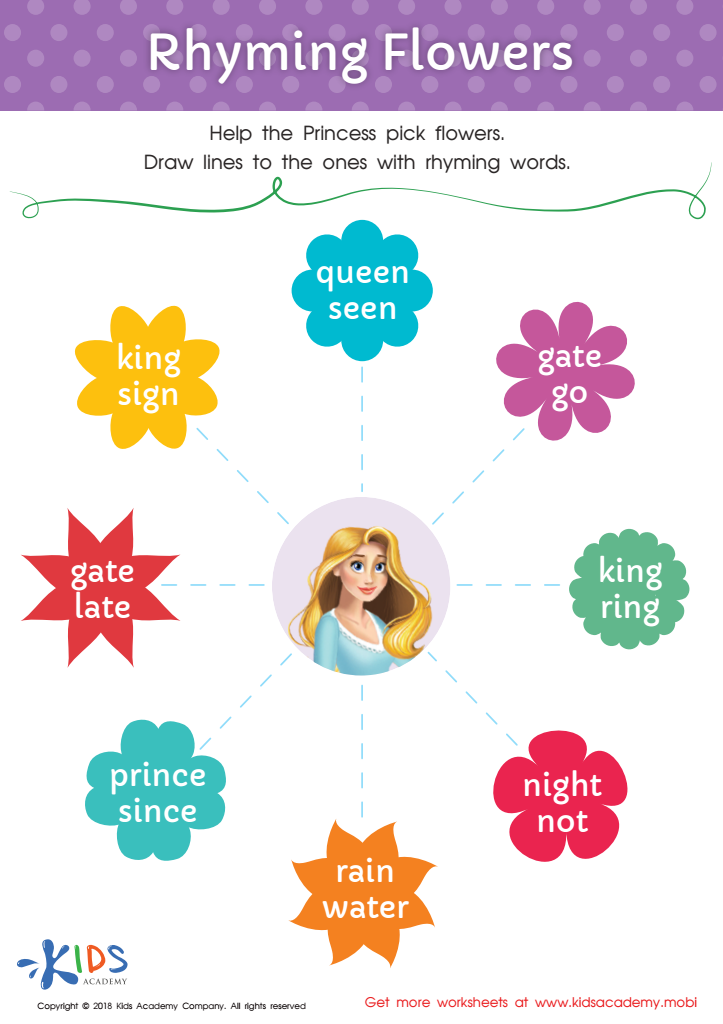
Rhyming Flowers Worksheet
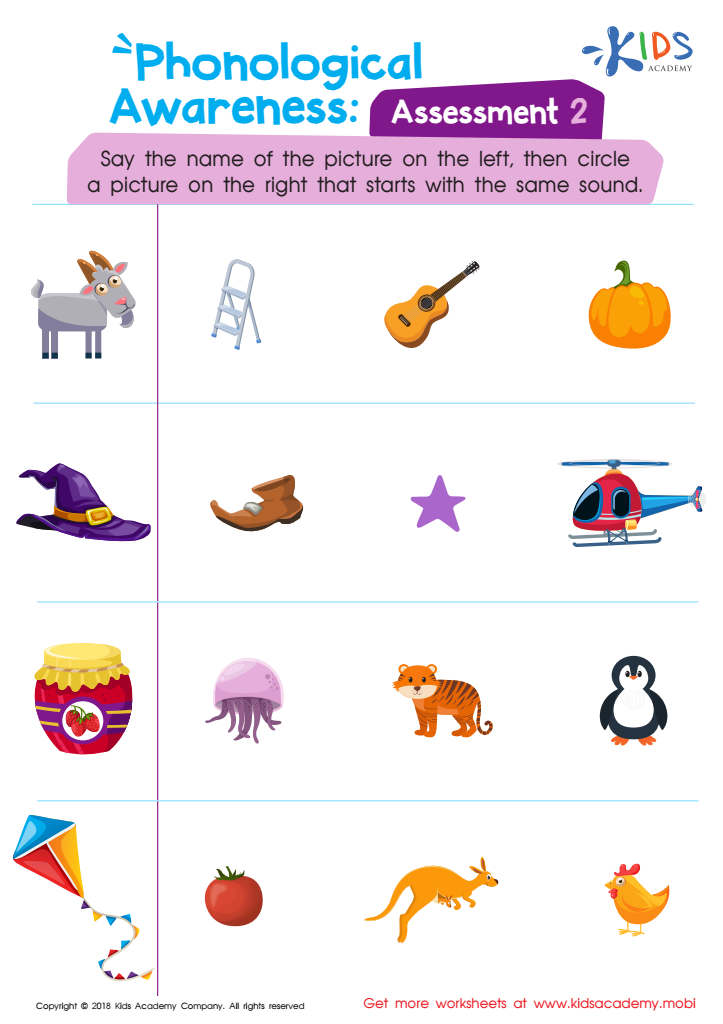
Phonological Awareness: Assessment 2 Worksheet
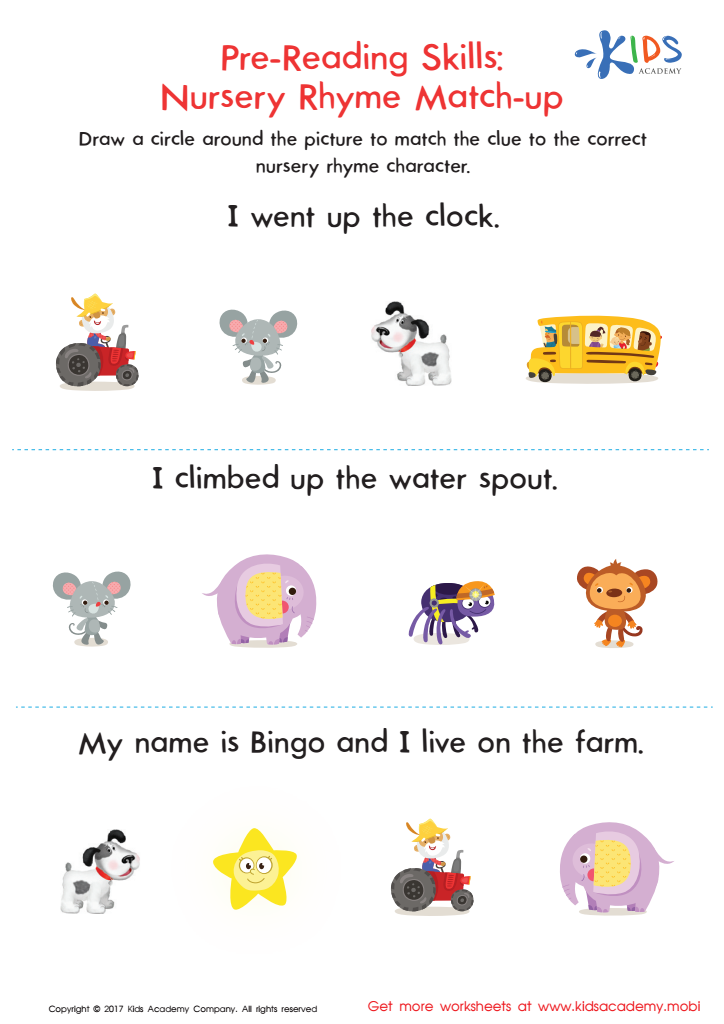
Nursery Rhyme Match–Up Worksheet
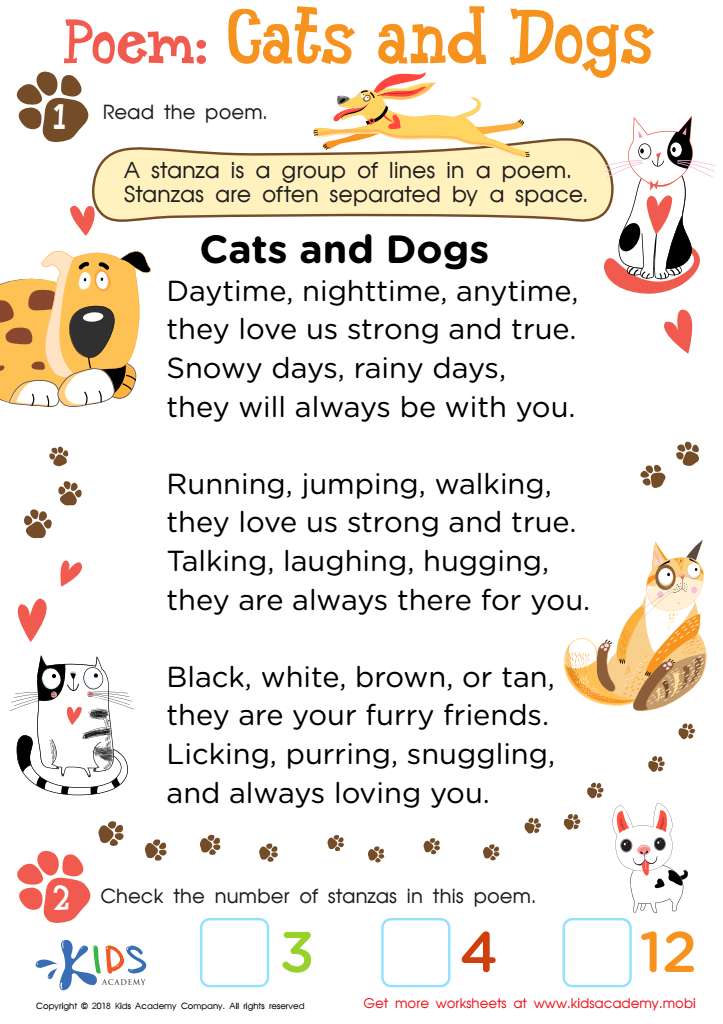
Poem: Cats and Dogs Worksheet







Rhyme recognition and learning the alphabet are foundational elements in early childhood education, crucial for children ages 5-8. Parents and teachers should prioritize these skills as they significantly contribute to the development of phonemic awareness, which is the ability to hear, identify, and manipulate sounds in spoken words. Phonemic awareness is one of the strongest predictors of early reading success. When children engage in rhyming activities, they learn to recognize patterns within words, which aids in decoding and spelling.
Moreover, rhymes and alphabet knowledge enhance vocabulary acquisition. Children learn new words in a fun, memorable way, expanding their language and comprehension skills. Rhyming also boosts auditory discrimination and strengthens memory, which are essential for efficient learning. Songs, poems, and games that emphasize rhymes and letter recognition make the learning process enjoyable, encouraging a love for reading.
Incorporating rhymes and the alphabet into early education programs helps build a solid literacy foundation. As children become more proficient in these areas, their confidence and enthusiasm for learning grow, which carries over into other academic subjects. Therefore, parents and teachers should actively involve children in rhyme recognition and alphabet activities to foster long-term academic success and a lifelong love of learning.







