
Uppercase identification Alphabet Worksheets for Ages 5-8
5 filtered results
Difficulty Level
Grade
Age
-
From - To
Subject
Activity
Standards
Discover our engaging Uppercase Identification Alphabet Worksheets designed for children aged 5-8! These worksheets provide a fun and interactive way for young learners to recognize and distinguish uppercase letters. Each worksheet is thoughtfully crafted to enhance foundational literacy skills, making learning both enjoyable and effective. Your little ones will engage with colorful activities, including tracing, matching, and identifying uppercase letters in various contexts. Perfect for home or classroom use, these worksheets help boost confidence in letter recognition, setting the stage for future reading and writing success. Start your child’s literacy journey today with our user-friendly resources!
Favorites
With answer key
Interactive
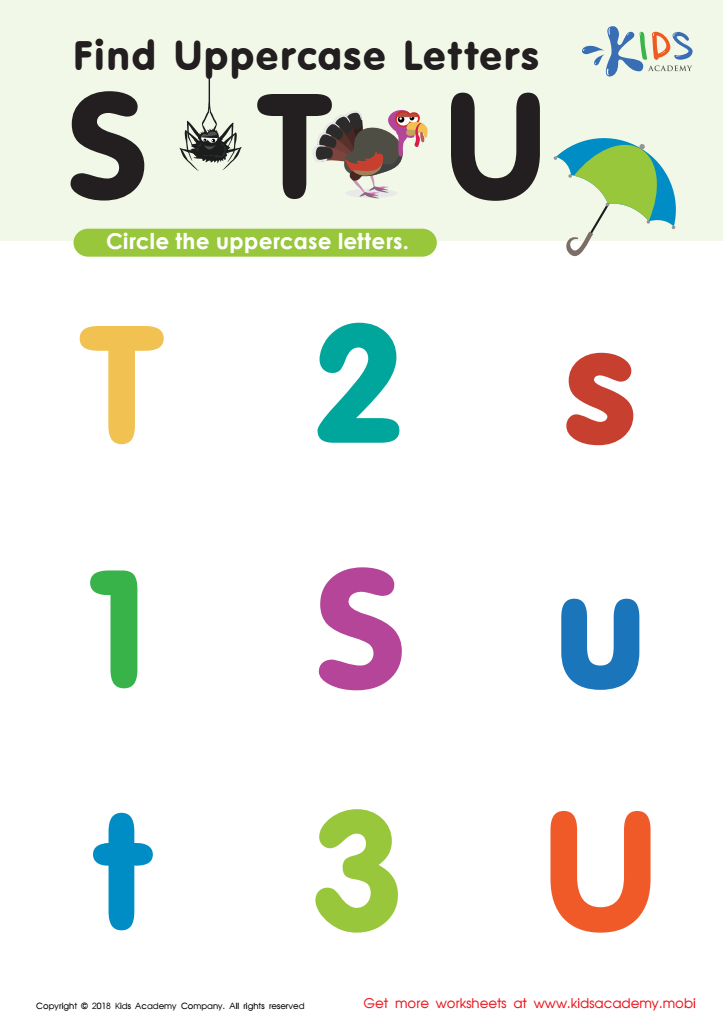
Find Uppercase Letters Worksheet
What level is your kid at now? Can they tell the difference between small and uppercase letters? Ask them to name words beginning with S, T and U, then help them find and circle the uppercase letters S, T and U in a mix of small letters, numbers and uppercase letters.
 Assign to My Students
Find Uppercase Letters Worksheet
Worksheet
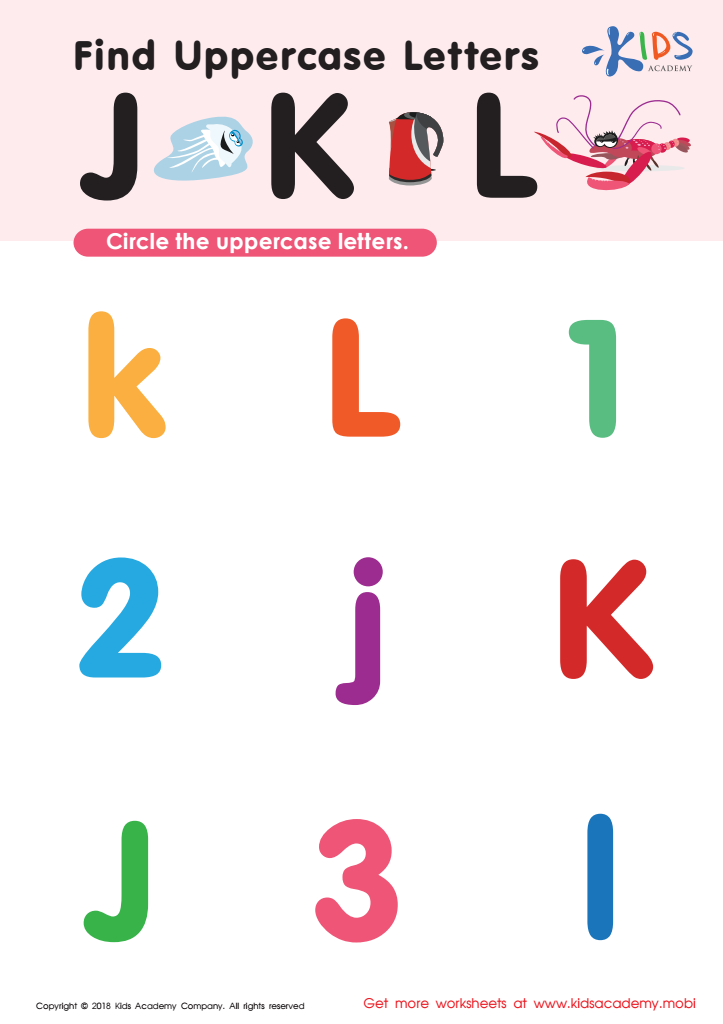
Find Uppercase Letters J, K, and L Worksheet
Search for the uppercase letters J, K, and L in this fun worksheet! Help your child identify the starting sound of each picture, then look for the letters. Keep an eye out for numbers that look like letters. Swim with the jellyfish and solve this delightful puzzle!
Find Uppercase Letters J, K, and L Worksheet
Worksheet
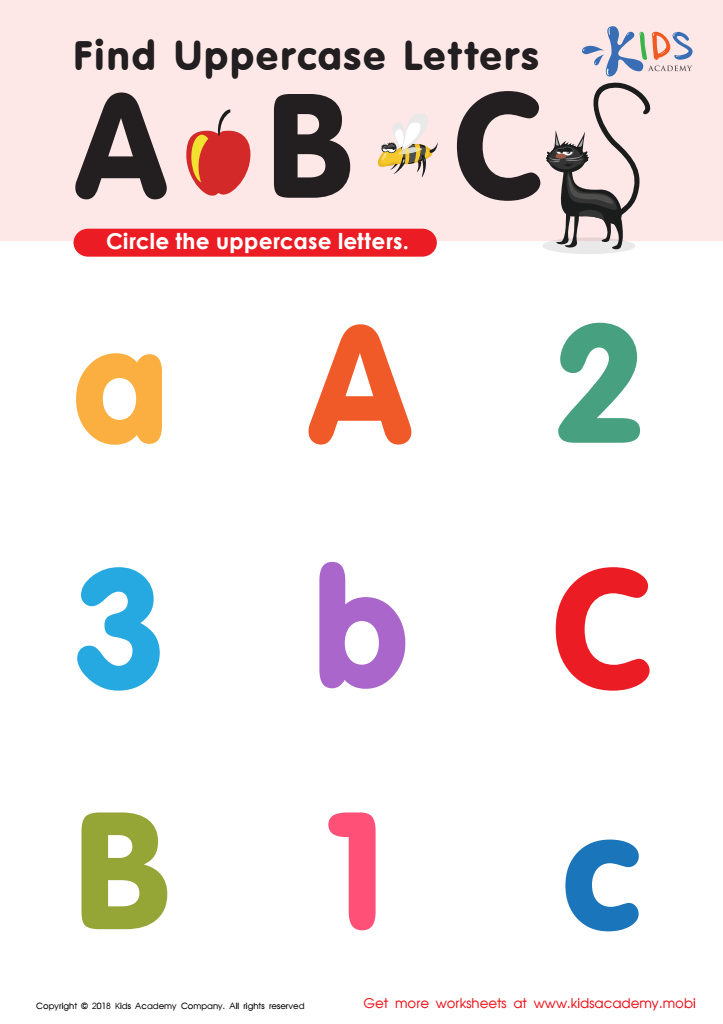
Find Uppercase Letters A, B, and C Worksheet
Check out this PDF worksheet and spot all the capital letters! Arranged as a puzzle, this exercise will test little learners to read and recognize uppercase letters and tell the difference between letters and numbers. To help them, use the pictures on top of the page to practice the sounds A, B and C make! 80 words.
Find Uppercase Letters A, B, and C Worksheet
Worksheet

Find Uppercase Letters V, W, X Worksheet
Ask your kids if they can spot the uppercase letters V, W and X hidden in the lowercase letters and numbers, then have them circle them. After that, ask them to give you examples of words beginning with those letters. This worksheet will help them get started.
Find Uppercase Letters V, W, X Worksheet
Worksheet
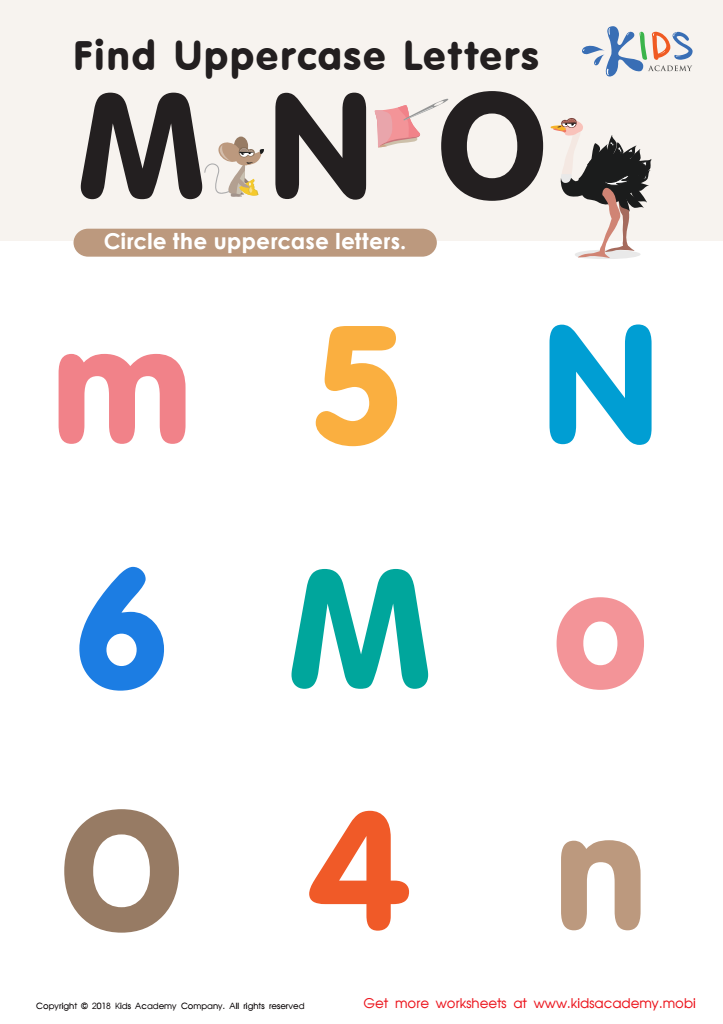
Find Uppercase Letters M, N, and O Worksheet
Kids love puzzles! This one scrambles up letters and numbers. Help your learner spot the capital letters, then search for the uppercase M, N, and O. For an extra challenge, cover the large letters and have kids circle the capitals using only beginning letter sounds.
Find Uppercase Letters M, N, and O Worksheet
Worksheet
Join Kids Academy for Free
Who is primarily going to use this learning content?






.jpg)

Identifying uppercase letters is a foundational skill that significantly impacts literacy development in children aged 5-8. Understanding uppercase letters is crucial for early reading and writing abilities, as these letters are often used to begin sentences, denote proper nouns, and highlight titles. Mastery of uppercase identification not only boosts children's confidence but also facilitates their participation in classroom activities, such as reading aloud and engaging in writing exercises.
For parents and teachers, fostering uppercase letter recognition provides children with the tools needed for effective communication. When children can quickly identify uppercase letters, they can decode and construct words with ease, laying the groundwork for spelling skills and vocabulary expansion.
Furthermore, recognizing uppercase letters can enhance a child's phonemic awareness. As children learn that letters correspond to sounds, they become more proficient in exploring language. By focusing on uppercase identification, parents and teachers can create engaging and developmentally appropriate learning experiences, from games to storytelling.
Overall, supporting uppercase letter recognition in early learners not only advances their reading skills but also instills a love for literacy that can inspire lifelong learning. Through strategic encouragement and practice, caregivers play a crucial role in shaping capable readers and writers.







