Visual discrimination Alphabet Worksheets for Ages 5-8
5 filtered results
-
From - To
Enhance your child's learning with our Visual Discrimination Alphabet Worksheets designed specifically for ages 5-8. These engaging activities help young learners identify letters, distinguish similarities and differences, and boost their cognitive skills. Perfect for developing essential visual skills, our worksheets make alphabet learning fun and interactive. Kids will practice recognizing various letter forms and enhance their attention to detail through colorful illustrations and exciting exercises. Each worksheet promotes critical thinking while fostering a love for reading and writing. Empower your child’s educational journey today with our thoughtfully crafted resources that blend learning with play! Explore the full range now!
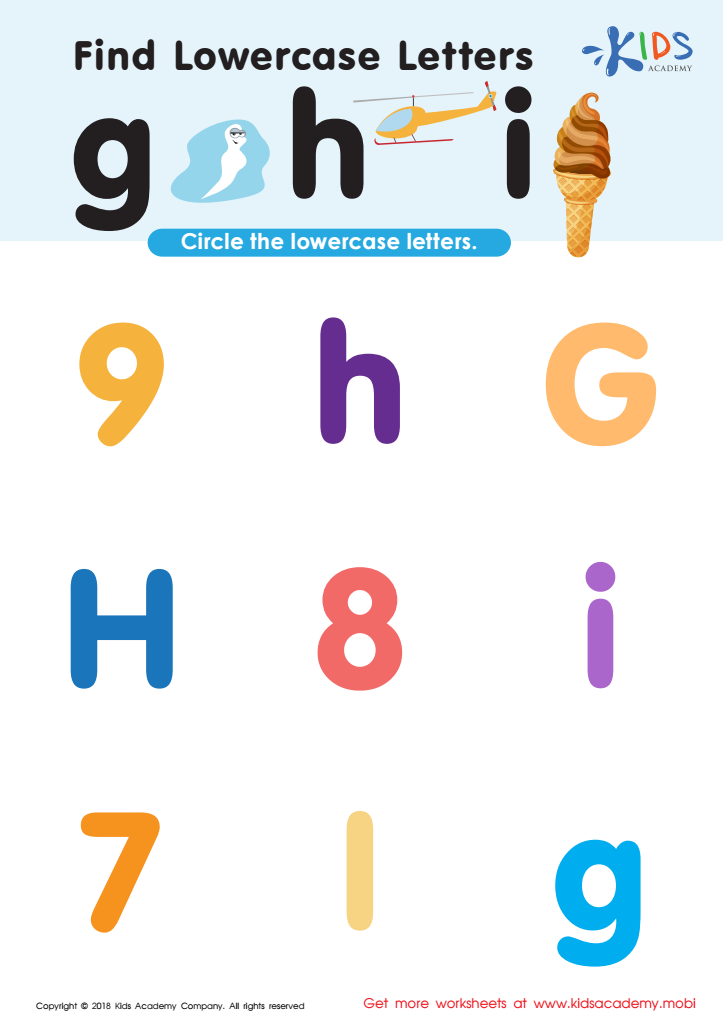
Find Lowercase Letters g h i Worksheet
 Assign to My Students
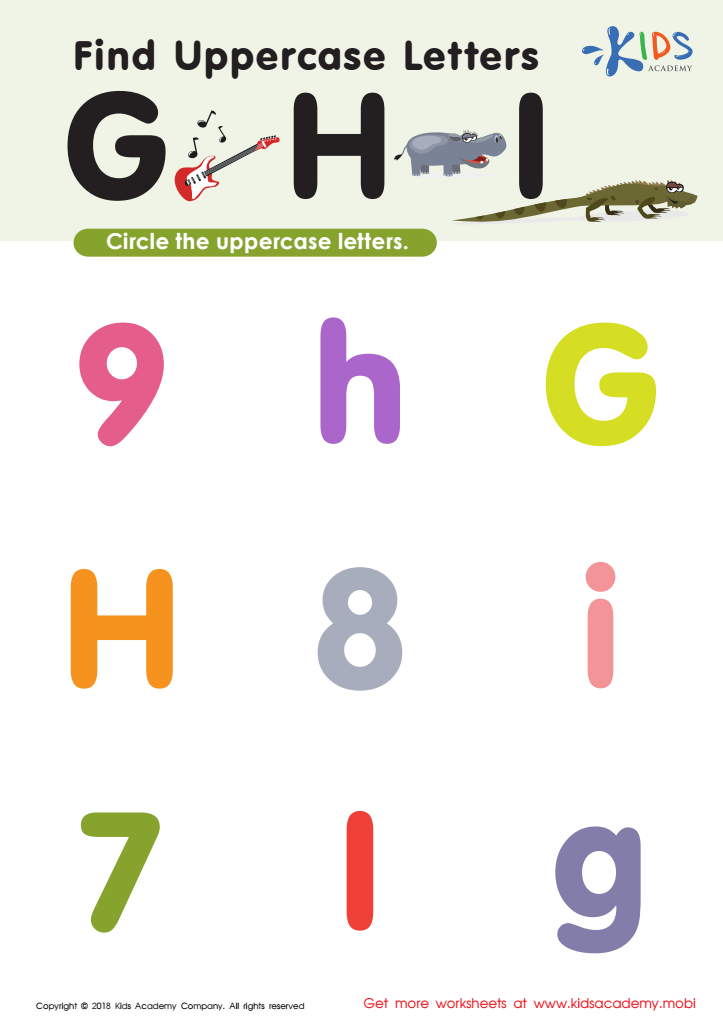
Find Uppercase Letters G, H, and I Worksheet
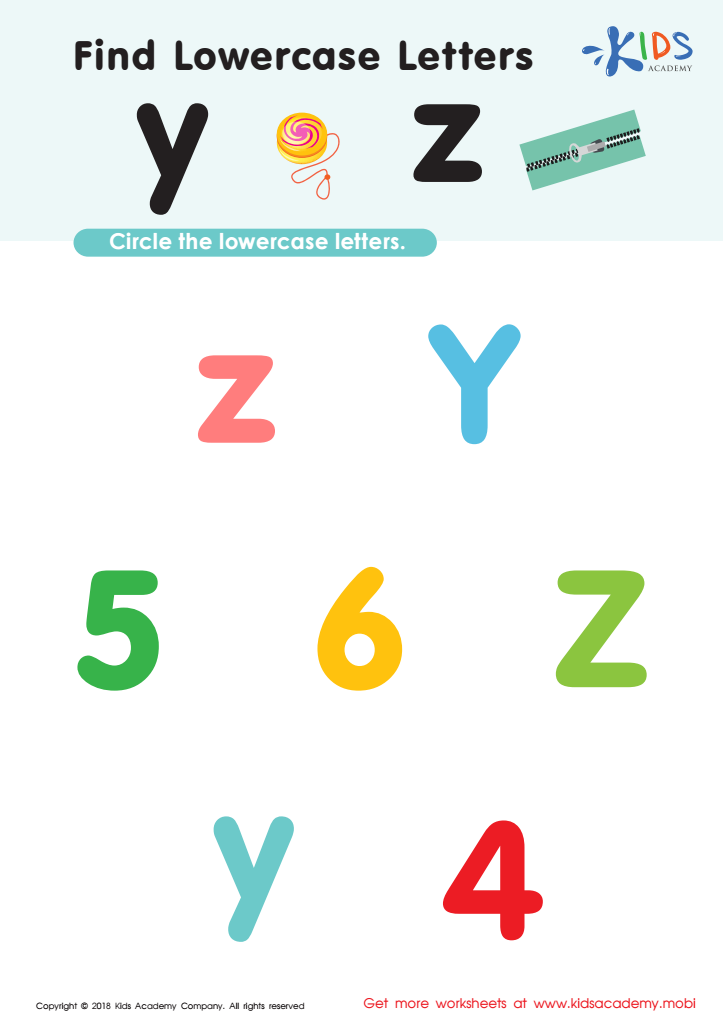
Find Lowercase Letters y z Worksheet
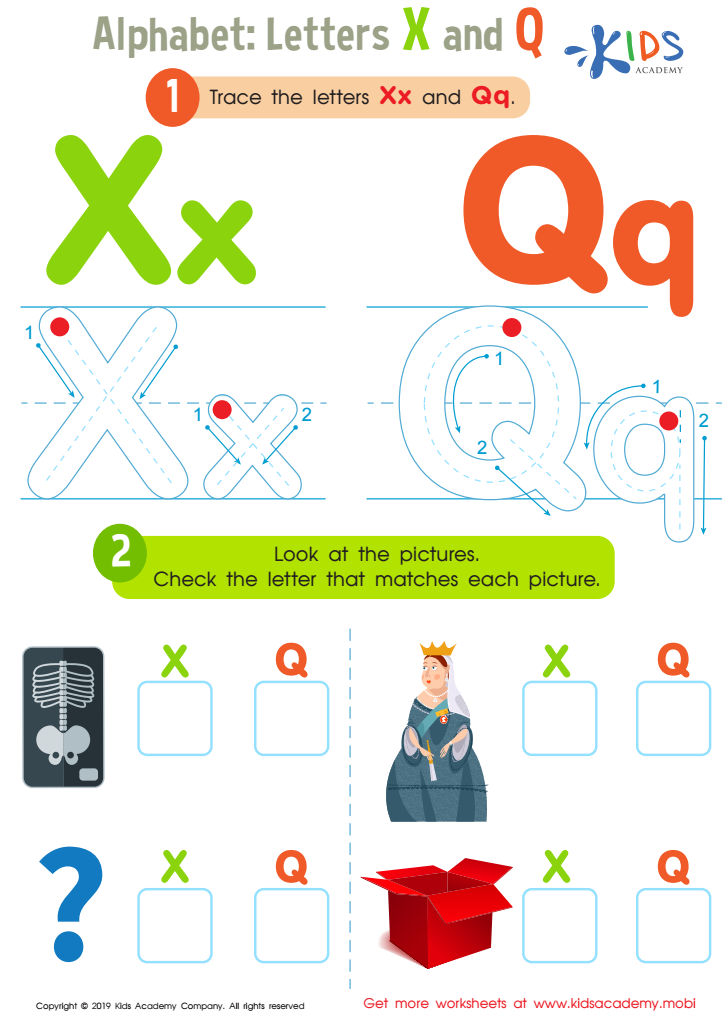
Letters X and Q Tracing Worksheet
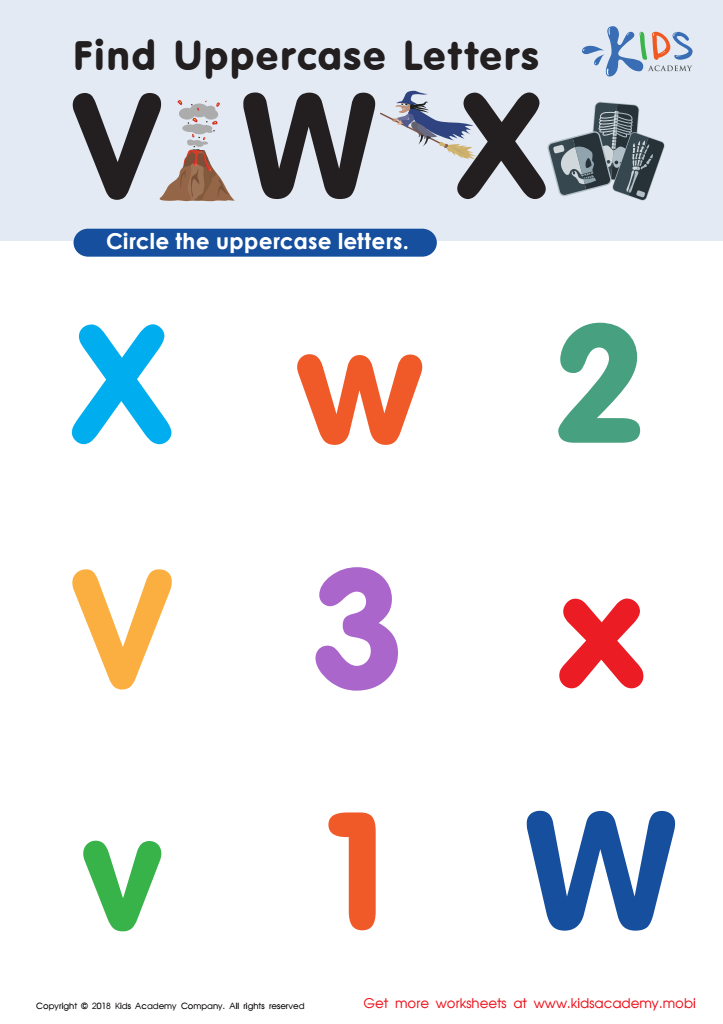
Find Uppercase Letters V, W, X Worksheet





.jpg)

Visual discrimination is a crucial skill that enables children to recognize and differentiate between similar letters or shapes. For children aged 5-8, developing this skill supports early literacy and lays a foundation for reading and writing success. Parents and teachers should care about visual discrimination because it directly impacts a child's ability to recognize words, which is essential for fluent reading.
Children who struggle with visual discrimination may confuse letters like 'b' and 'd' or 'p' and 'q', leading to difficulties in decoding text and comprehension. This can result in frustration, loss of confidence, and hesitance to engage with reading activities. By focusing on visual discrimination, parents and educators can employ targeted exercises and games to enhance children’s ability to recognize distinct shapes and letters, promoting positive learning experiences.
Moreover, strong visual discrimination skills also aid in other academic areas such as math, where distinguishing between similar symbols is essential. Thus, nurturing visual discrimination during these critical years not only fosters reading fluency but also strengthens overall cognitive abilities. Engaging children in active learning through fun activities encourages their interest and builds a solid armor against future academic challenges.







