
Uppercase identification Letter Recognition Worksheets for Ages 5-8
5 filtered results
Difficulty Level
Grade
Age
-
From - To
Subject
Activity
Standards
Enhance your child's alphabet mastery with our comprehensive "Uppercase Identification Letter Recognition Worksheets for Ages 5-8." These engaging and expertly crafted worksheets are designed to make learning uppercase letters a fun and interactive experience. Each activity helps solidify recognition skills while building confidence in young learners. Ideal for kids aged 5-8, our resources promote visual discrimination and alphabet familiarity crucial for early literacy. Perfect for both classroom use and at-home practice, these worksheets support children in identifying, tracing, and matching uppercase letters efficiently. Foster your child's love for letters and set a strong foundation for reading success today!
Favorites
With answer key
Interactive
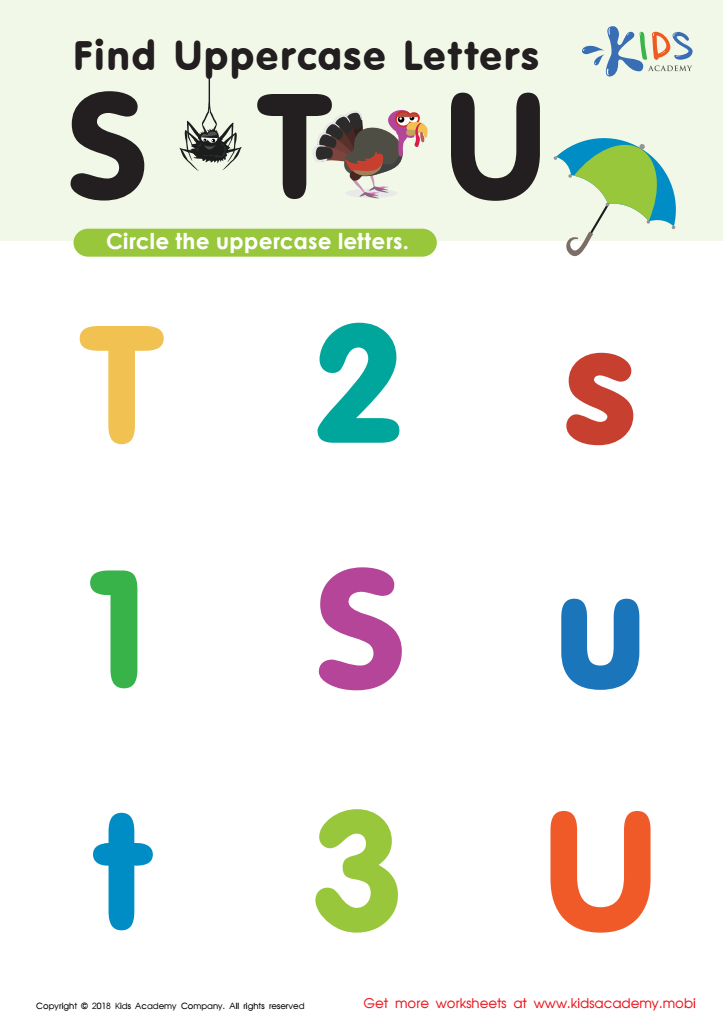
Find Uppercase Letters Worksheet
What level is your kid at now? Can they tell the difference between small and uppercase letters? Ask them to name words beginning with S, T and U, then help them find and circle the uppercase letters S, T and U in a mix of small letters, numbers and uppercase letters.
 Assign to My Students
Find Uppercase Letters Worksheet
Worksheet
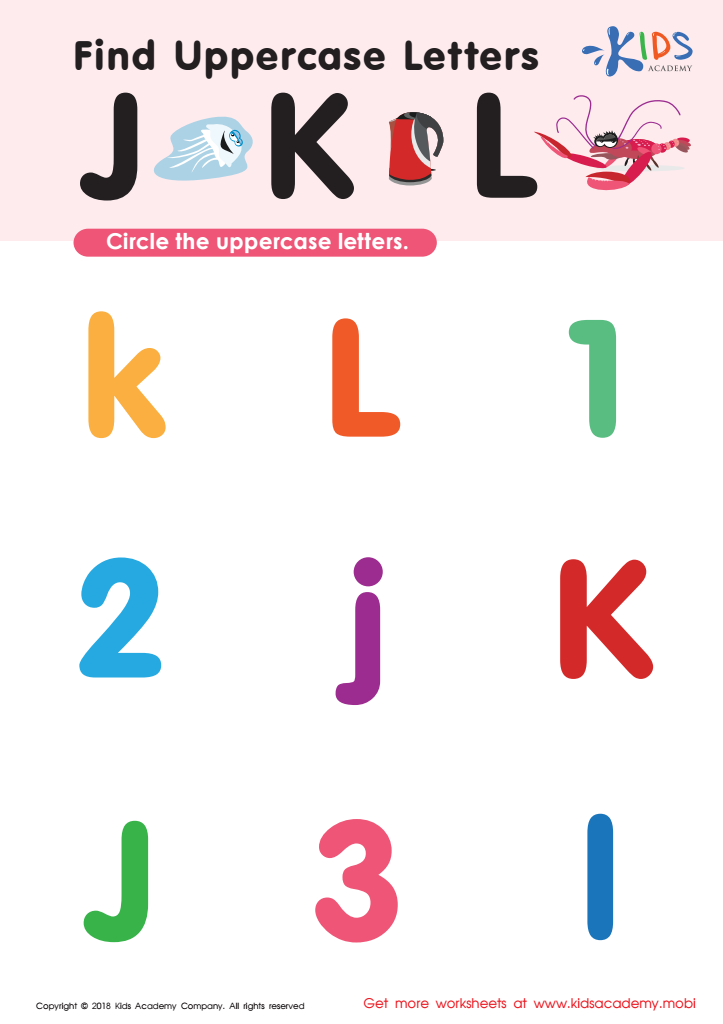
Find Uppercase Letters J, K, and L Worksheet
Search for the uppercase letters J, K, and L in this fun worksheet! Help your child identify the starting sound of each picture, then look for the letters. Keep an eye out for numbers that look like letters. Swim with the jellyfish and solve this delightful puzzle!
Find Uppercase Letters J, K, and L Worksheet
Worksheet

Find Uppercase Letters A, B, and C Worksheet
Check out this PDF worksheet and spot all the capital letters! Arranged as a puzzle, this exercise will test little learners to read and recognize uppercase letters and tell the difference between letters and numbers. To help them, use the pictures on top of the page to practice the sounds A, B and C make! 80 words.
Find Uppercase Letters A, B, and C Worksheet
Worksheet
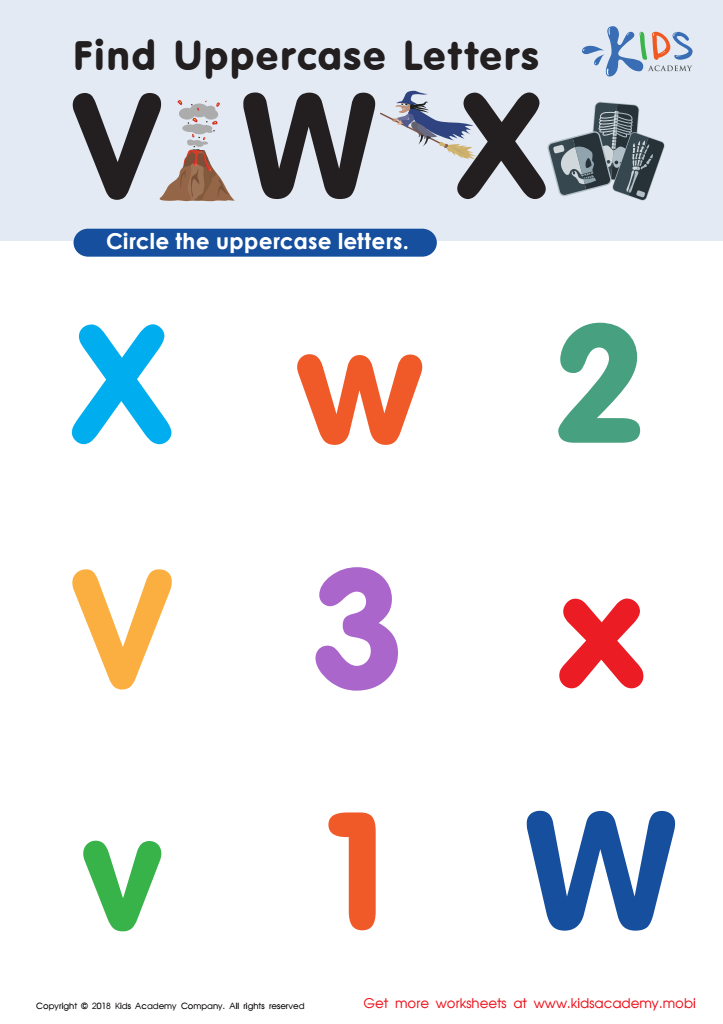
Find Uppercase Letters V, W, X Worksheet
Ask your kids if they can spot the uppercase letters V, W and X hidden in the lowercase letters and numbers, then have them circle them. After that, ask them to give you examples of words beginning with those letters. This worksheet will help them get started.
Find Uppercase Letters V, W, X Worksheet
Worksheet
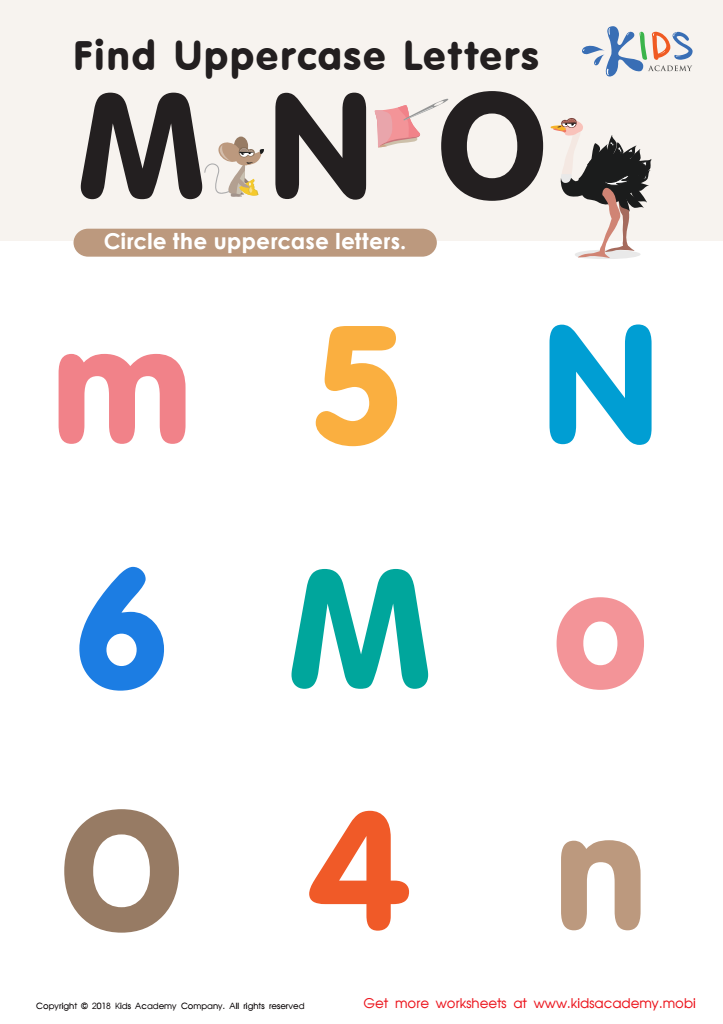
Find Uppercase Letters M, N, and O Worksheet
Kids love puzzles! This one scrambles up letters and numbers. Help your learner spot the capital letters, then search for the uppercase M, N, and O. For an extra challenge, cover the large letters and have kids circle the capitals using only beginning letter sounds.
Find Uppercase Letters M, N, and O Worksheet
Worksheet
Join Kids Academy for Free
Who is primarily going to use this learning content?








Uppercase letter identification is crucial for children aged 5-8 as it lays the foundation for literacy skills essential throughout their education. Recognizing uppercase letters enables children to read signs, labels, and books more effortlessly, boosting their confidence and catering to their curiosity about the written world around them. Sight-word recognition, an integral part of early reading, often relies on familiarization with capital letters first because they are generally more distinct and easier for young minds to grasp.
For parents, being proactive in letter recognition can transform daily activities into learning opportunities, nurturing a home environment rich in literacy. Teachers who emphasize uppercase letters in early grades create structured learning environments where children can build upon a solid base. This simplicity helps minimize confusion that may arise from learning both uppercase and lowercase letters simultaneously.
Moreover, mastery of uppercase letters facilitates learning essential skills such as writing and spelling. When teachers and parents collaborate, reinforcing these skills consistently, children thrive academically, broadening their communication capabilities.
By prioritizing uppercase letter recognition, parents and teachers contribute not just to literacy but to the overall cognitive development of children. This focus fosters skills like patience, memory, and attention to detail, fortifying their readiness for more advanced educational challenges.







