Vowel Recognition Letter Recognition Worksheets for Ages 5-8
5 filtered results
-
From - To
Boost your child's literacy skills with our engaging Vowel Recognition Letter Recognition Worksheets designed for ages 5-8! These interactive worksheets help young learners identify and understand vowels, the building blocks of reading and writing. Featuring colorful illustrations and fun activities, children will explore vowel sounds, match letters, and enhance their letter recognition abilities. Perfect for home or classroom use, our worksheets promote creativity while cultivating foundational reading skills. Watch your child gain confidence in learning with these easy-to-use resources that make vowel recognition enjoyable! Start your child's reading journey today with our beautifully crafted, educational materials.
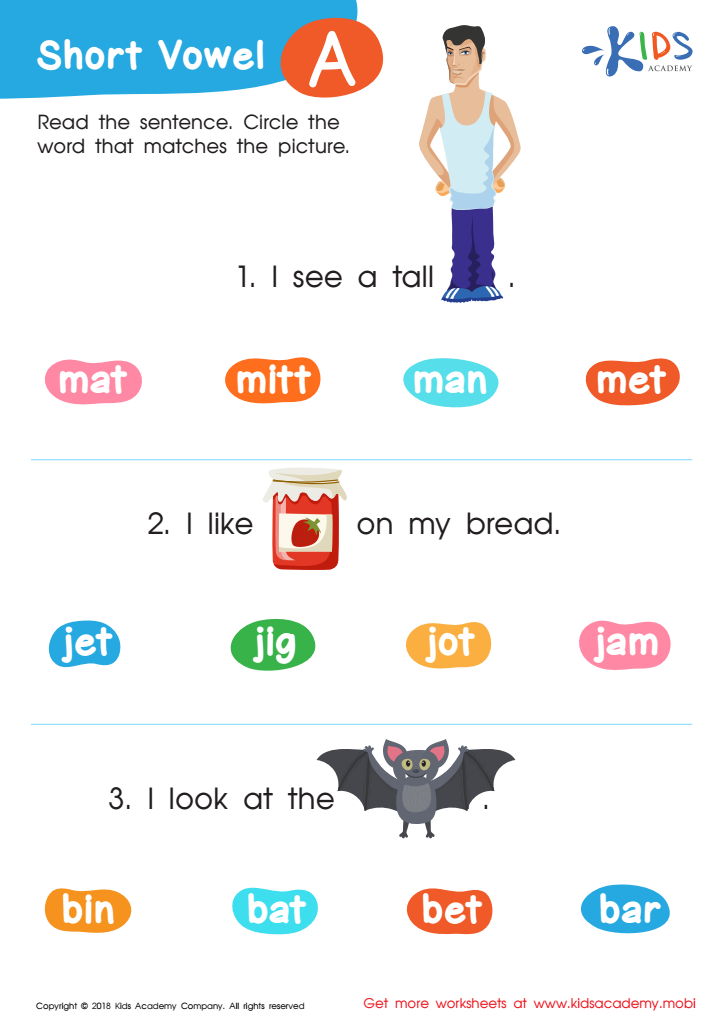
Short Vowel /a/ Worksheet
 Assign to My Students
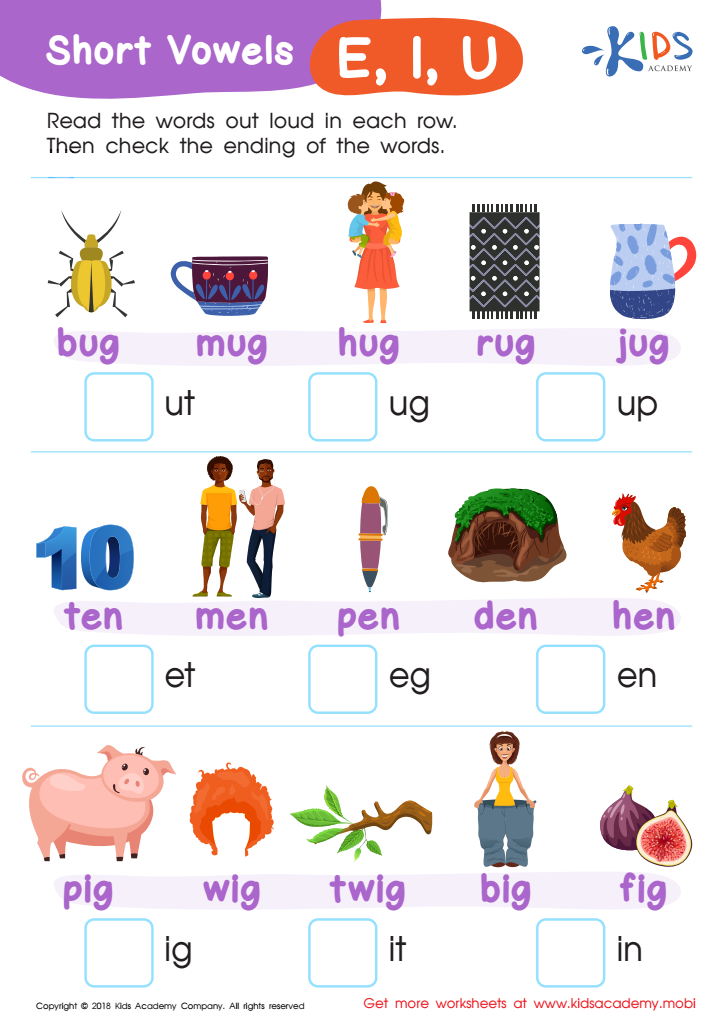
Short Vowels /e/, /i/, and /u/ Worksheet
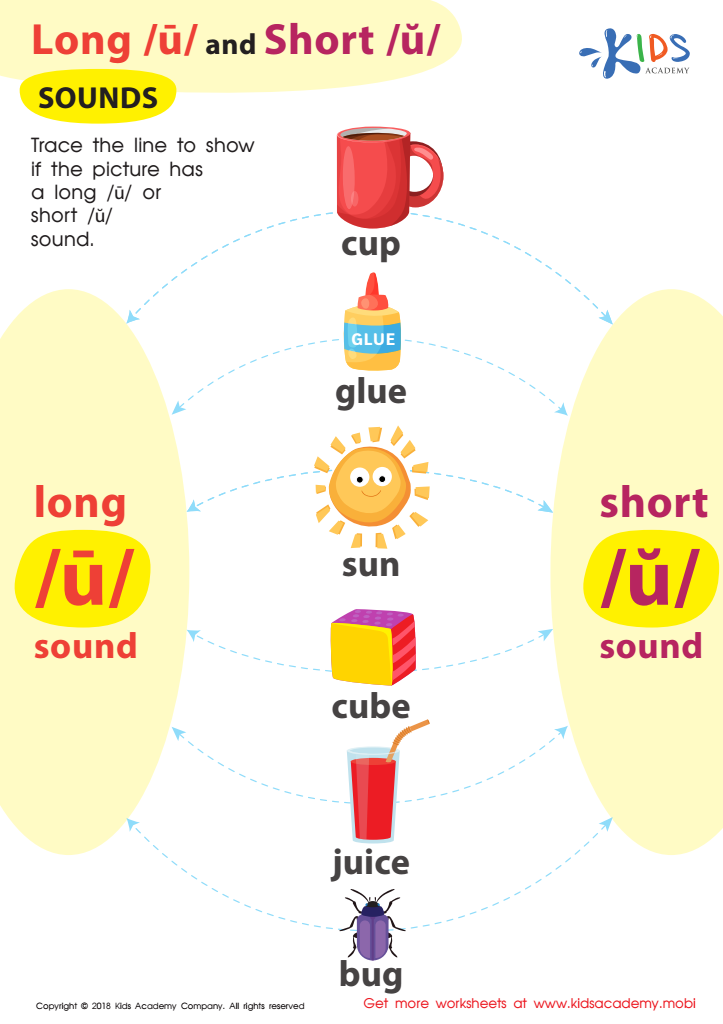
Reading: Long U and Short U Sounds Worksheet
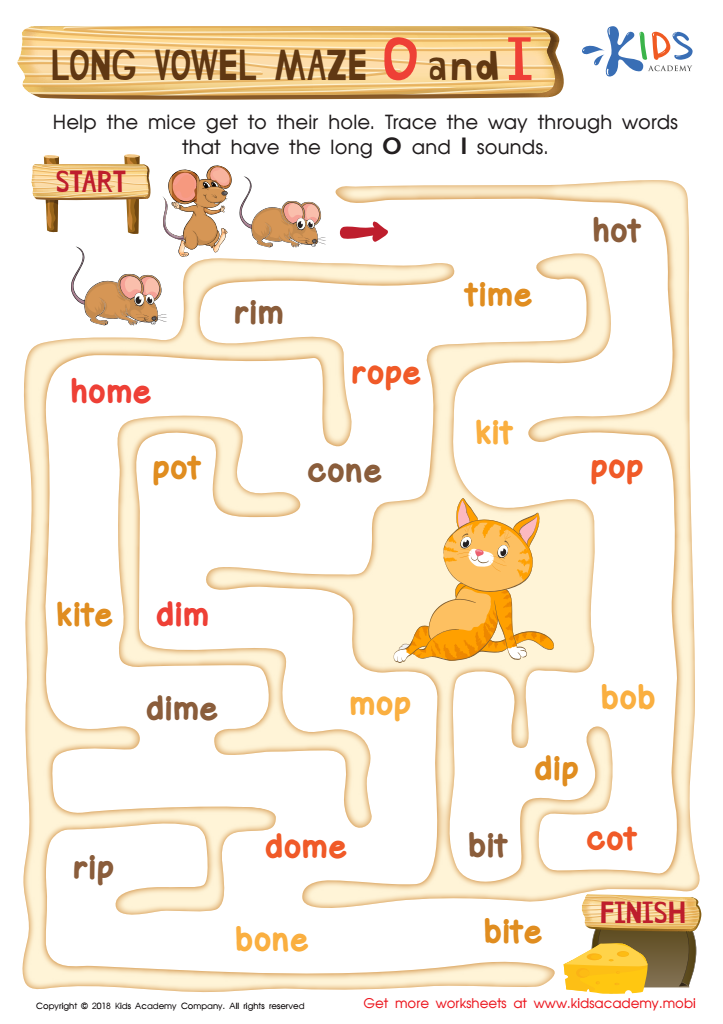
Long Vowel Maze /o/ and /i/ Worksheet
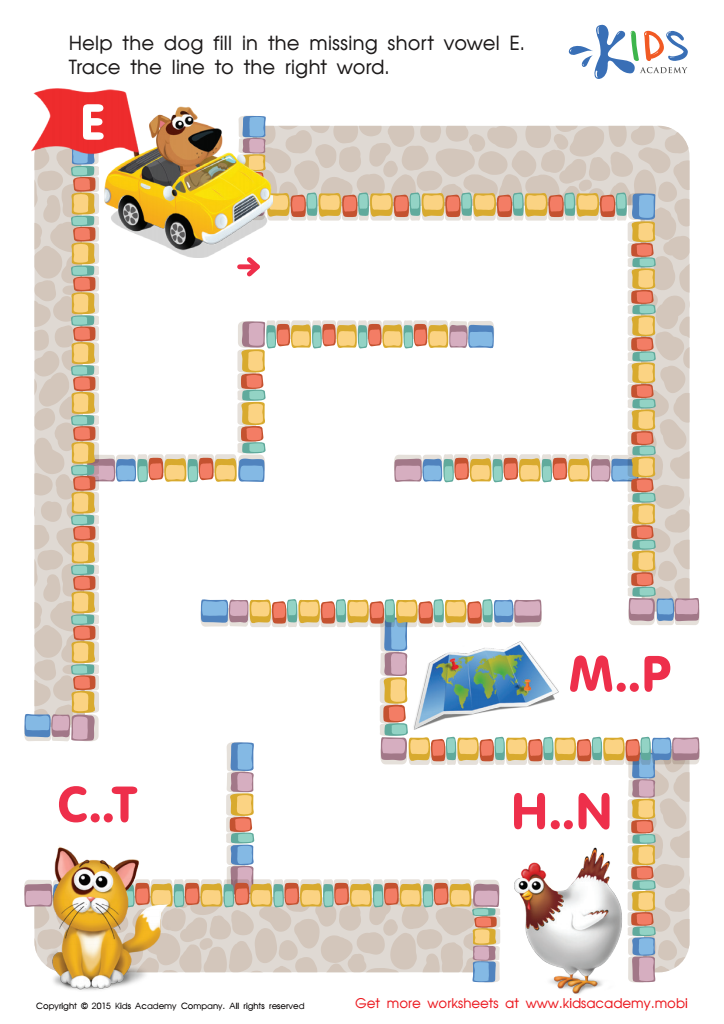
Short Vowel Sound E Worksheet








Vowel recognition and letter recognition are foundational skills for early literacy development in children aged 5-8. These skills are crucial as they form the basis for reading and writing. Vowels, being essential components of every syllable, are particularly important for understanding word formation. Unlike consonants, vowels can significantly change the meaning of words, making their recognition vital for comprehension.
For parents and teachers, promoting vowel and letter recognition helps children build phonemic awareness—understanding sounds in spoken language—leading to better reading fluency. When children can easily identify vowels and letters, they can decode words more effectively, encouraging independent reading.
Additionally, early mastery of these skills fosters confidence in young learners. As children encounter new words, they are less likely to feel frustrated or discouraged, enabling a positive attitude towards learning. Encouraging activities such as letter games, singing vowel songs, or literacy-rich storytelling can effectively support this development.
Moreover, strong early literacy skills lay a strong foundation for future academic success. Children who are proficient in vowel and letter recognition transition more smoothly into complex reading skills, enhancing their overall educational journey and preparing them for a lifelong enjoyment of reading. Therefore, it is essential for parents and teachers to prioritize these skill areas during early childhood.







