Listening skills Letter Sounds Worksheets for Ages 5-8
4 filtered results
-
From - To
Enhance your child's listening skills with our engaging Letter Sounds Worksheets designed for ages 5-8! These interactive worksheets focus on auditory discrimination and early phonetic awareness, vital for developing strong reading abilities. Children will enjoy activities that reinforce their understanding of letter sounds through fun exercises and colorful visuals. Perfect for home or classroom use, these worksheets help young learners connect sounds with letters, improving their listening and overall language skills. Foster a love for learning while preparing your child for future academic success with our expertly crafted listening skills resources. Explore the power of sound through play today!
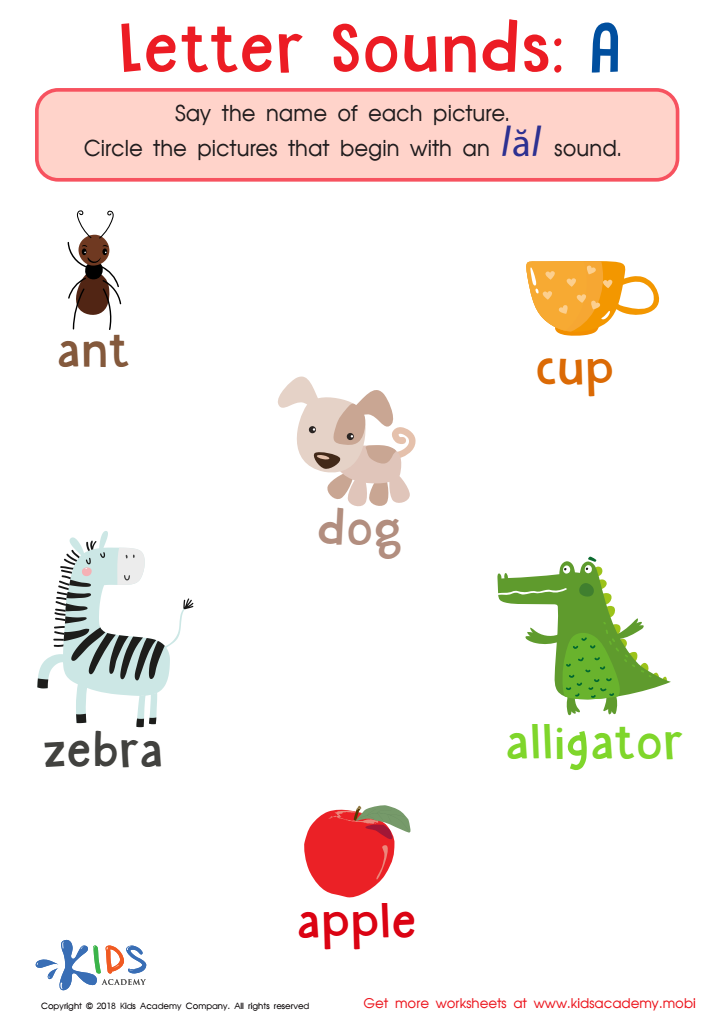
Letter A Sounds Worksheet
 Assign to My Students
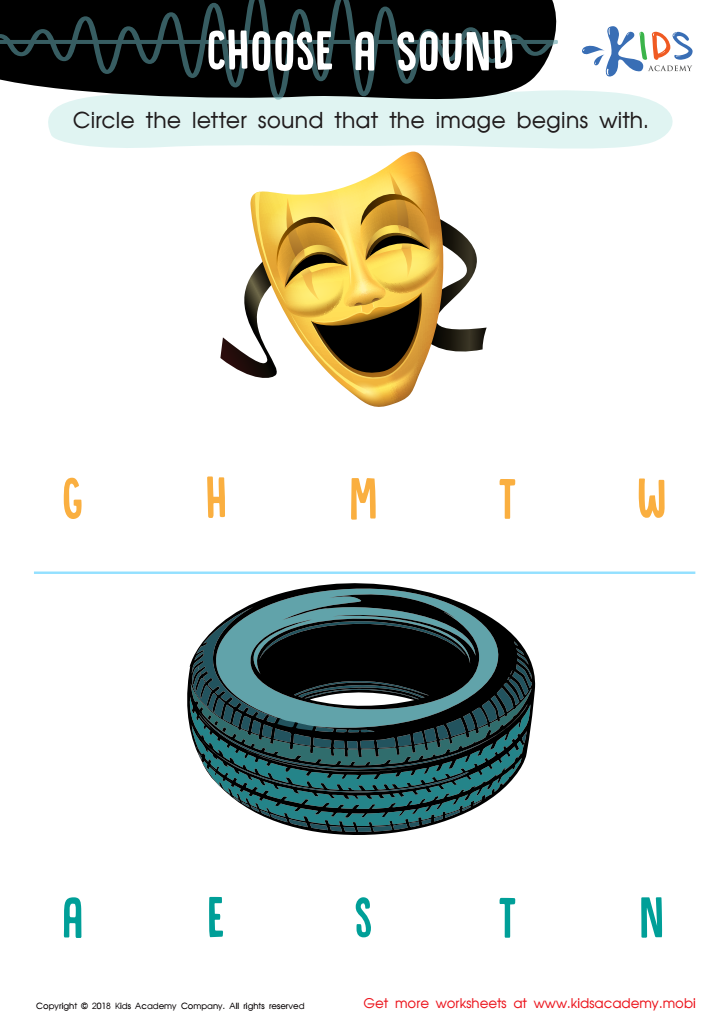
Choose a Sound Worksheet
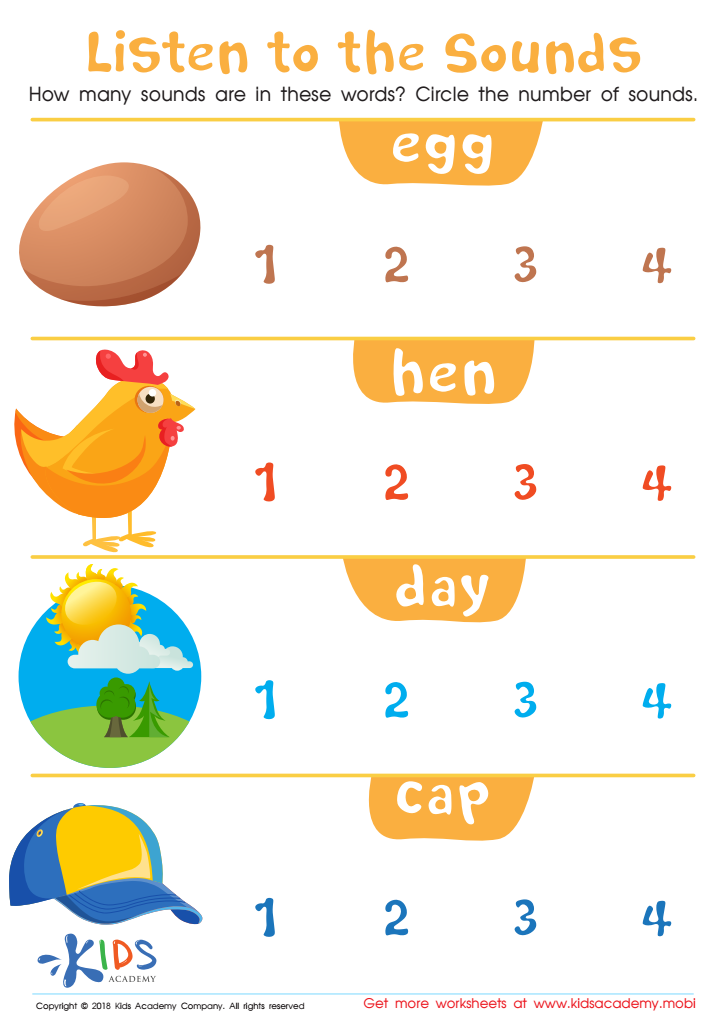
Listen to the Sounds Worksheet
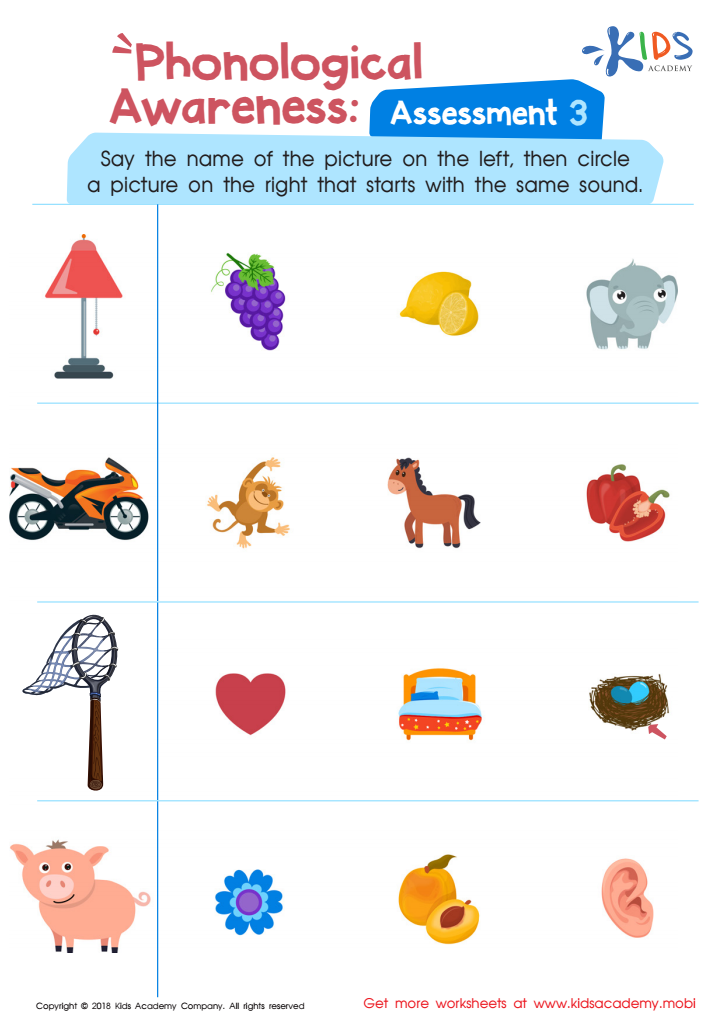
Phonological Awareness: Assessment 3 Worksheet








Listening skills and letter sounds are crucial for children aged 5-8 as they form the foundation of literacy and language development. Effective listening enables children to comprehend and follow instructions, fostering better participation in classroom activities. When teachers and parents emphasize listening skills, they help children decode spoken language, manage conversations, and express their thoughts logically. This stage is also essential for identifying letter sounds, or phonemes, which are foundational for reading. Children learn to associate individual sounds with letters, aiding in the ability to read words and pronounce them correctly.
Moreover, nurturing listening skills enhances children's ability to focus on details and decipher context in spoken language, which supports overall academic success. As they engage in storytelling and discussions, they learn to pick up nuances in conversations, building their comprehension abilities. Practicing letter sounds in their early years encourages children to become confident readers and writers, establishing a productive learning trajectory.
Additionally, these skills foster social interactions and emotional intelligence by enabling better communication among peers. A strong start in listening skills and phonetic awareness not only prepares children for reading but also equips them with critical life skills, emphasizing why parents and teachers should prioritize these developmental milestones.







