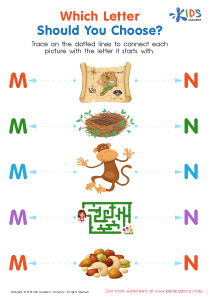
Alphabet familiarity Lowercase/Small Letters Worksheets for Ages 5-8
3 filtered results
-
From - To
Discover our engaging "Alphabet Familiarity Lowercase/Small Letters Worksheets" tailored specifically for children aged 5-8. These worksheets are designed to help young learners recognize, write, and engage with lowercase letters in a fun and interactive way. Each activity focuses on various skills, including letter identification and writing practice, ensuring a comprehensive understanding of the alphabet. With colorful illustrations and captivating exercises, these worksheets are perfect for both classroom use and at-home learning. Support your child's literacy journey as they build confidence in their reading and writing abilities. Explore our collection today and watch your child thrive in their alphabet mastery!
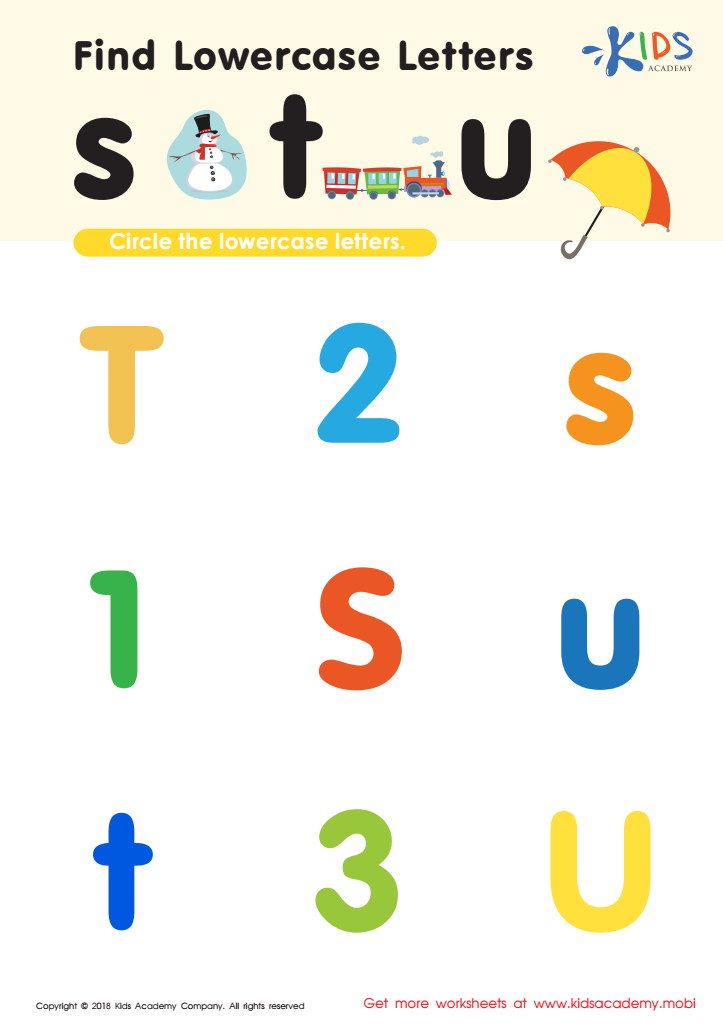
Find lowercase Letters s t u Worksheet
 Assign to My Students
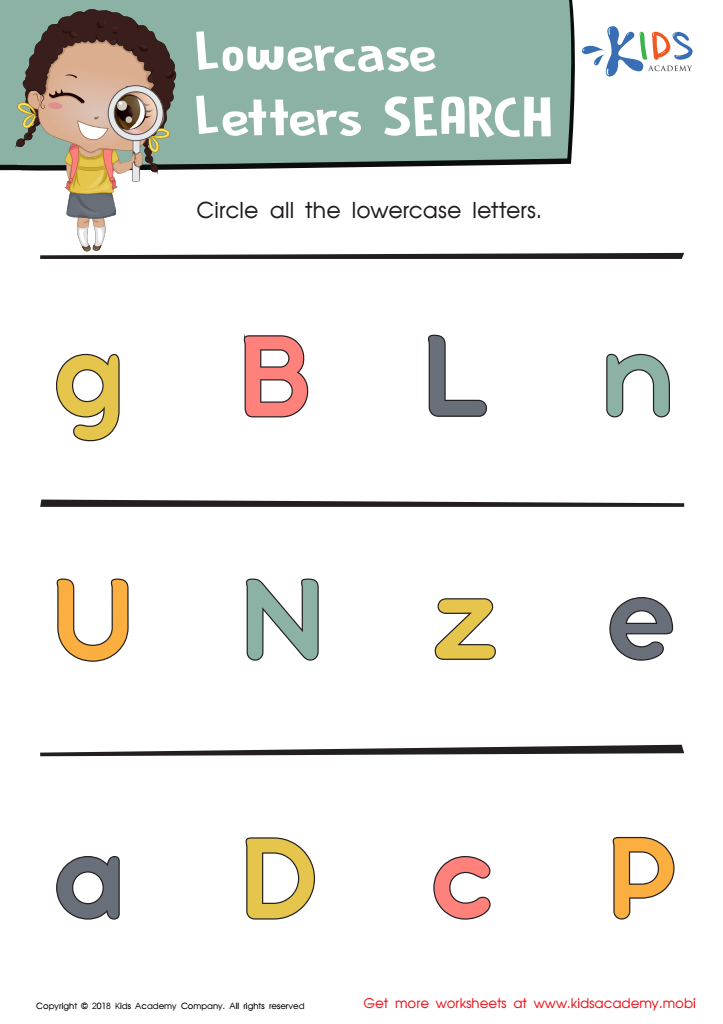
Lowercase Letters Search: Assessment Worksheet
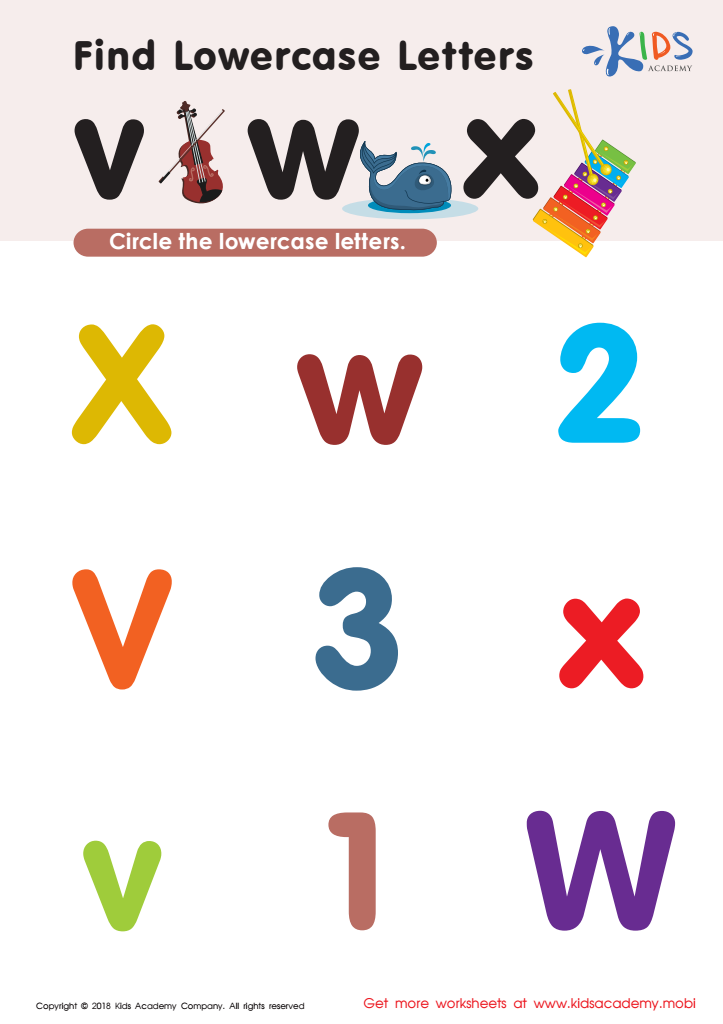
Find Lowercase Letters v w x Worksheet


Alphabet familiarity, particularly with lowercase letters, is a crucial aspect of early literacy development for children aged 5-8. Understanding lowercase letters is essential because they comprise the majority of text in everyday reading materials, such as storybooks, signs, and digital content. When children are familiar with these letters, they become more confident readers, allowing them to engage with written words more effectively.
Additionally, lowercase letters play a significant role in writing and communication. As children begin to express their thoughts and stories, being comfortable with lowercase letters enables them to write fluidly and creatively. Familiarity with lowercase soon contributes to important skills such as spelling and grammar, paving the way for their academic progress.
Moreover, teaching lowercase letters can foster increased motivation and enjoyment in reading and writing. As students successfully decode words and sentences, they experience a sense of accomplishment, which encourages a lifelong love for learning.
In essence, parents and teachers should prioritize lowercase letter recognition, as it is fundamental to children’s literacy skills. By ensuring children have a solid foundation in alphabet familiarity, we foster their confidence and strategies for effective communication, setting them on a positive trajectory for future academic success.