Fine Motor Skills Tracing Lines and Curves Worksheets for Ages 5-8
5 filtered results
-
From - To
Unlock your child's potential with our fine motor skills tracing lines and curves worksheets, designed for ages 5-8! These engaging, printable worksheets from Kids Academy help improve handwriting, boost hand-eye coordination, and strengthen muscles essential for writing. With playful activities and charming illustrations, children are inspired to practice tracing lines, curves, and shapes while having fun. Perfect for classroom or at-home learning, our worksheets also support early reading and math skills development. Set the stage for academic success by making fine motor skills practice enjoyable and interactive with our expertly crafted resources!
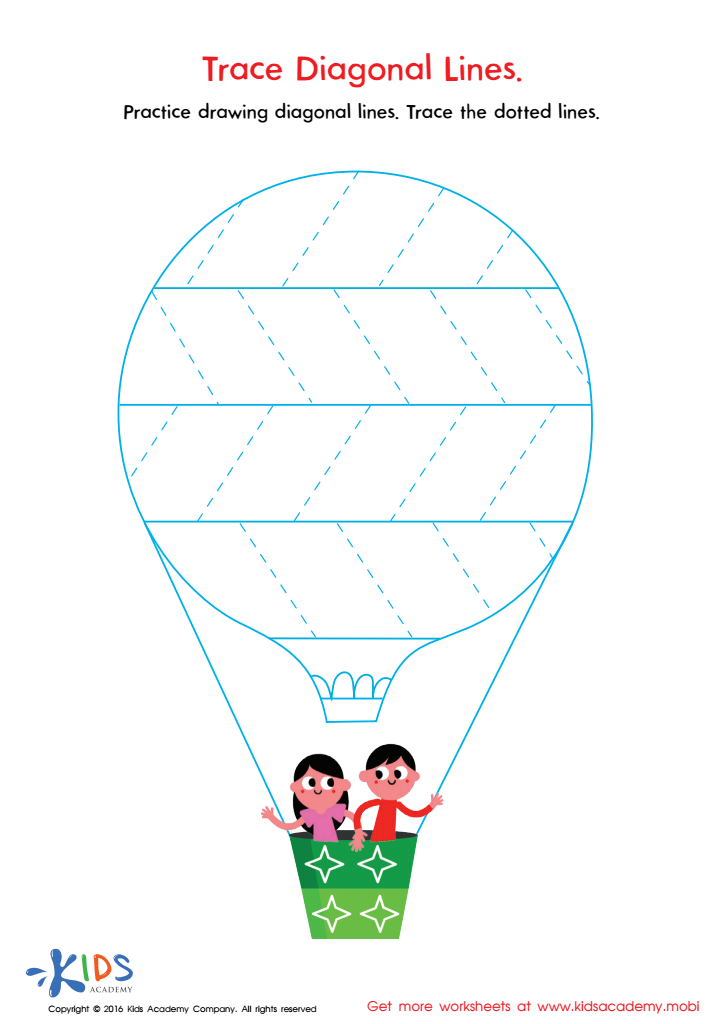
Trace Diagonal Lines Worksheet
 Assign to My Students
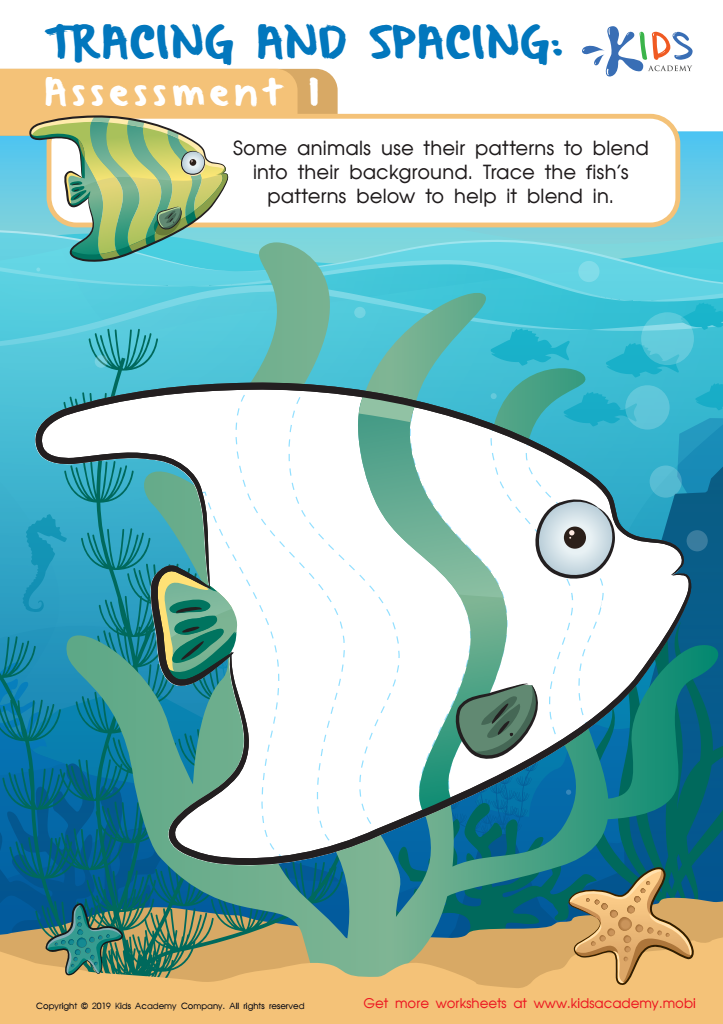
Tracing and Spacing: Assessment 1 Worksheet
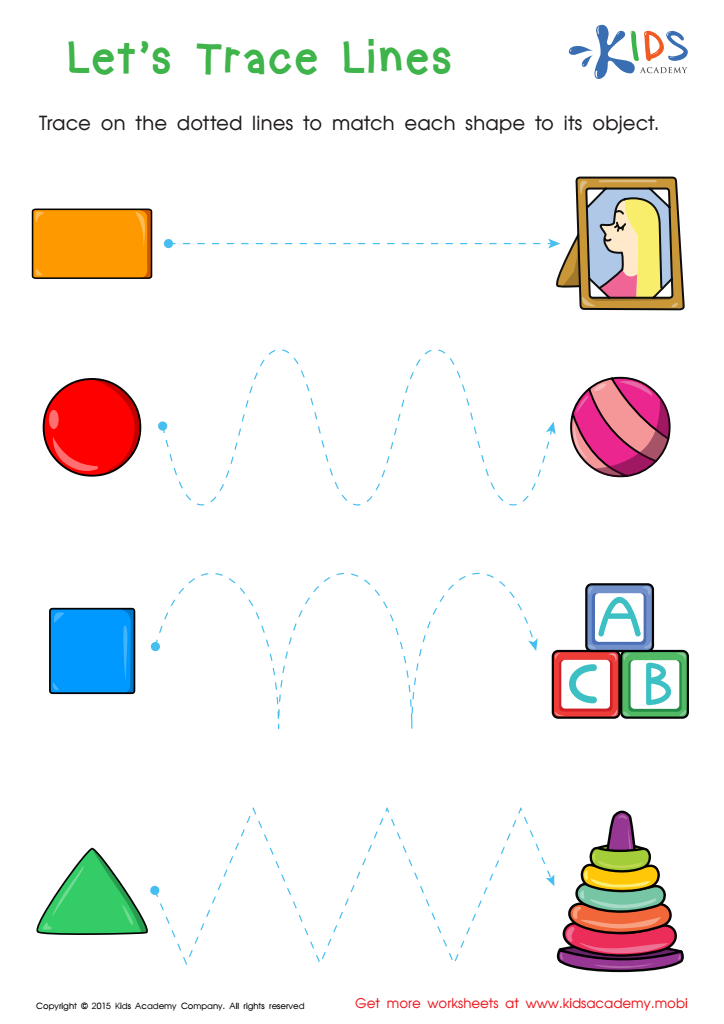
First Words: Let's Trace Lines Worksheet
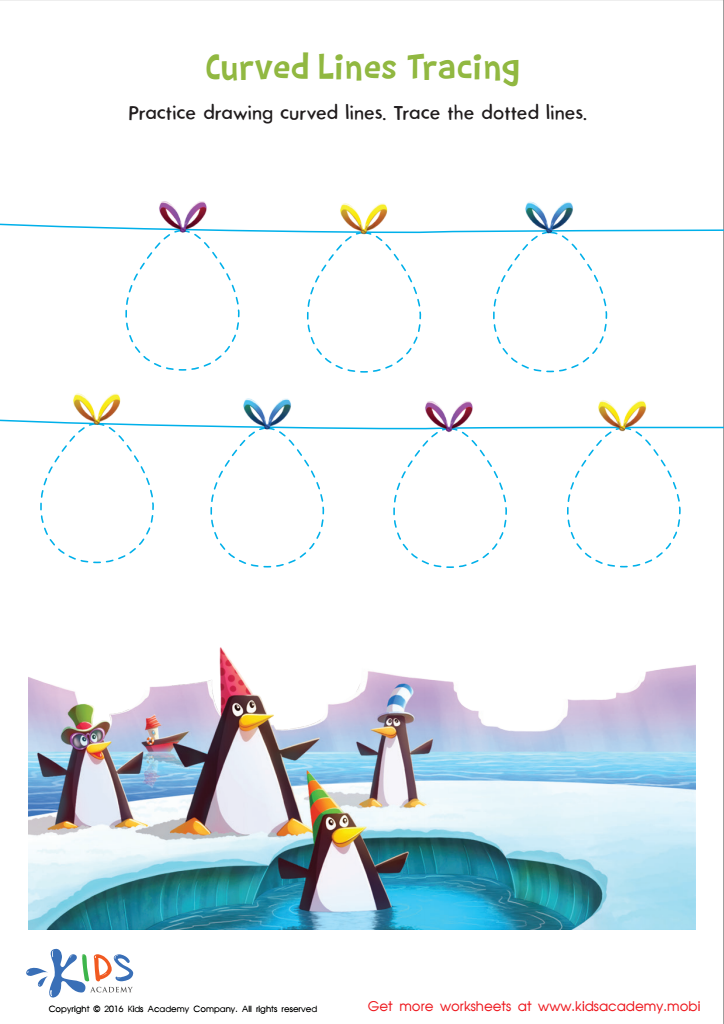
Curved Lines Tracing Worksheet

Tracing Lines Worksheet




Fine motor skills are essential for children's overall development, and tracing lines and curves at ages 5-8 plays a crucial role in honing these skills. For parents and teachers, focusing on tracing activities during these formative years helps children improve their hand-eye coordination, precision, and control. These motor skills are foundational for many everyday tasks such as writing, buttoning clothes, and even using utensils.
Engaging in tracing lines and curves helps children develop the dexterity needed for writing. Proper pencil grip and control cultivated through tracing translate into neater handwriting, reducing any frustration children might face when learning to write. Moreover, these activities build muscle strength in the hands and fingers, making it less tiring for children to engage in longer writing tasks.
We shouldn't overlook the cognitive benefits, too. Tracing requires concentration and planning, fostering a child's ability to organize thoughts and sequence actions, which are skills critical for academic success. Furthermore, by mastering fine motor tasks, children gain confidence, self-esteem, and a sense of independence.
Teachers and parents should therefore prioritize these activities, dedicating consistent time to them. This small investment during early childhood education can significantly impact a child's fine motor development, academic performance, and daily life skills, paving the way for future successes.








