Capitalization rules Upper & Lowercase Letters Worksheets for Ages 5-8
3 filtered results
-
From - To
Welcome to our engaging "Capitalization Rules Upper & Lowercase Letters Worksheets" designed specifically for children aged 5-8. These printable activities introduce young learners to essential capitalization rules in a fun and interactive way. Our colorful worksheets help kids recognize the importance of uppercase and lowercase letters while enhancing their writing skills. Through various exercises, children will practice identifying proper nouns, the beginnings of sentences, and more. These worksheets promote early literacy, boost confidence, and encourage a love for learning. Perfect for classroom settings or at-home practice, our resources will aid your child on their educational journey. Download now and start exploring!
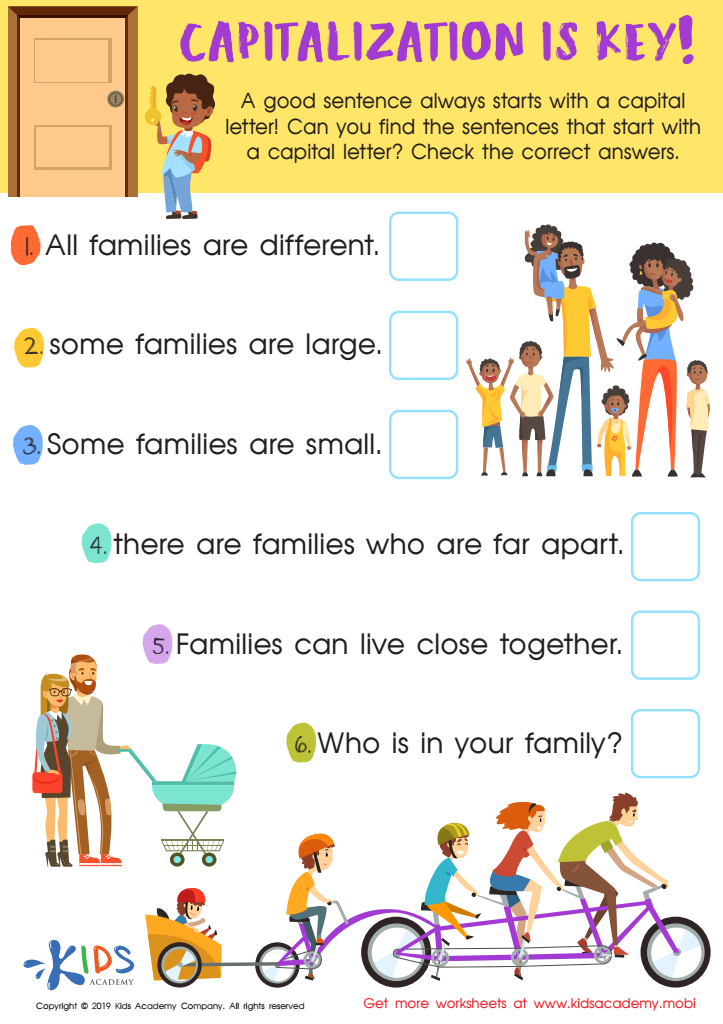
Capitalization Key Worksheet
 Assign to My Students



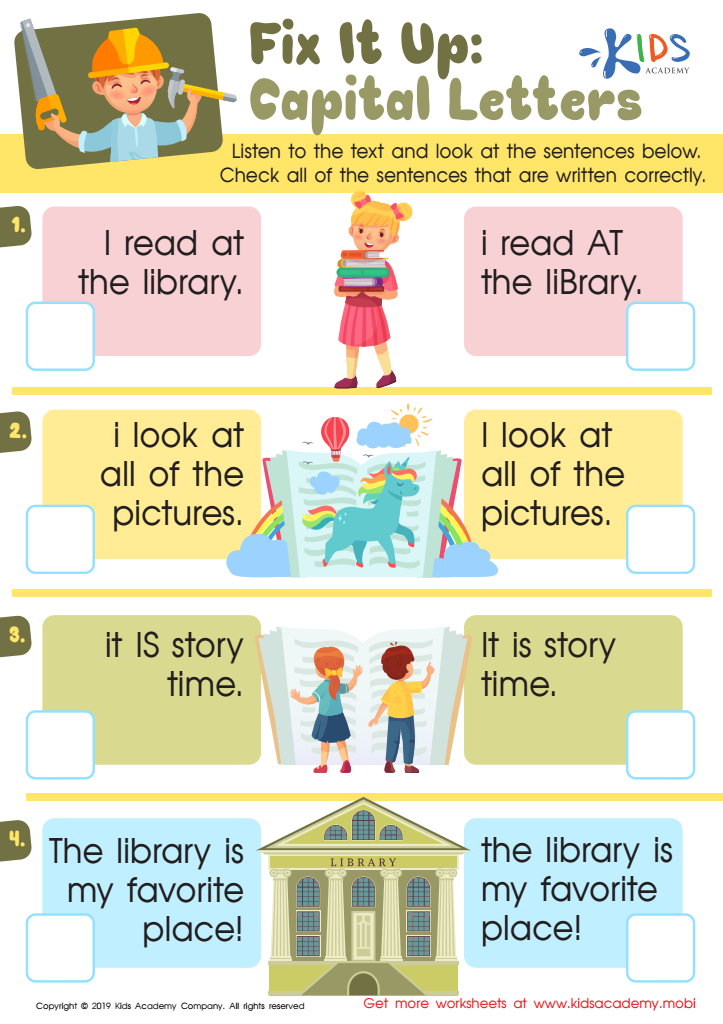
Fix Capital Letters Worksheet
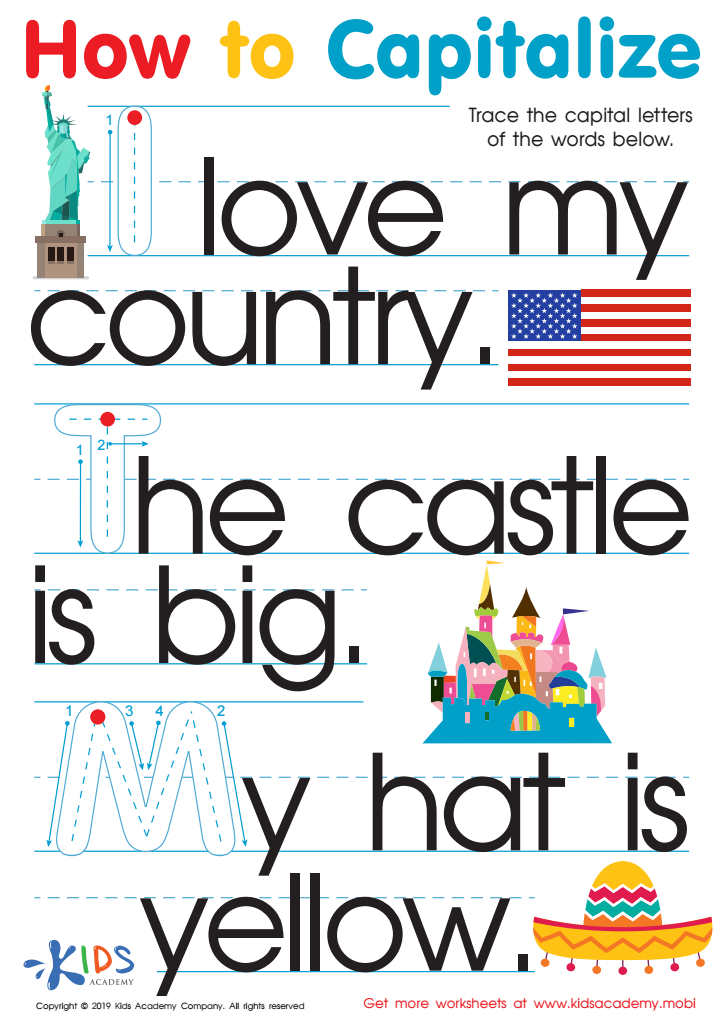
How to Capitalize Worksheet






Capitalization rules for upper and lowercase letters are essential components of early literacy that parents and teachers should prioritize for children aged 5-8. First, understanding these rules helps young learners recognize the difference between proper nouns, sentences, and general words, which contributes to their reading comprehension. Notably, capital letters serve as visual cues, indicating the beginning of sentences and proper names, making texts easier to understand.
Additionally, mastering capitalization fosters essential writing skills. When children use uppercase letters appropriately, it enhances the clarity and professionalism of their writing, allowing them to express their ideas more effectively. This lays a strong foundation for future writing, encouraging skill development in spelling and grammar.
Moreover, capitalization rules are often emphasized in educational systems, so familiarity with them gives children more confidence in academic settings. As they move to higher grades, their written assignments will increasingly be evaluated based on conventional standards, including proper capitalization.
Lastly, understanding capitalization sparks critical thinking, as children begin to question why certain words are written differently. Overall, engaging with these rules sets the stage for improved literacy skills, enhances communication abilities, and prepares children for future educational success.







