Long vowel recognition Vowels Worksheets for Ages 5-8
3 filtered results
-
From - To
Our Long Vowel Recognition Worksheets are designed for children ages 5-8 to help them master essential vowel sounds. These engaging, printable activities focus on the long vowel sounds found in words, boosting phonemic awareness and early reading skills. Curriculum-aligned, these worksheets provide comprehensive practice through fun games and exercises, ensuring young learners can confidently recognize and use long vowel sounds. Perfect for kindergarten through second grade, our colorful and interactive materials support both classroom learning and at-home practice. Spark your child's language development journey with our expertly crafted long vowel recognition worksheets!
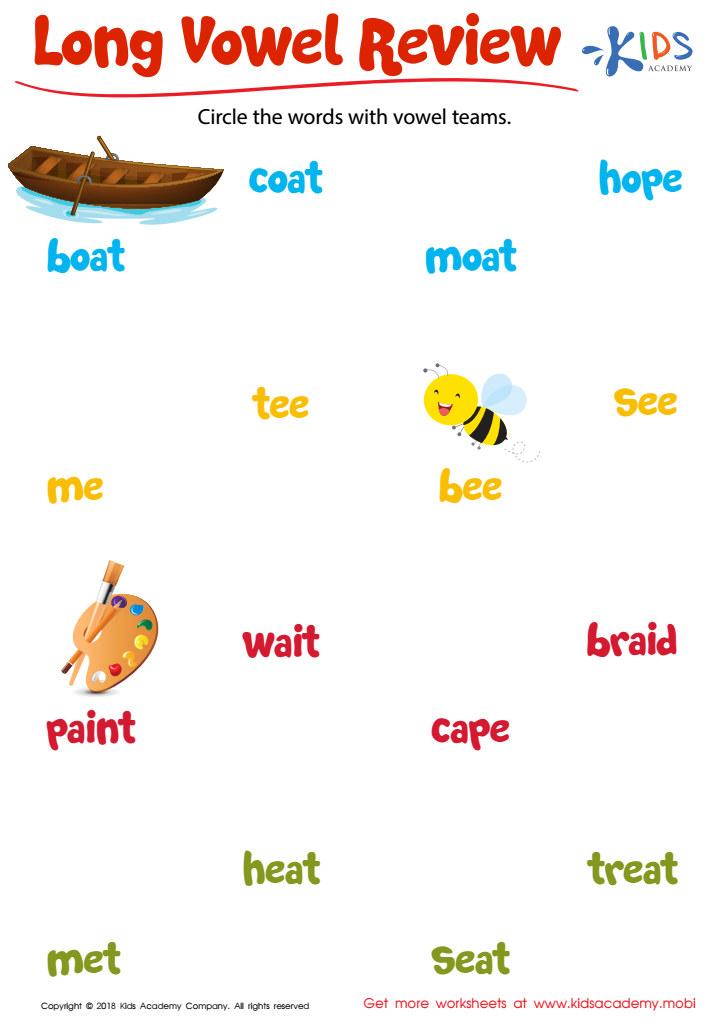
Long Vowel Review Worksheet
 Assign to My Students
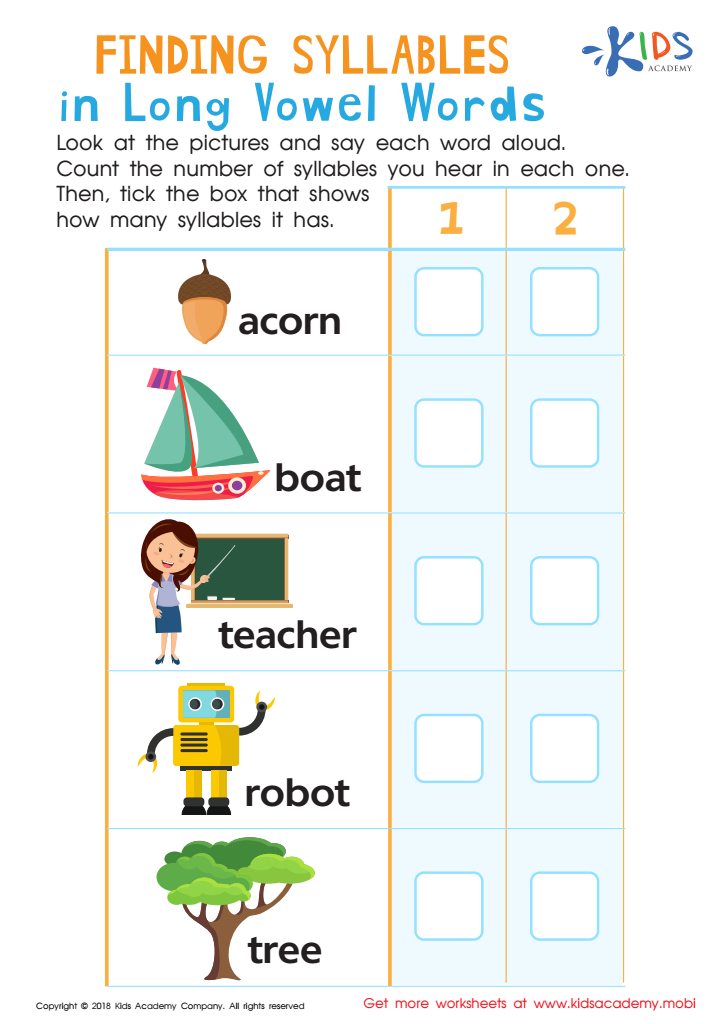
Finding Syllables in Long Vowel Words Worksheet
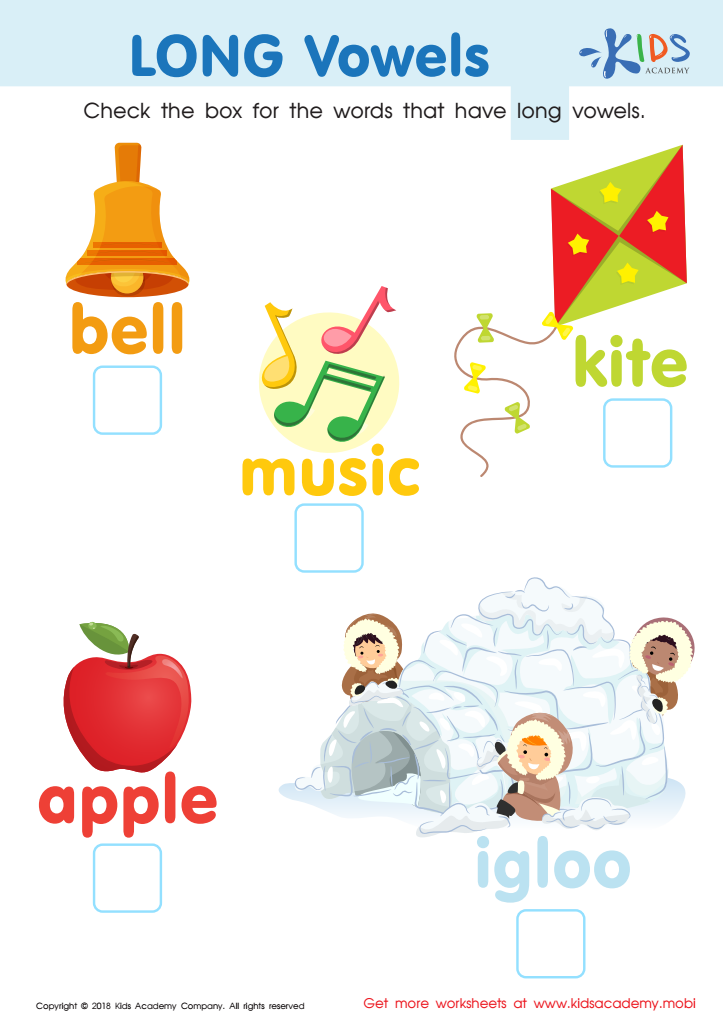
long vowels Worksheet





Long vowel recognition is a crucial aspect of early literacy and can significantly impact a child's reading and writing skills. For children aged 5-8, understanding long vowels forms the foundation of effective communication in both oral and written forms. Recognizing long vowels helps children decode words more accurately and increases their ability to understand text, making reading a more enjoyable and less frustrating experience.
Long vowel sounds often change the meaning of a word. For example, 'tap' (short vowel) and 'tape' (long vowel) have completely different meanings. Mastery of these sounds allows children to improve their vocabulary as they can correctly pronounce and use a broader range of words. Additionally, long vowel recognition supports better spelling, helping children avoid common errors and encouraging more precise written communication.
For teachers and parents, focusing on long vowel recognition can lead to strong phonemic awareness and phonics skills, which are critical for the development of fluent reading. Long vowel proficiency directly correlates with improved comprehension skills and boosts a child's confidence in reading independently. Early investment in teaching these skills can set a child on a successful academic path, fostering a lifelong love for reading and learning. Therefore, it is essential for parents and teachers to prioritize long vowel recognition in early education.







