
Vocabulary development Vowels Worksheets for Ages 5-8
6 filtered results
Difficulty Level
Grade
Age
-
From - To
Subject
Activity
Standards
Enhance your child's vocabulary skills with our engaging Vowel Worksheets designed specifically for ages 5-8. These worksheets focus on the essential role vowels play in language development, providing interactive exercises that captivate young learners. Through fun activities, kids will identify, practice, and expand their understanding of vowel sounds, boosting their reading and communication abilities. Each worksheet is carefully crafted to promote vocabulary enhancement and reinforce early literacy skills. Ideal for homeschooling or supplemental schoolwork, our Vowel Worksheets offer a playful yet educational experience that makes learning enjoyable. Unlock your child's potential while fostering a strong foundation in language arts!
Favorites
With answer key
Interactive
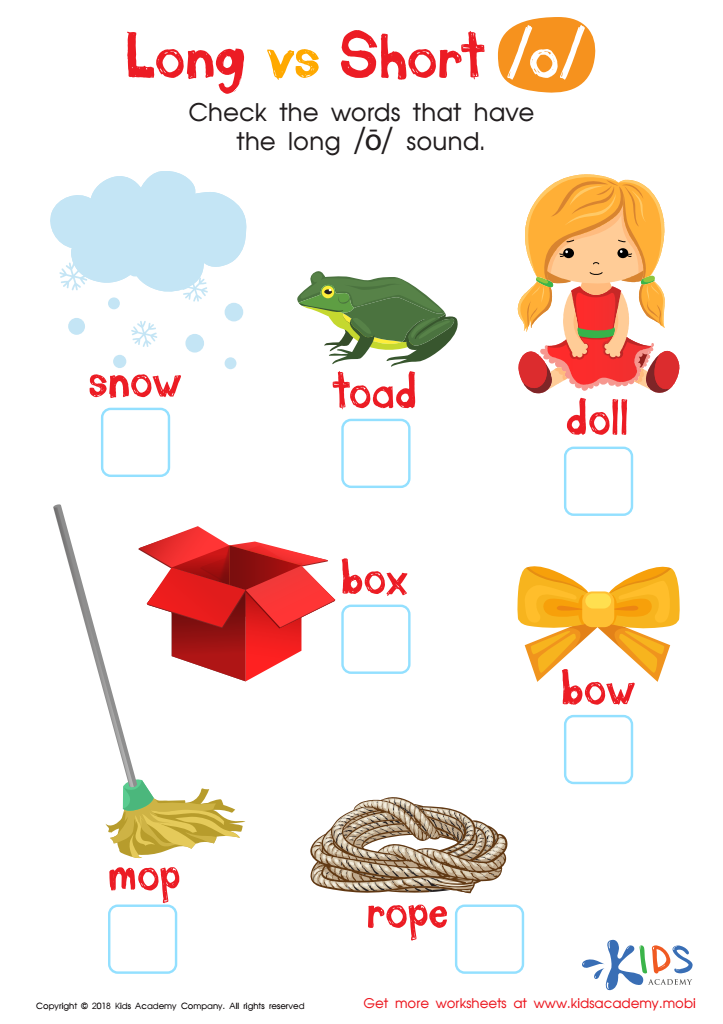
Long vs Short O Reading Worksheet
Help your child learn to identify the long and short «o» sound with this colourful worksheet. Guide them as they spot words with the long or short «o» sound. With practice, your child will find it easier to tell the difference between the two.
 Assign to My Students
Long vs Short O Reading Worksheet
Worksheet
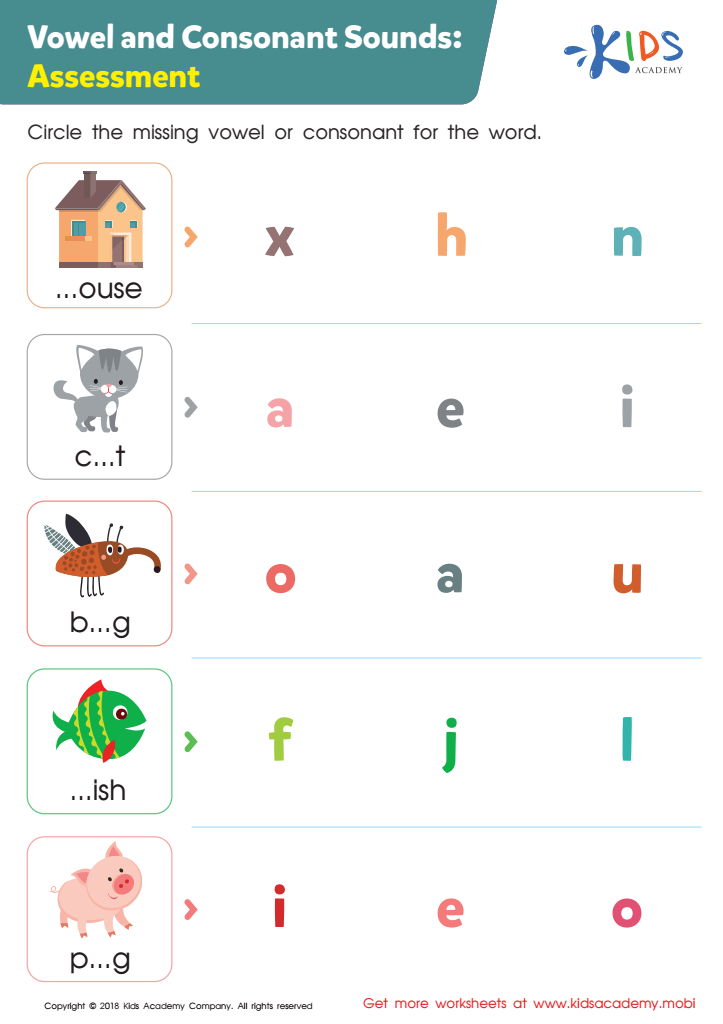
Vowel and Consonant Sounds: Assessment Worksheet
Test young elementary students on vowel and consonant sounds with this friendly phonics assessment worksheet. Get kids to name each image and look at the word underneath. Ask them to sound out the word, then circle the missing letter to complete. This will help assess their knowledge and skills!
Vowel and Consonant Sounds: Assessment Worksheet
Worksheet
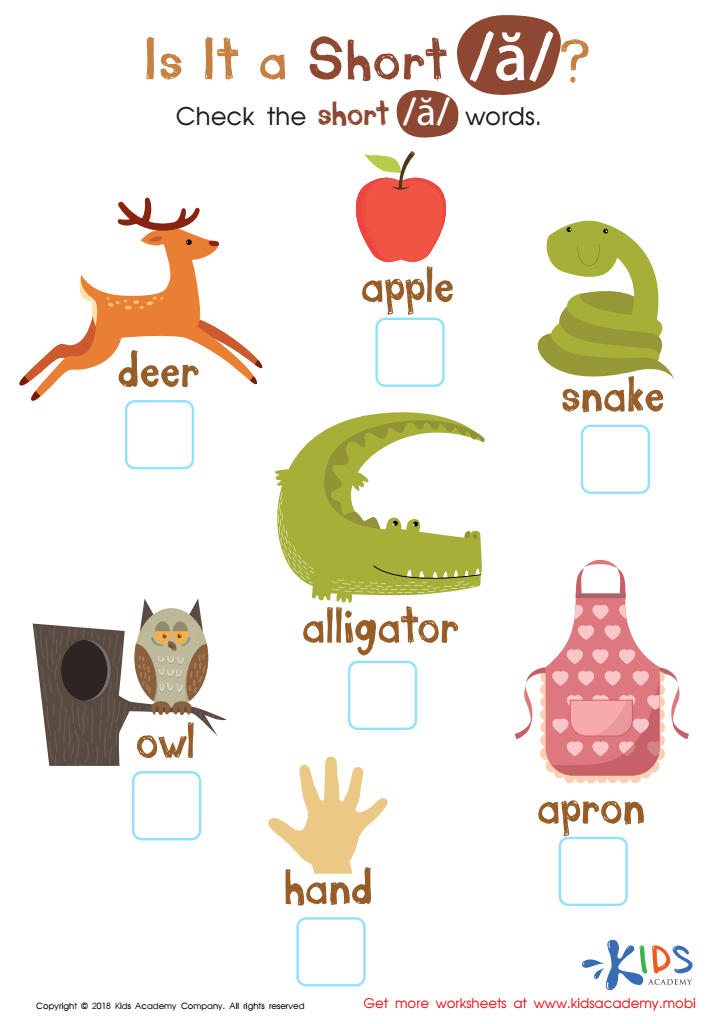
Is It Short A? Reading Worksheet
Struggling readers may have difficulty distinguishing short from long vowels. With this fun PDF worksheet, they practice identifying the corresponding short «ă» by naming each picture and ticking the right boxes. It's a great way to work on decoding and fluency skills!
Is It Short A? Reading Worksheet
Worksheet
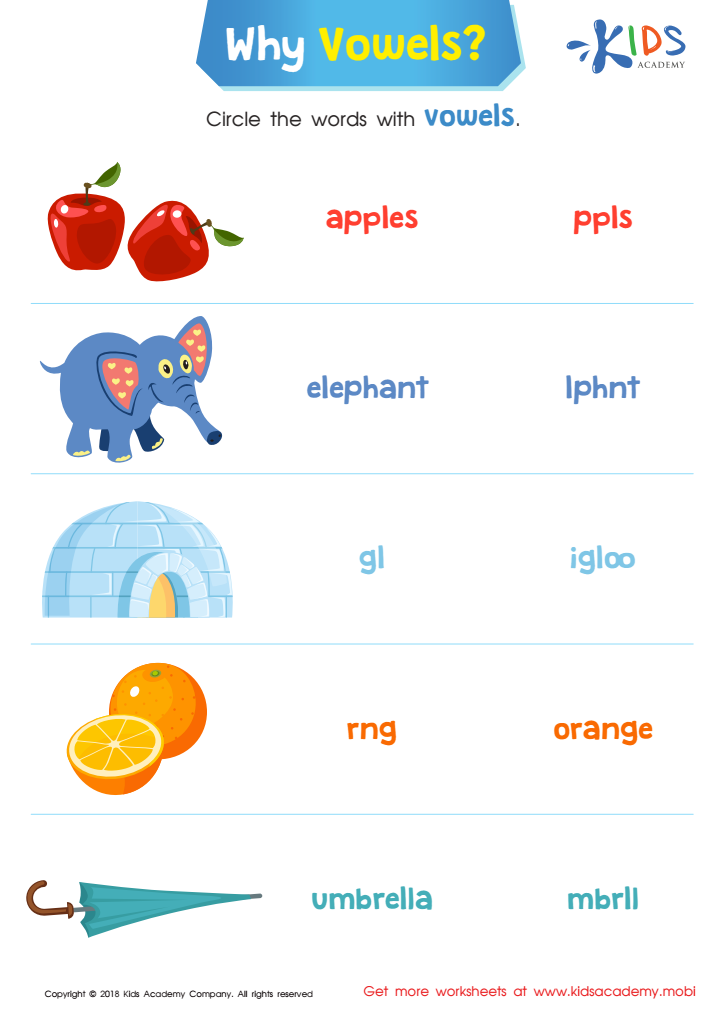
Why Vowels? Reading Worksheet
This worksheet teaches kids to spell words with vowels. It features familiar pics for them to recognize, and they practice fine motor skills by circling the correct spelling. It's an enjoyable way for kids to learn how to spell and promote reading skills.
Why Vowels? Reading Worksheet
Worksheet
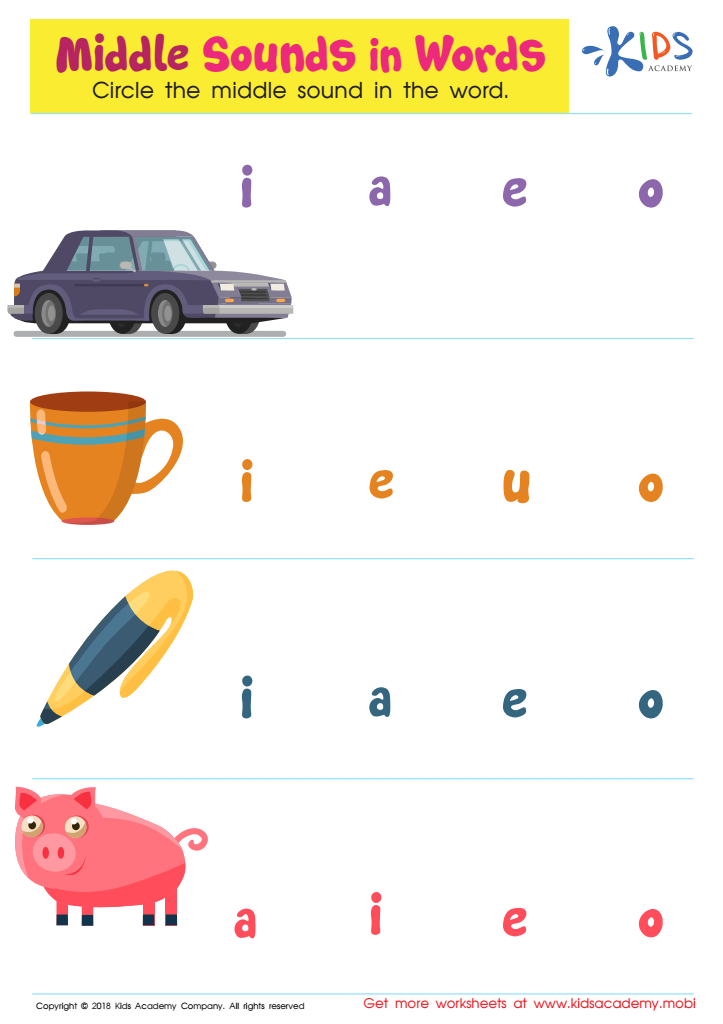
Middle Sounds in Words Worksheet
This worksheet helps emerging readers use picture clues to identify familiar words and practice tracing and fine-motor abilities. It also reinforces spelling by helping them distinguish middle sounds in words. A great way to build listening and literacy skills!
Middle Sounds in Words Worksheet
Worksheet
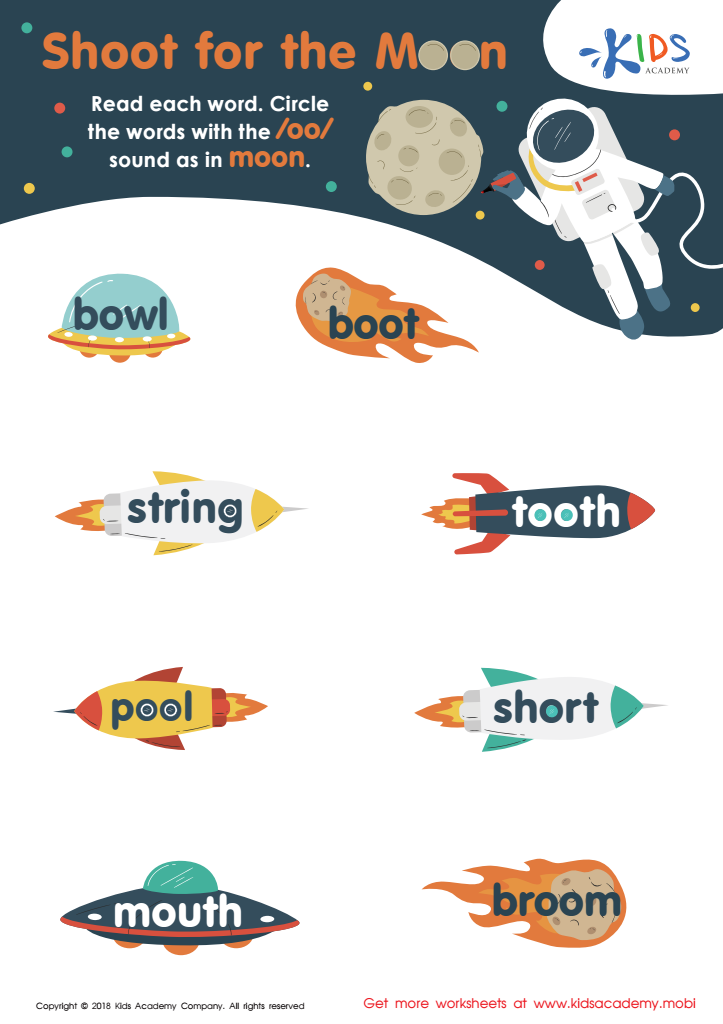
Reading: Shoot for the Moon Worksheet
Ask your kids if they can name any common words with the /oo/ sound. Read each word with them and help them pronounce it. Then, have them circle the words that have the /oo/ sound as in moon.
Reading: Shoot for the Moon Worksheet
Worksheet
Join Kids Academy for Free
Who is primarily going to use this learning content?





Vocabulary development, particularly understanding vowels, is crucial for children aged 5-8 as it forms the foundation for reading and language skills. At this stage, children begin to decode words, and vowels are pivotal in this process because they are essential in forming syllables and words. A strong grasp of vowel sounds enhances phonetic awareness, making it easier for children to blend sounds and read fluently.
Parents and teachers should prioritize vocabulary development to foster effective communication skills. A rich vocabulary enables children to express themselves clearly and understand others better, which supports their social interactions and academic achievements. Additionally, vocabulary knowledge aids comprehension; when children recognize and understand words, they can process stories and information, leading to improved educational outcomes.
Engaging children in activities that promote vowel recognition—such as reading, singing vowel-centric songs, and playing word games—can make learning enjoyable and effective. Encouraging an environment where vocabulary is valued also instills a love for language and learning, fostering lifelong skills. Finally, investing in vocabulary development now can lead to enhanced critical thinking, creativity, and confidence in expressing ideas, setting a solid foundation for future academic and personal success.







