Addition of fractions Worksheets for Ages 5-8
3 filtered results
-
From - To
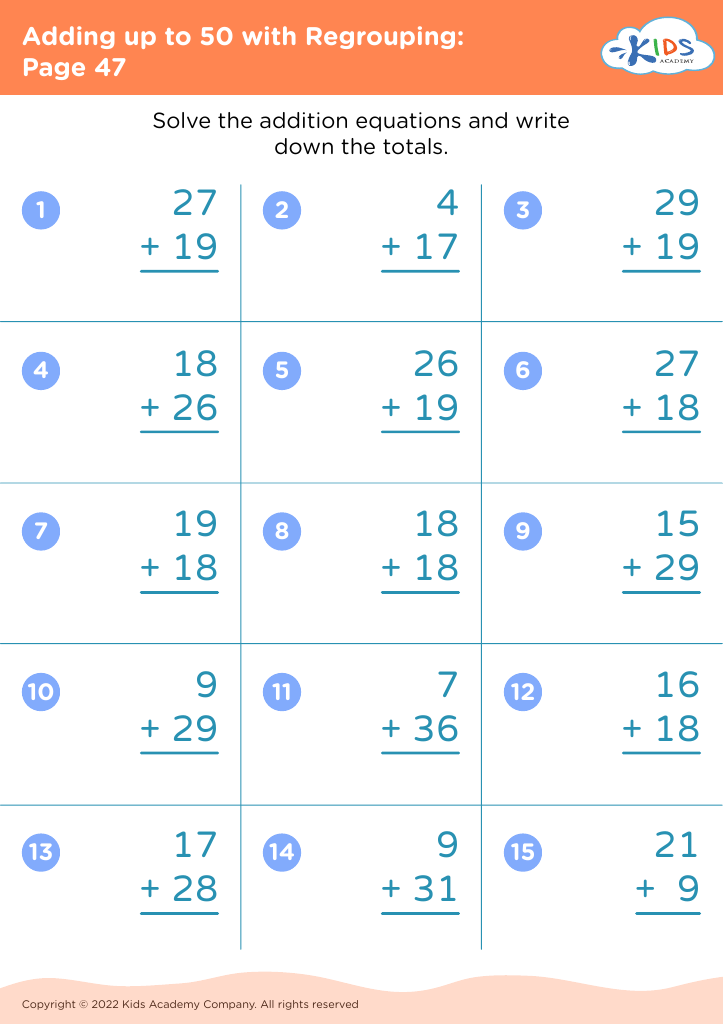
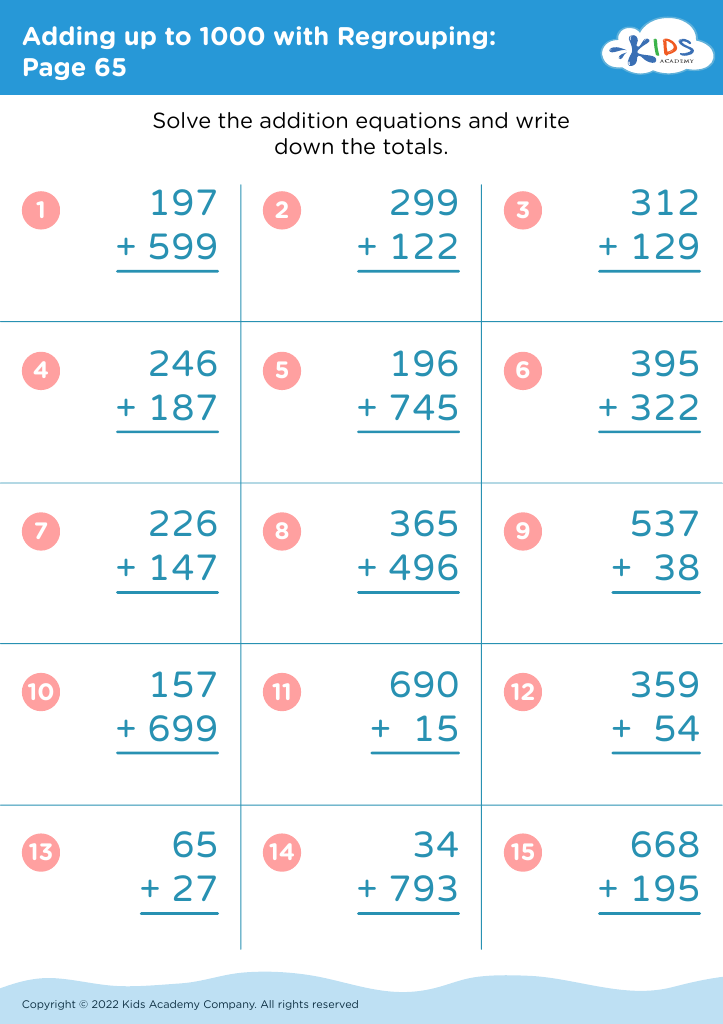
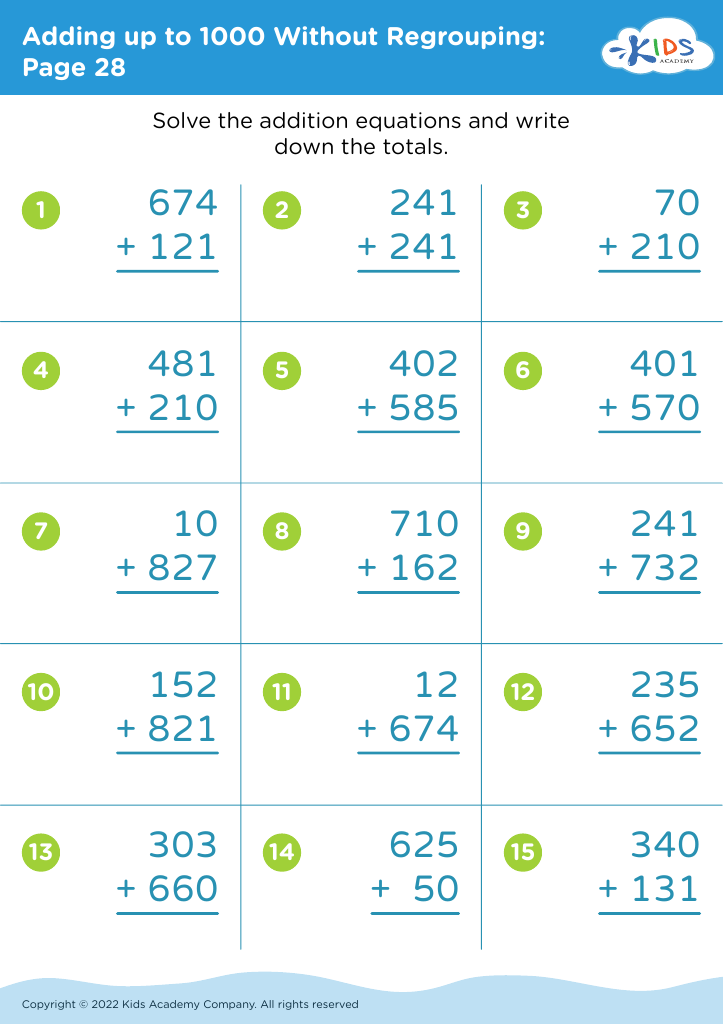
Explore our engaging Addition of Fractions Worksheets designed specifically for children aged 5-8! These printable resources provide a fun way for young learners to grasp the concept of adding fractions with like denominators. With colorful visuals and age-appropriate exercises, students can confidently practice their skills and build a strong mathematical foundation. Our worksheets are tailored to promote critical thinking and enhance problem-solving abilities, ensuring that children develop a solid understanding of fractions in a stress-free environment. Perfect for classroom activities or home practice, these worksheets will make learning about fractions an enjoyable experience for every child. Start exploring today!





.jpg)


Understanding the addition of fractions is essential for children aged 5-8 as it serves as a foundational skill in their mathematical journey. At this age, children are developing critical thinking and problem-solving abilities. Introducing them to fractions in an engaging way helps foster these skills.
Learning to add fractions enhances children's number sense and boosts their confidence in handling more complex mathematical concepts later on. It encourages them to visualize parts of a whole, which is crucial for various real-life applications, including cooking, sharing, or budgeting. Furthermore, grasping the concept of fractions promotes understanding in spatial awareness, essential for geometry and measurements.
Parents and teachers should emphasize this skill because it often has a cumulative effect; if children struggle with fractions early on, they may face challenges with more advanced topics in mathematics as they progress through school. Providing support through fun activities and practical examples can ignite an interest in math.
Ultimately, mastering the addition of fractions not only prepares children for future mathematical success but also empowers them with skills that are applicable in everyday life. Cultivating these foundational skills ensures that children become confident, capable learners ready to tackle more complex mathematics as they grow.








