Analog clock reading Worksheets for Ages 5-8
4 filtered results
-
From - To
Enhance your child's time-telling skills with our Analog Clock Reading Worksheets for Ages 5-8. Specially designed for young learners, these engaging worksheets help kids understand analog clocks through fun and interactive activities. Kids will practice identifying hours and minutes, reading different clock faces, and matching times, helping them build a strong foundation in time management. With colorful illustrations and incremental difficulty, our printable worksheets make learning to read analog clocks enjoyable and effective. Perfect for classroom use or at-home practice, give your child the tools they need to master this essential life skill. Explore now!
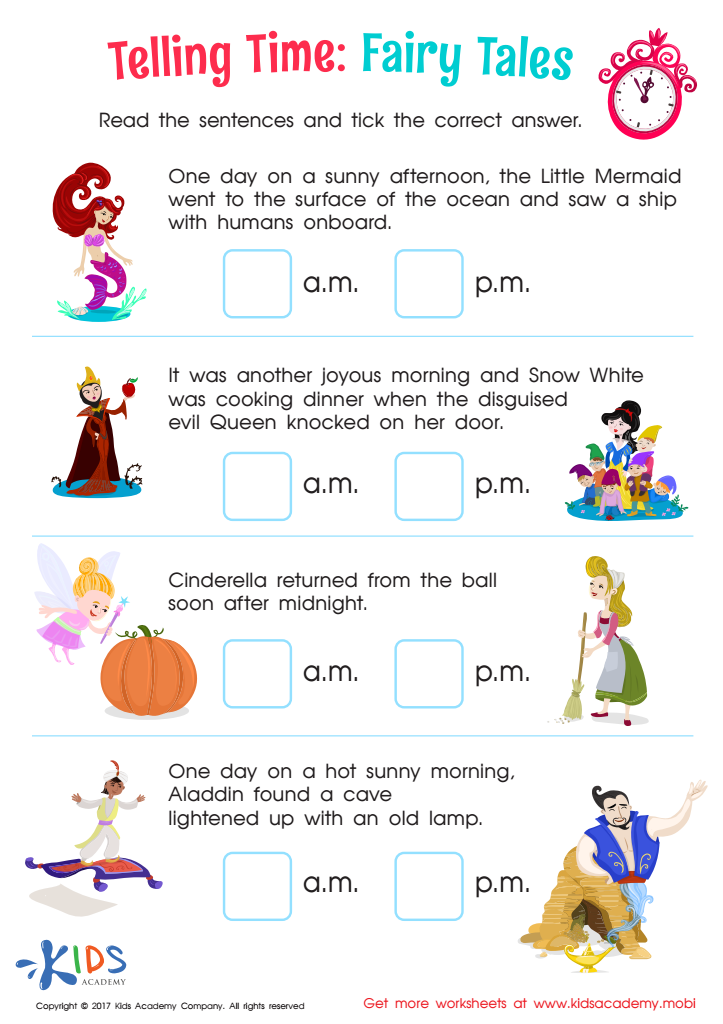
Telling Time: Fairy Tales Worksheet
 Assign to My Students
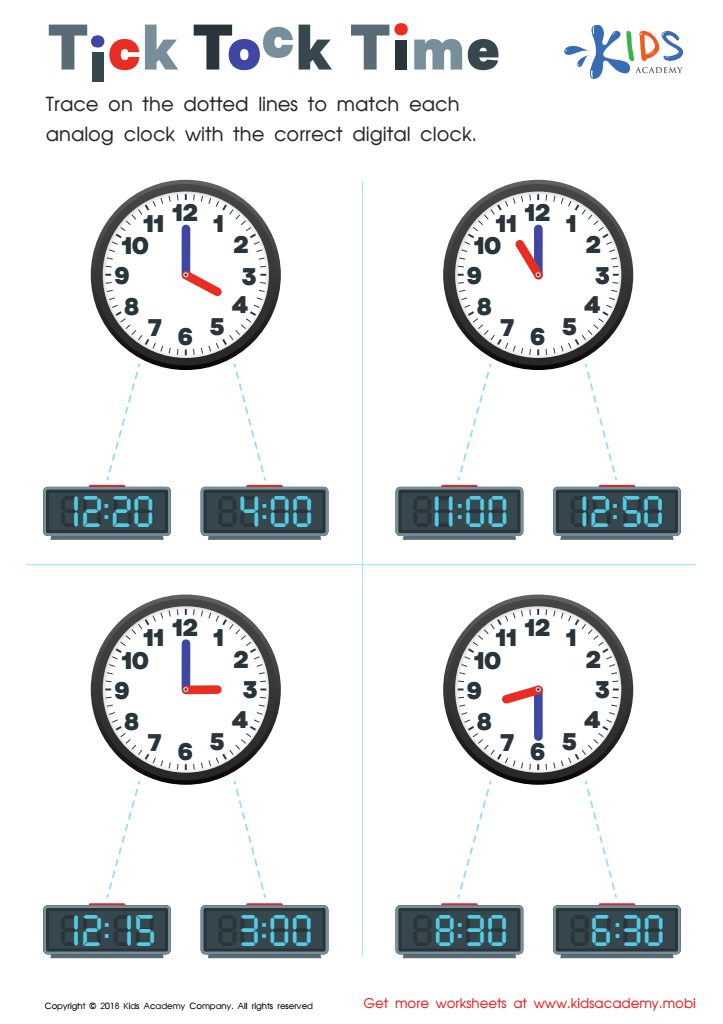
Tick Tock Time Worksheet
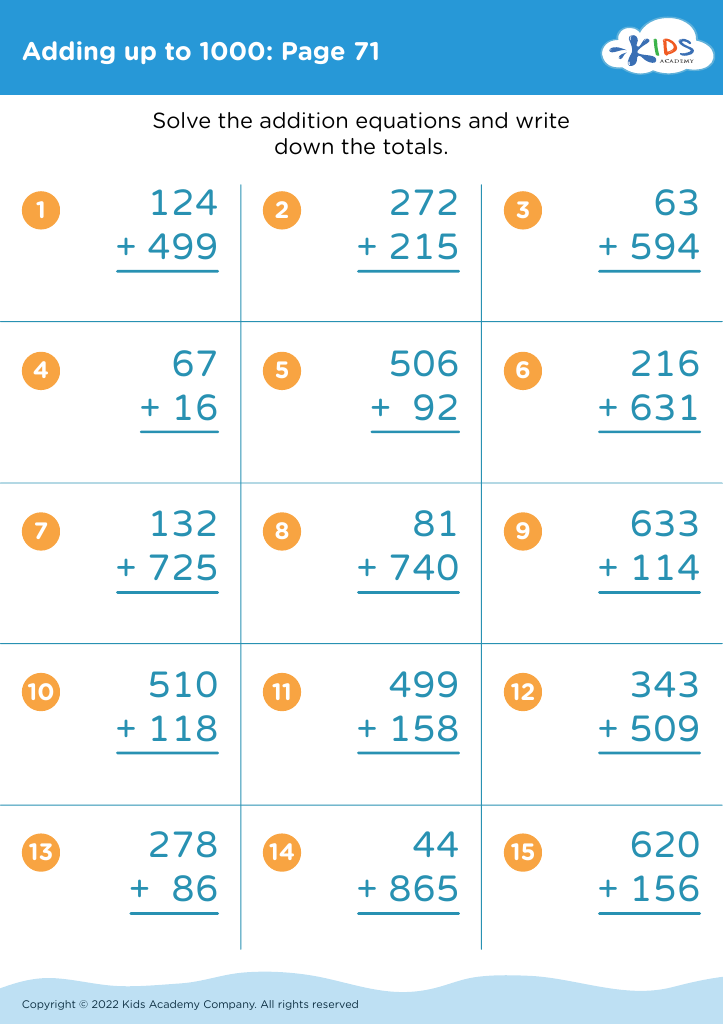
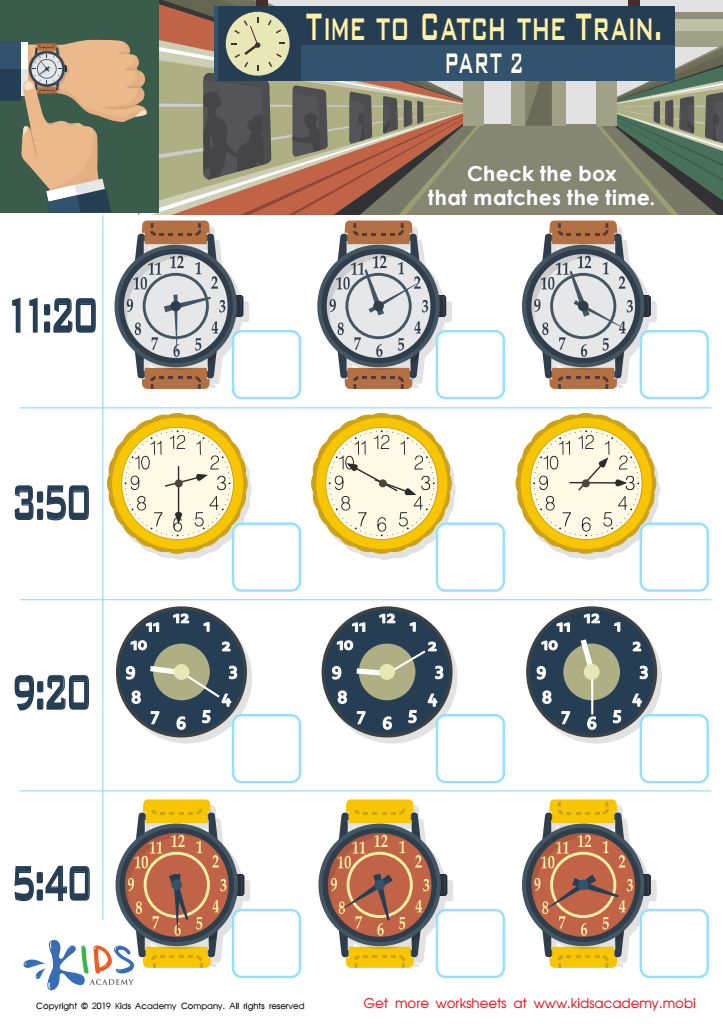
Time to Catch the Train Part 2 Worksheet








Parents and teachers should prioritize teaching children ages 5-8 to read analog clocks because it fosters fundamental educational and developmental skills. Firstly, understanding an analog clock aids in numeracy. As children learn to recognize numbers and calculate simple intervals, they lay the groundwork for more complex math concepts. Secondly, analog clock reading enriches spatial reasoning. It helps kids understand the passage of time and the relationship between the hour and minute hands, boosting their ability to navigate and organize time effectively.
Additionally, analog clock reading encourages fine motor skills. Manipulating small clock hands while learning to set time enhances muscle coordination. Notably, it also teaches patience and focus; unlike digital clocks, reading an analog clock requires a child to concentrate and decode its display actively.
Moreover, while digital clocks are ubiquitous, analog clocks still play crucial roles in many settings, such as schools and games. Familiarity with analog clocks ensures that children are well-rounded and versatile in different environments.
In essence, introducing children to analog clocks between ages 5-8 bridges multiple academic and life skills, setting a robust foundation for future education. Parents and teachers play an essential role in guiding children through this learning process, eventually empowering them to manage their time effectively.








