Analog Clock Understanding Worksheets for Ages 5-8
3 filtered results
-
From - To
Discover our engaging Analog Clock Understanding Worksheets designed specifically for children aged 5-8! These interactive resources help young learners grasp the concept of time by reading analog clocks through fun activities and exercises. From identifying hours and minutes to practicing time-telling skills, our worksheets are ideal for reinforcing basic math concepts in an enjoyable way. Perfect for classroom use or at-home learning, these worksheets promote confidence and competence in telling time. Unlock your child's potential today by exploring our thoughtfully crafted materials that make learning about analog clocks a breeze and nurture their enthusiasm for understanding time!
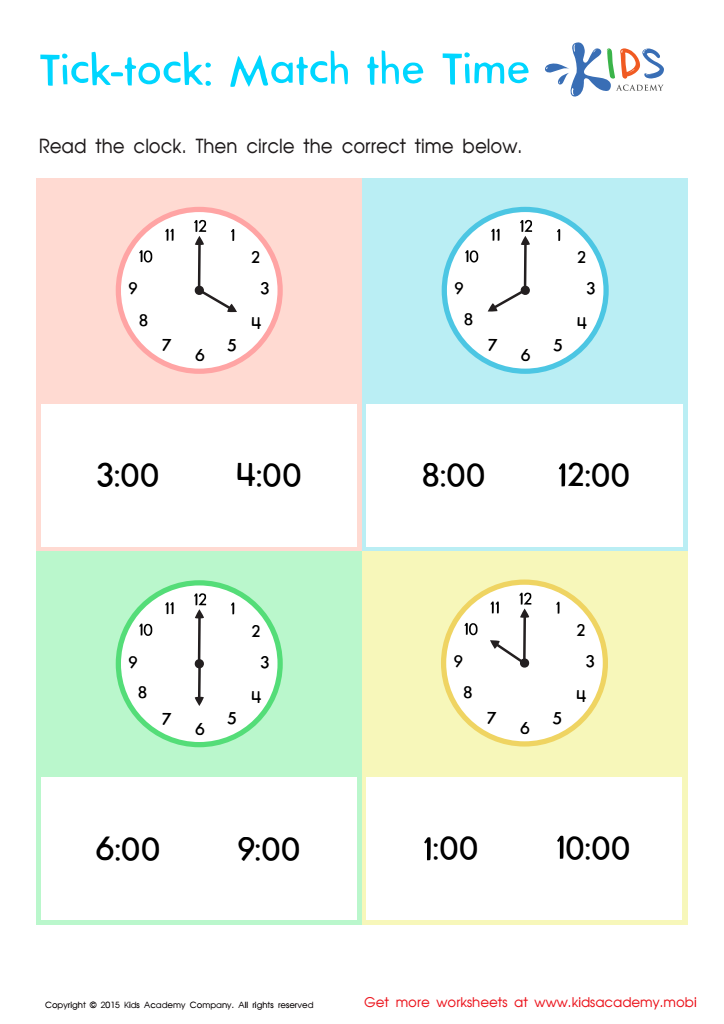
Telling The Time Worksheet: Part 4
 Assign to My Students
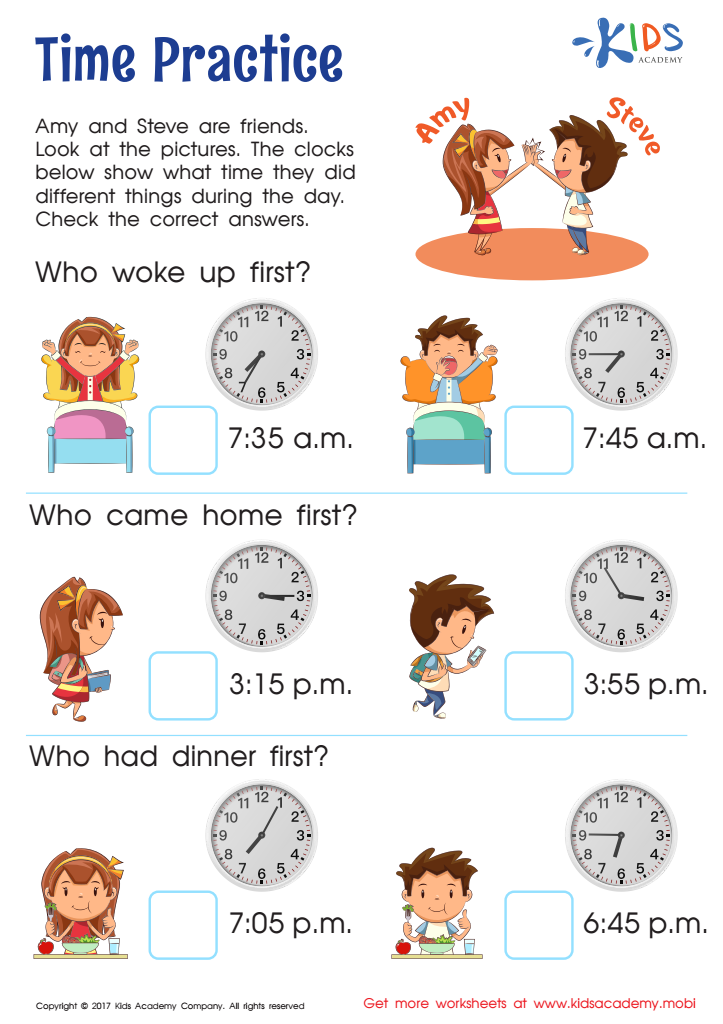
Time Practice Worksheet
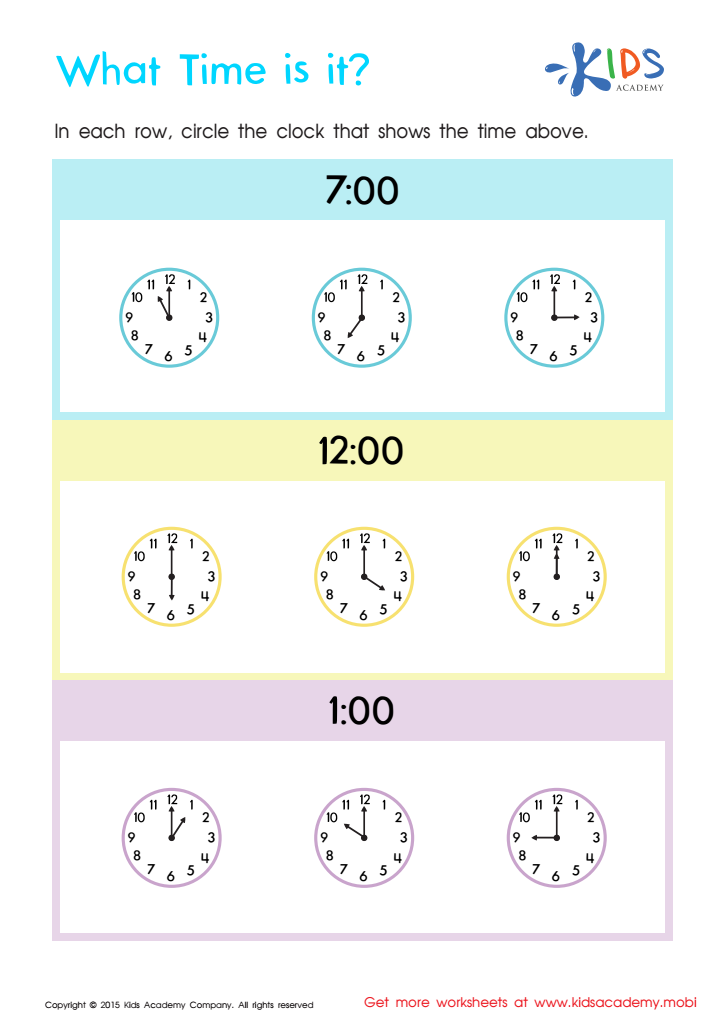
Telling The Time Worksheet: Part 3







Understanding analog clocks is an essential skill for children aged 5-8, as it lays the foundation for effective time management and development of critical thinking skills. Unlike digital clocks, which simply display numbers, analog clocks require children to comprehend both the positions of the hands and the relationships between hours and minutes. This understanding fosters numeracy, as children practice counting by fives and developing a sense of intervals.
Moreover, learning to tell time on an analog clock reinforces other important cognitive skills. Children engage in pattern recognition and spatial awareness while relating the clock's hands to their own routines, helping them learn concepts of sequencing and duration. Encouraging children to use analog clocks can enhance their engagement with time-related tasks, making them more aware of schedules and punctuality.
In our fast-paced digital world, nurturing this skill also promotes mindfulness and connection to the physical world around them. It encourages curiosity and the ability to appreciate how time flows in a tangible format. For these reasons, parents and teachers play a pivotal role in integrating analog clock understanding into daily learning, as it contributes significantly to a child's overall cognitive and emotional development.








