
Animal knowledge Worksheets for Ages 5-8
6 filtered results
Difficulty Level
Grade
Age
-
From - To
Subject
Activity
Standards
Welcome to our engaging "Animal Knowledge Worksheets" for ages 5-8, designed to spark children's curiosity about the animal kingdom! Our printable worksheets offer a variety of fun activities, including matching animals with their habitats, completing name puzzles, and exploring fascinating facts about various species. Tailored to enhance critical thinking and boost vocabulary, these resources support young learners in developing essential skills while they enjoy hands-on interactions. With colorful illustrations and interactive tasks, our worksheets make learning about animals exciting and enjoyable. Perfect for home or classroom use, these activities nurture a love for wildlife and nature in your little learners.
Favorites
With answer key
Interactive
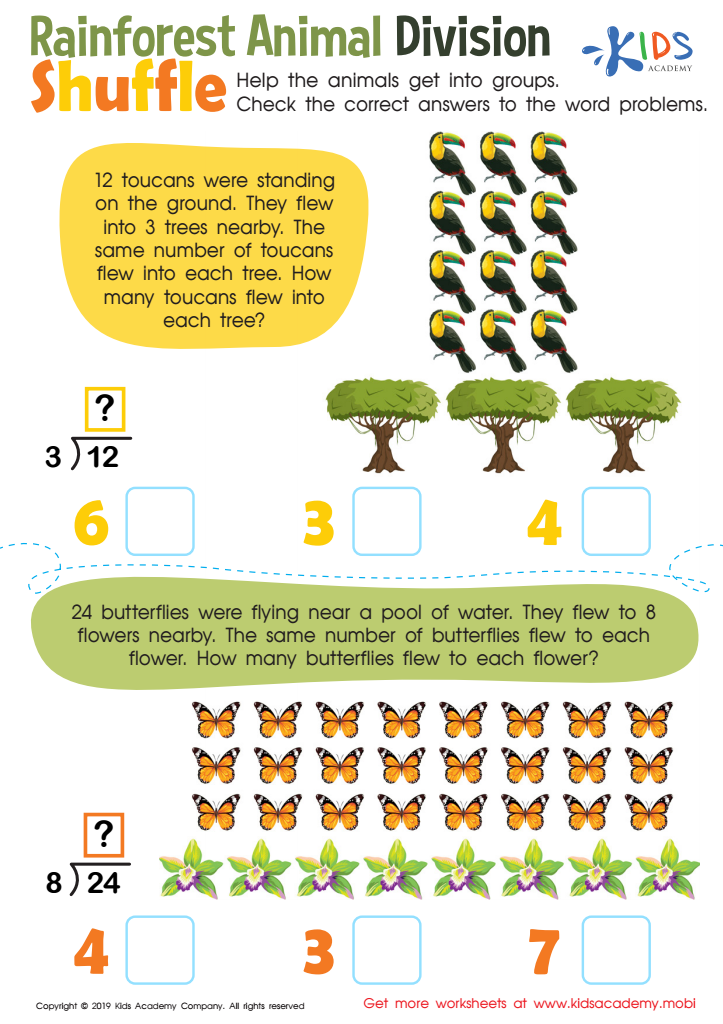
Rainforest Animal Division Worksheet
Children can save the rainforest and learn about division with this worksheet! It helps kids understand that division involves creating equal groups of specific numbers, and with its visual representation, they can grasp the concept more easily. They'll have fun learning about their place in the world and their role in protecting the environment.
 Assign to My Students
Rainforest Animal Division Worksheet
Worksheet
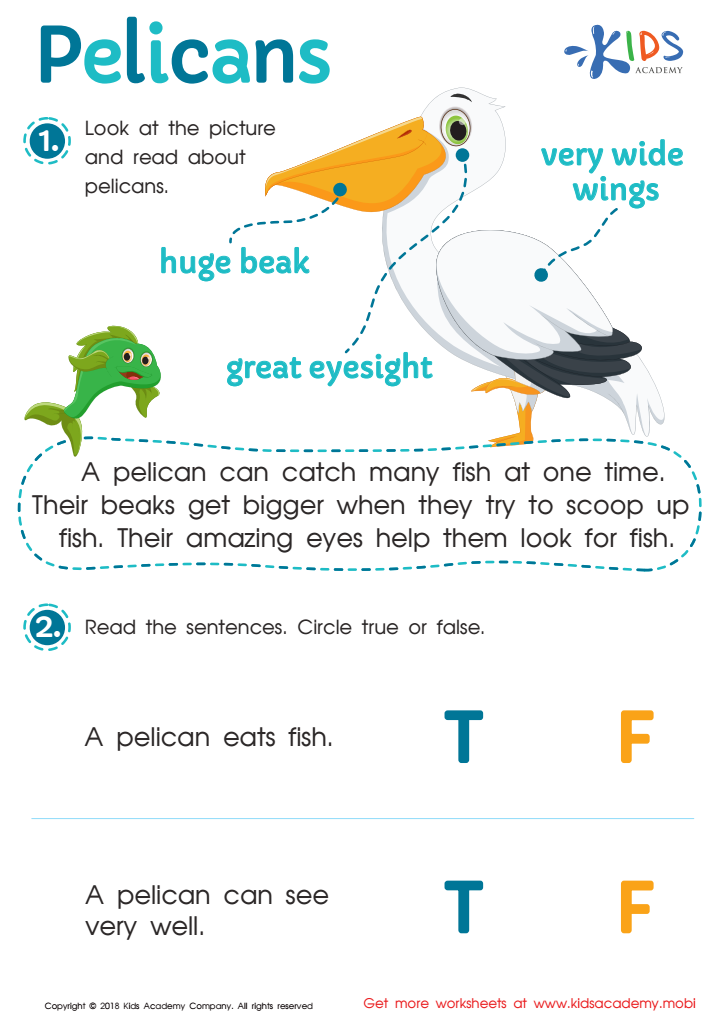
Pelicans Worksheet
This printable worksheet will help your child learn to read and analyze informational passages. It's fun and educational, featuring an animal science topic about pelicans. Read the passage and view the graph, then answer the questions by indicating if the statements are true or false.
Pelicans Worksheet
Worksheet
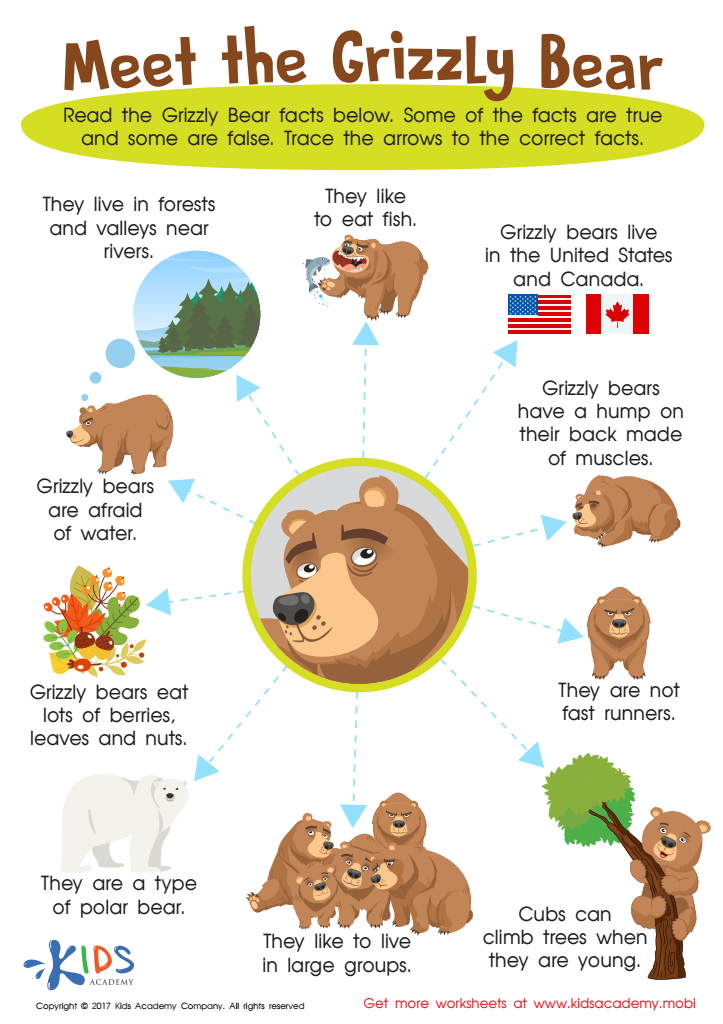
Grizzly Bear Facts Worksheet
Kids will separate truth from fiction in this engaging worksheet about the grizzly bear! Third graders will use their prior knowledge to read the facts and determine which are true and false. Give your child an interesting way to learn more with this vibrant worksheet!
Grizzly Bear Facts Worksheet
Worksheet
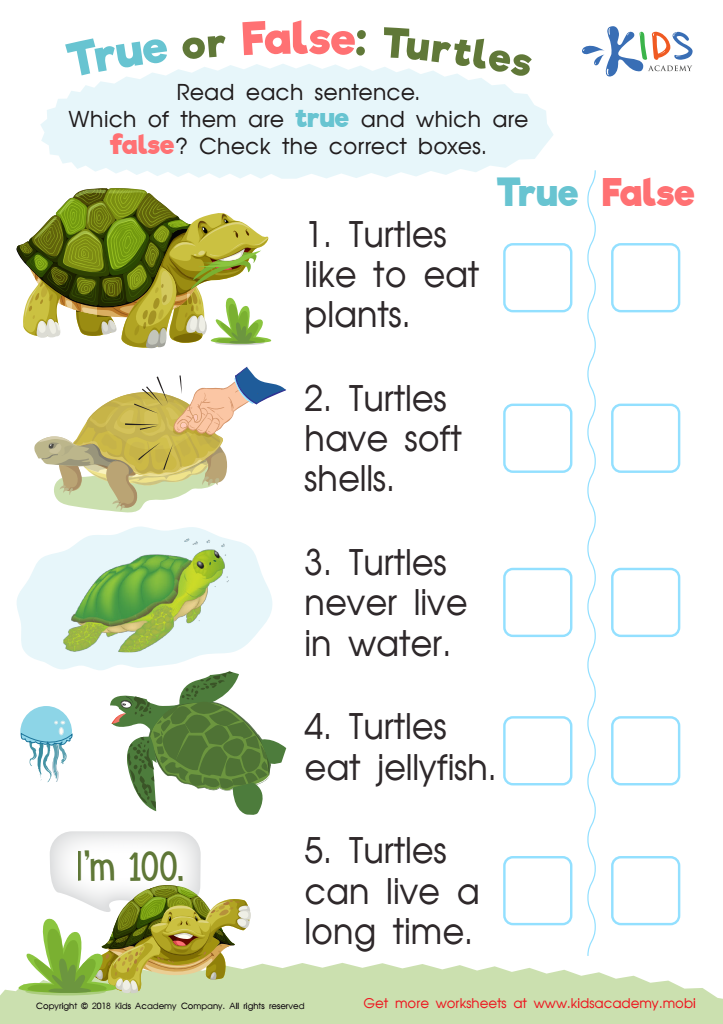
True or False: Turtles Worksheet
Print this free downloadable worksheet to strengthen your child's reading comprehension. Assist them to read each sentence and recall facts about turtles. Check true or false for each statement to verify their knowledge. Perfect for early learners!
True or False: Turtles Worksheet
Worksheet
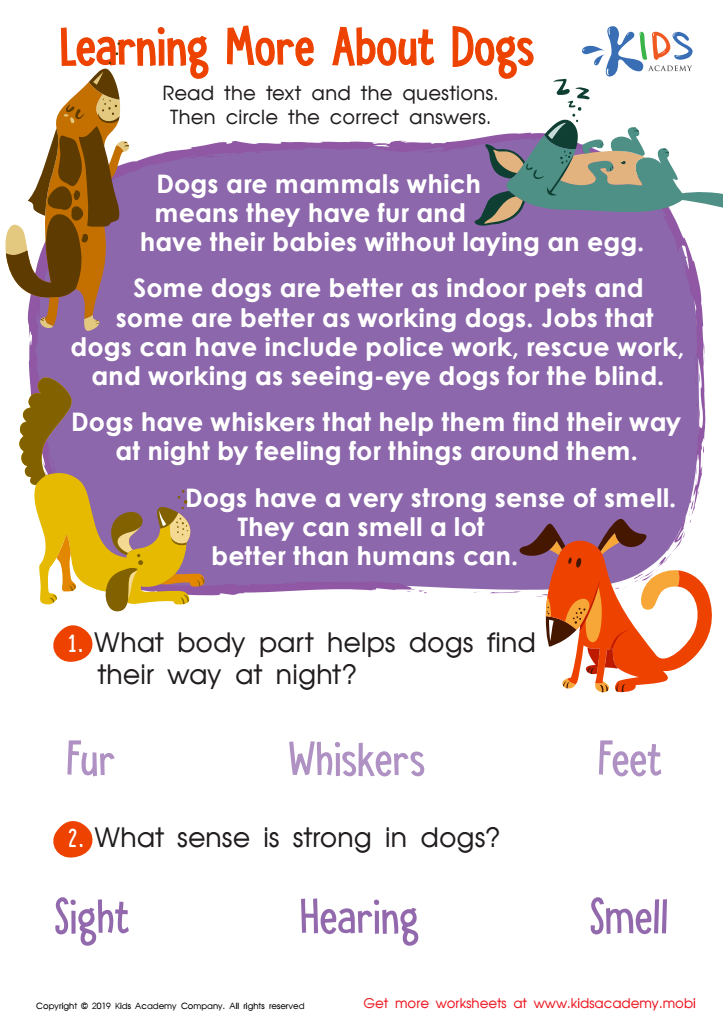
Learning More About Dogs Worksheet
Kids love learning about dogs! This free comprehension passage is great for engaging them with interesting facts. From the text, they can learn about dogs and the work they do, then answer questions to test their understanding. It's an enjoyable worksheet with fast reading and comprehension practice.
Learning More About Dogs Worksheet
Worksheet
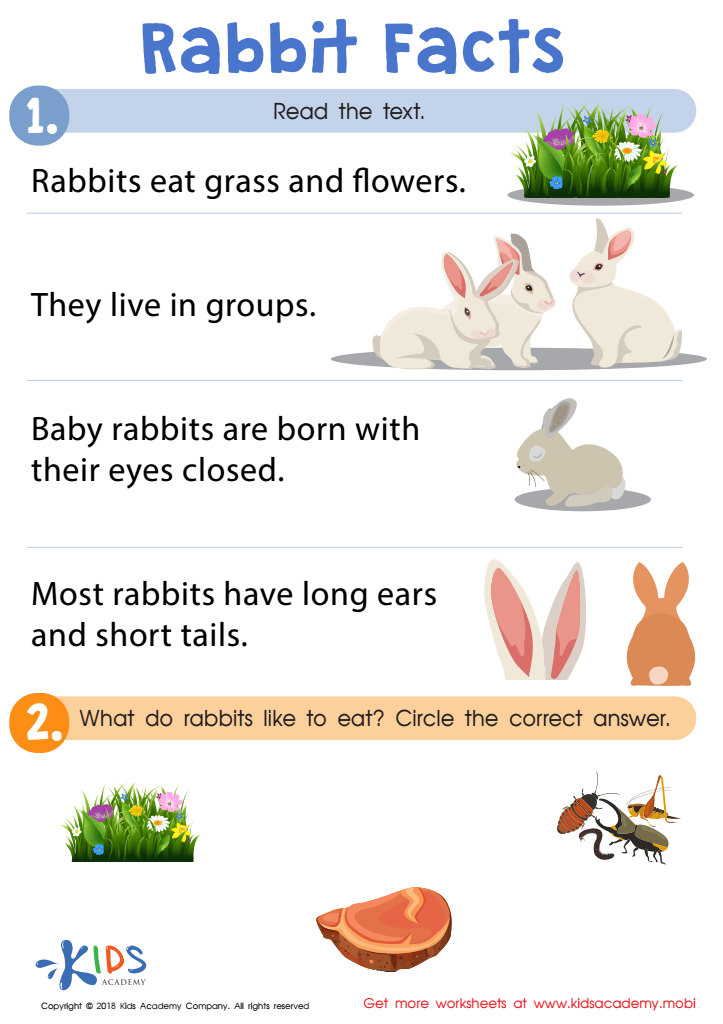
Rabbit Facts Worksheet
Informational texts offer great learning opportunities. Kids Academy's reading worksheet helps children read and recall important details from a text about bunnies. Kids will love it! Simply read the rabbit facts and circle the correct pictures to answer the questions.
Rabbit Facts Worksheet
Worksheet
Join Kids Academy for Free
Who is primarily going to use this learning content?






.jpg)

Animal knowledge is essential for children aged 5-8 for several reasons, enhancing their development and understanding of the world. Firstly, learning about animals encourages curiosity and a love for nature, promoting outdoor exploration. This age group is naturally inquisitive, and engaging them in animal studies helps satisfy their craving for learning.
Secondly, knowledge about animals fosters empathy and compassion. Understanding how animals live, their needs, and their environments enables children to appreciate the importance of wildlife conservation and responsible pet ownership, which are vital lessons in developing social awareness and empathy.
Furthermore, exposure to animals can enhance cognitive skills. Learning to classify animals, studying their habitats, diets, and behaviors introduces foundational concepts in science and critical thinking. This knowledge supports literacy development as children learn new vocabulary and concepts tied to animal names and facts.
Additionally, animal-based activities, such as visits to zoos or engagement with pets, provide opportunities for social interaction and teamwork. These experiences help to build confidence and communicative skills through discussions and collaboration. Overall, teaching young learners about animals contributes to a well-rounded education, helping to cultivate responsible, empathetic, and informed members of society.








