Applying math concepts Worksheets for Ages 5-8
3 filtered results
-
From - To
Discover a wide range of engaging "Applying Math Concepts" worksheets for children aged 5-8 that make learning fun. Our expertly designed activities help young learners grasp essential math skills, from addition and subtraction to understanding shapes and measurements. Tailored for young minds, these worksheets boost critical thinking and problem-solving abilities through playful visuals and hands-on problems. Perfect for use at home or in the classroom, they support early math proficiency and instill a love for learning. Visit us to equip your child with the foundational math skills they need for future academic success.
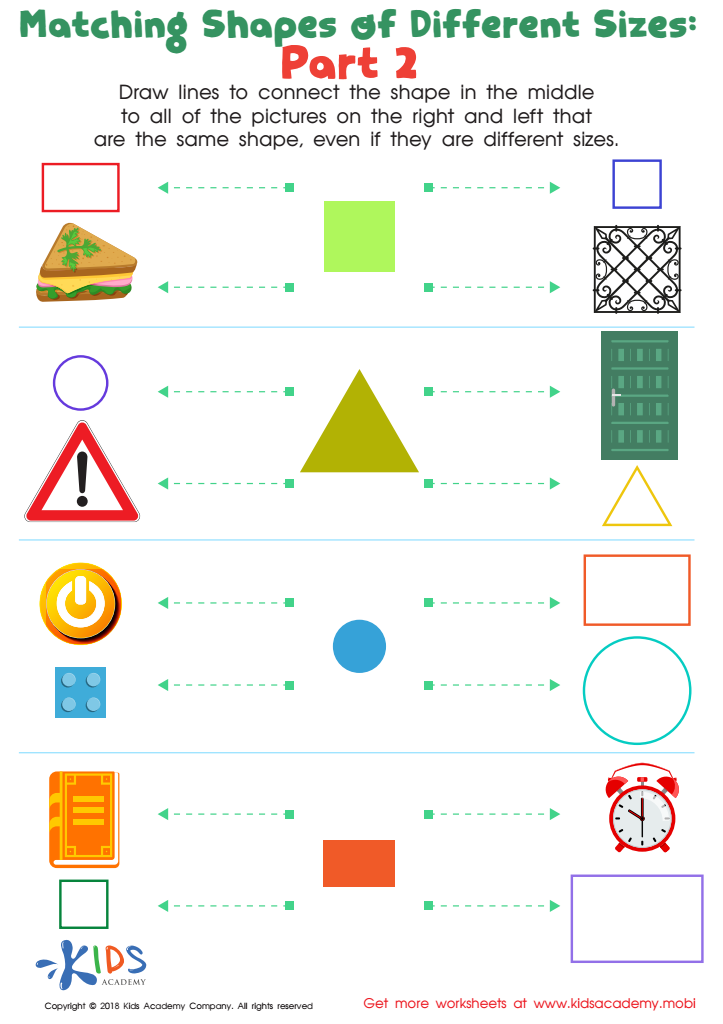
Geometry: Part 2 Worksheet
 Assign to My Students
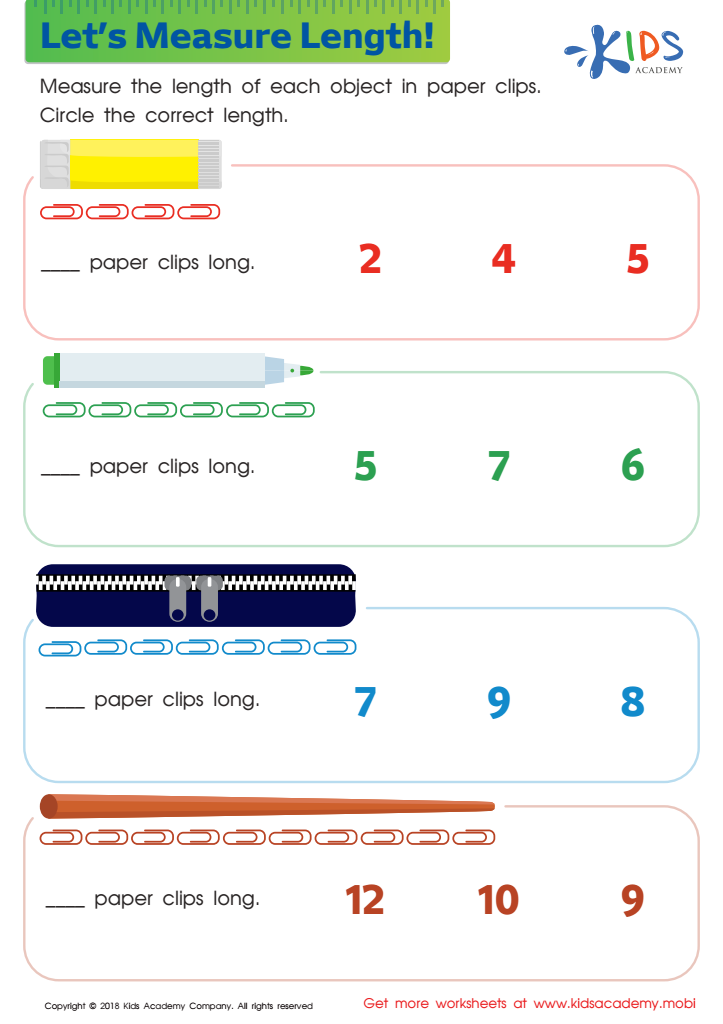
Lets Measure Length Worksheet
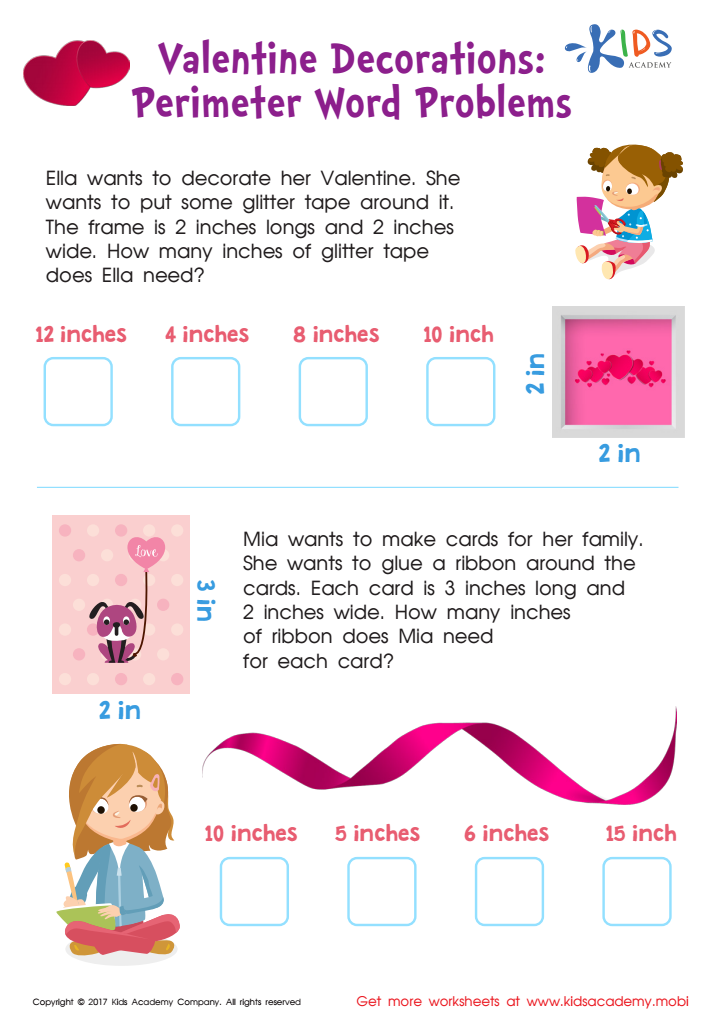
Perimeter Word Problems Worksheet







Applying math concepts for children aged 5-8 is crucial as it lays the foundation for their future academic and everyday life success. During these formative years, children are particularly receptive to learning, and introducing them to math concepts boosts cognitive development, critical thinking, and problem-solving skills.
Firstly, early math skills are strongly linked to higher academic achievement in later years. Children who grasp basic math concepts early on are likely to perform better not just in mathematics, but also in other subjects. This is because math teaches logical reasoning and the ability to follow step-by-step processes, which can be applied across the curriculum.
Secondly, real-world math applications, such as counting money, telling time, and understanding measurements, are essential life skills. By incorporating math into daily activities, parents and teachers make learning relevant and practical, helping children see the value of math beyond the classroom.
Moreover, exposure to math helps build confidence. Children who feel competent in math are more likely to approach new challenges with a positive mindset. Early success in math can also dispel the myth that math is inherently difficult, making them more likely to engage with the subject long-term.
In conclusion, emphasizing math concepts for young children is an investment in their intellectual growth, practical life skills, and overall confidence, setting a strong foundation for future learning and everyday tasks.








