Basic counting skills Worksheets for Ages 5-8 - Page 2
28 filtered results
-
From - To
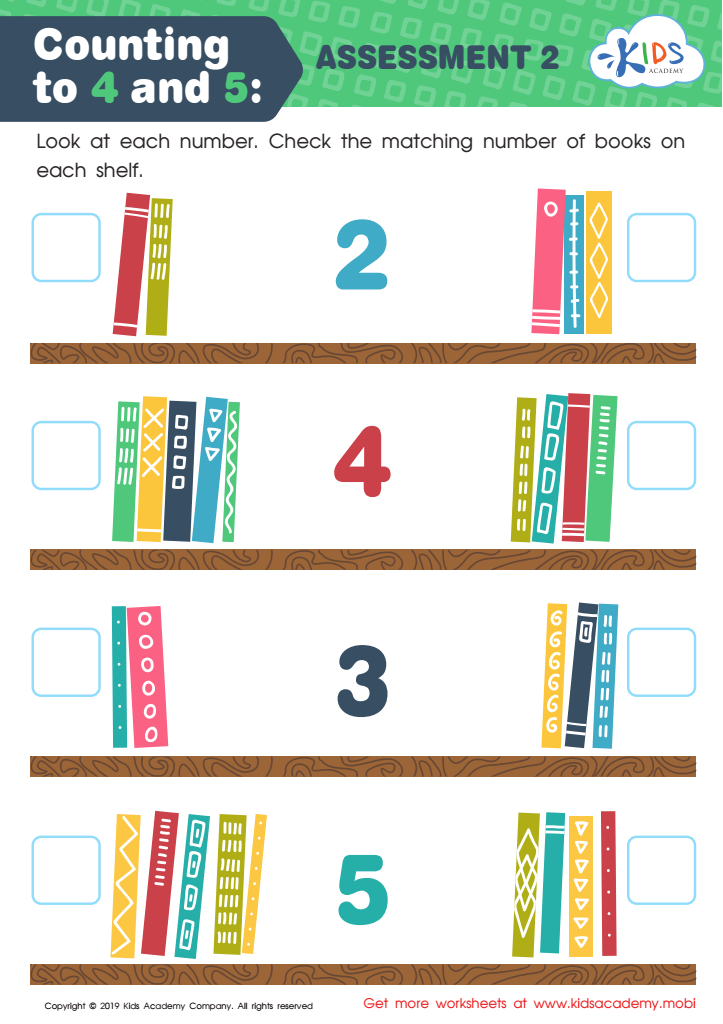
Counting to 4 and 5: Assessment 2 Worksheet
 Assign to My Students
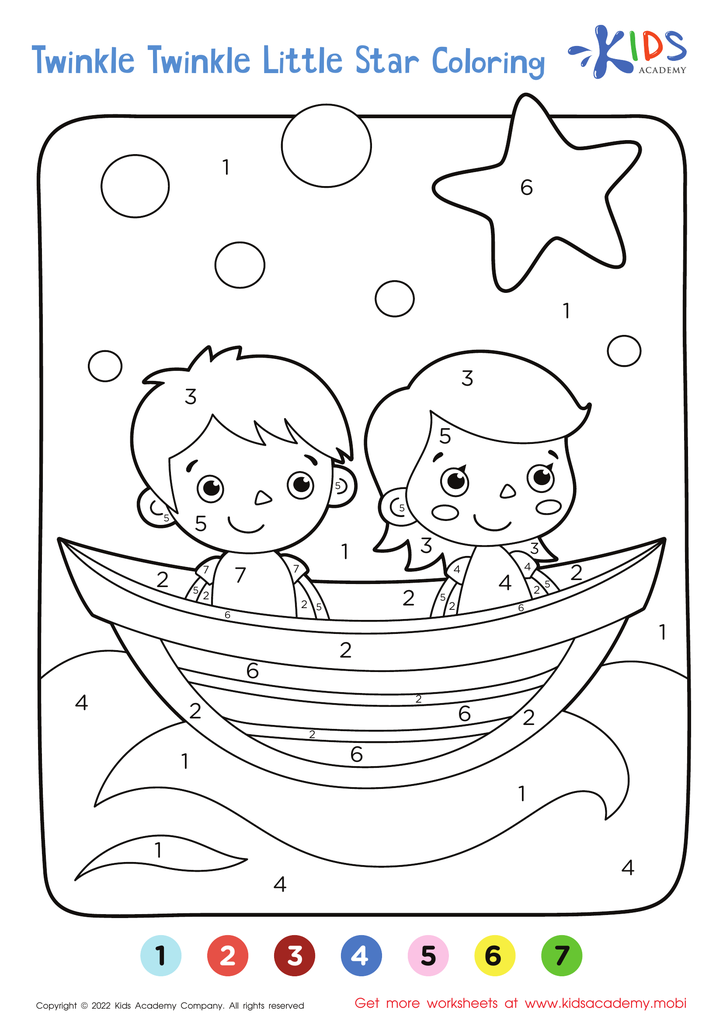
Twinkle, Twinkle, Little Star – Coloring by Numbers
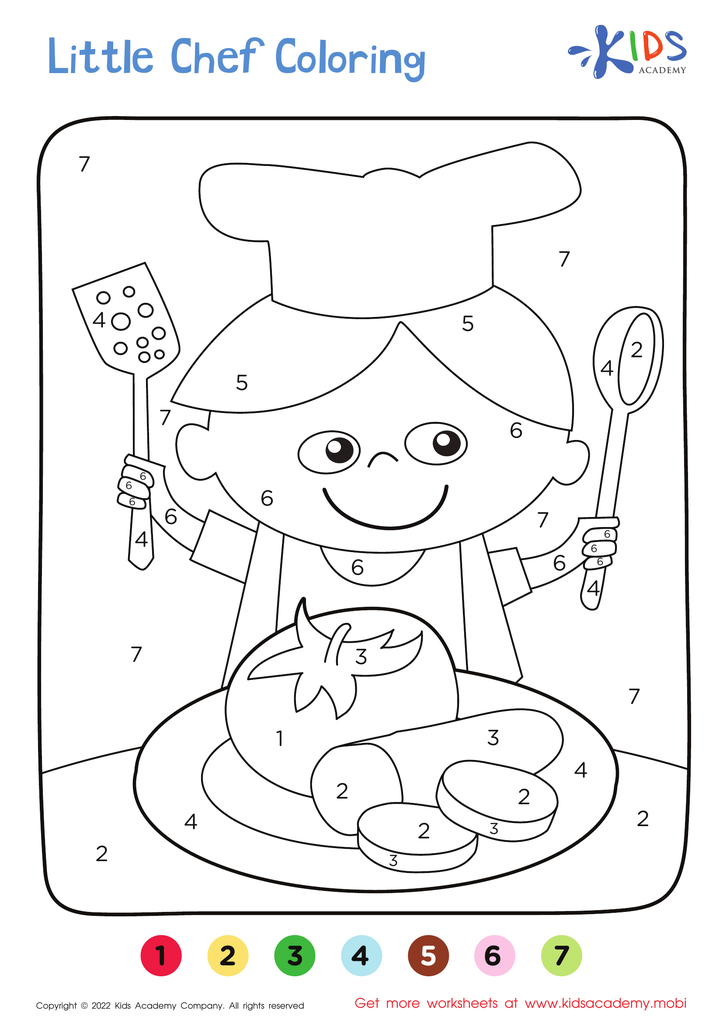
Little Chef – Coloring by Numbers







Basic counting skills are foundational for children's cognitive development and have far-reaching implications for their academic success. For children ages 5-8, these skills serve as the building blocks for mathematics and problem-solving. By learning to count, children not only grasp number recognition but also begin to understand patterns, progressions, and relationships between numbers, which leads to more advanced concepts like addition and subtraction.
Moreover, counting skills enhance children's ability to organize and categorize information, paving the way for critical thinking and analytical abilities. Instilling confidence in these early mathematical concepts can lead to greater enthusiasm for learning and a positive attitude toward math in general.
Additionally, counting skills have practical applications in everyday life. From managing money to measuring ingredients in cooking, the ability to count correctly helps children navigate the world around them. Teachers and parents play a pivotal role in reinforcing these skills through engaging activities and interactive learning experiences. When caregivers prioritize basic counting skills, they not only cultivate a solid mathematical foundation but also equip children with essential life skills that will benefit them throughout their educational journey and beyond. Therefore, fostering these abilities is a crucial investment in a child's future.








