Basic geometry comprehension Worksheets for Ages 5-8
3 filtered results
-
From - To
Explore our engaging Basic Geometry Comprehension Worksheets designed specifically for children ages 5-8! These interactive resources help young learners master foundational geometry concepts in a fun and accessible way. Our worksheets cover essential topics such as shapes, spatial reasoning, and measurement, encouraging kids to identify, classify, and describe various geometric figures. With vibrant illustrations and age-appropriate activities, these worksheets promote creativity and problem-solving skills while enhancing critical thinking. Ideal for home or classroom use, our downloadable worksheets make learning geometry enjoyable and effective. Help your child build confidence in their mathematical abilities today! Access our geometry worksheets to get started!
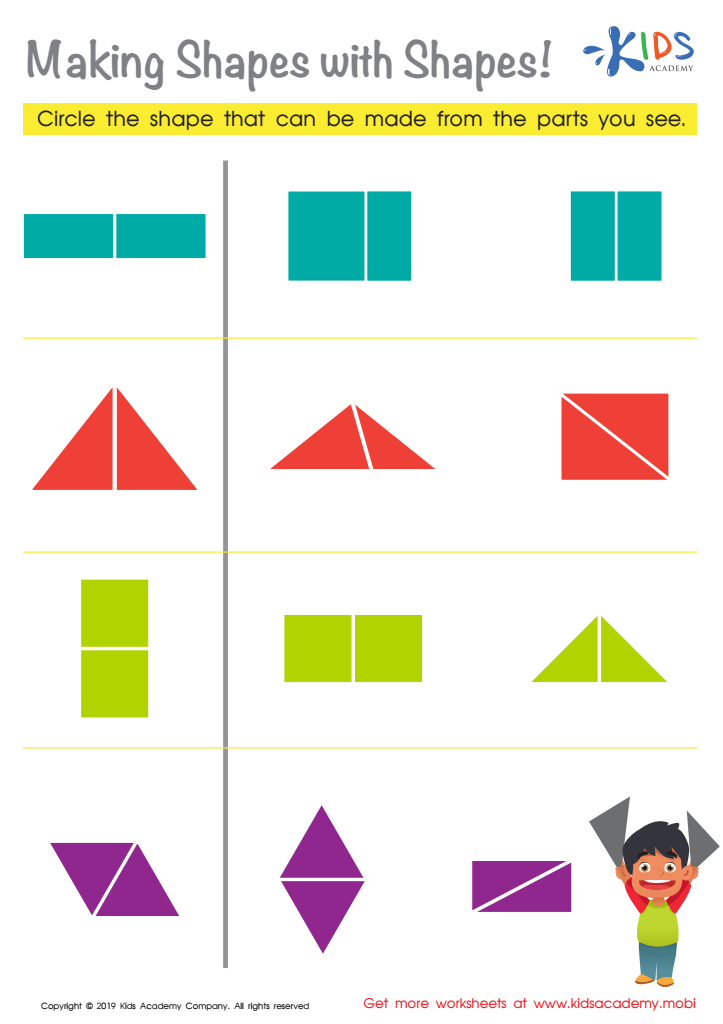
Making Shapes with Shapes Worksheet
 Assign to My Students
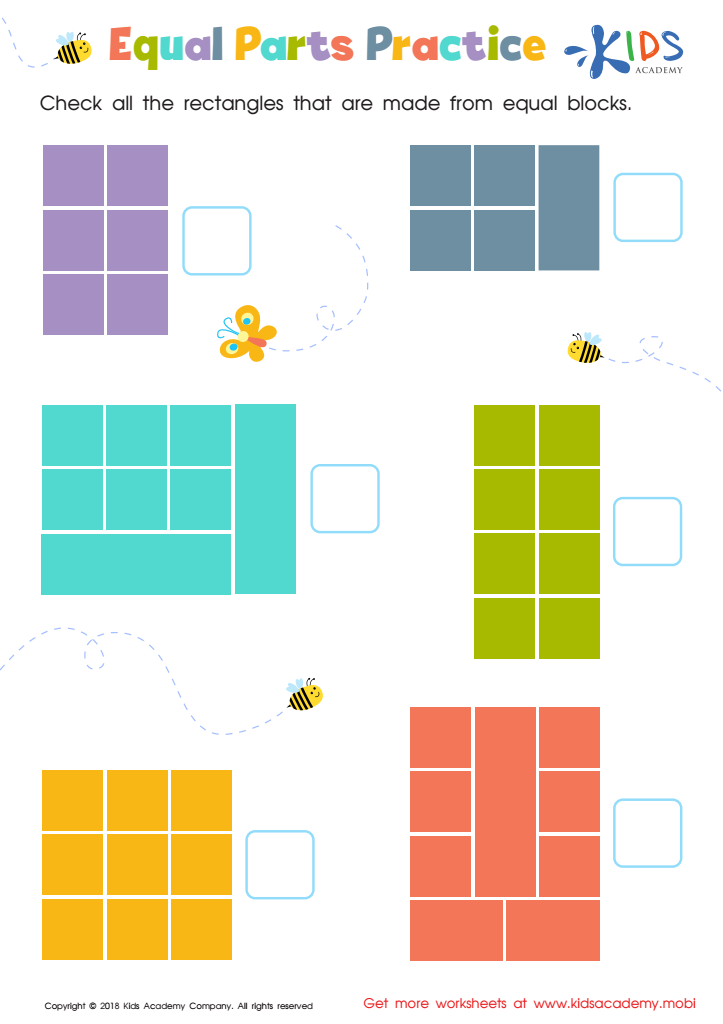
Equal Parts Practice Worksheet
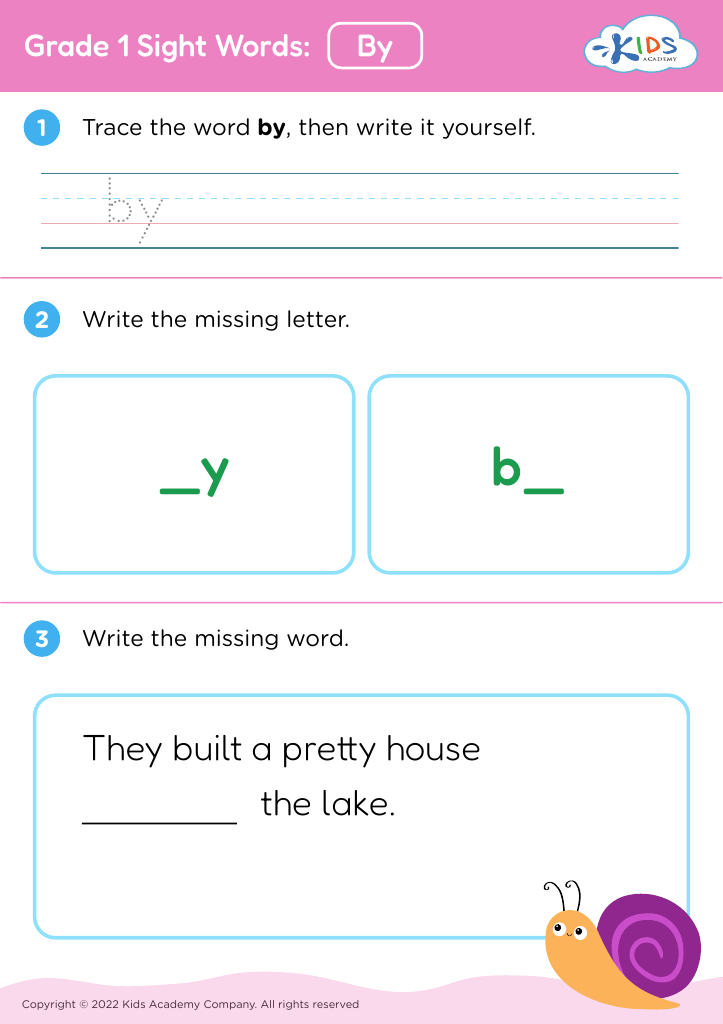







Basic geometry comprehension for children aged 5-8 is vital for several reasons. First, it lays the groundwork for their overall mathematical understanding. Recognizing shapes, understanding spatial relationships, and grasping concepts like symmetry and measurement promote critical thinking and problem-solving skills. Geometry fosters visual-spatial awareness, which is essential not only in mathematics but also in everyday life.
Moreover, engaging with geometry helps children develop confidence in their abilities. As they successfully identify and manipulate shapes and learn to measure objects, they gain a sense of accomplishment that encourages further learning.
Socially, geometry provides opportunities for collaboration and communication. Group activities that involve building, drawing, or solving spatial puzzles require children to explain their thinking and work together, enhancing their social skills.
Additionally, with an increasing emphasis on STEM education, a strong foundation in geometry prepares children for more complex concepts they will encounter later. Understanding basic geometric principles can inspire a love for these subjects, which can lead to better educational outcomes in the future. Ultimately, fostering geometry comprehension in young learners not only enhances their immediate academic endeavors but also shapes their overall cognitive and social development.








