Cultural Understanding Worksheets for Ages 5-8
3 filtered results
-
From - To
Explore our Cultural Understanding Worksheets, designed for ages 5-8 to nurture empathy and global awareness. Through engaging, age-appropriate activities, children learn about diverse cultures, traditions, and lifestyles. Our printable worksheets foster open-mindedness and respect, aiding young learners in recognizing and appreciating our multifaceted world. By introducing cultural concepts early, we aim to build curiosity and understanding that will benefit them throughout life. Enhance your child’s education with these fun, valuable resources that blend learning and cultural exploration seamlessly. Start their journey toward becoming informed, compassionate global citizens today! Discover a world of learning at Kids Academy.
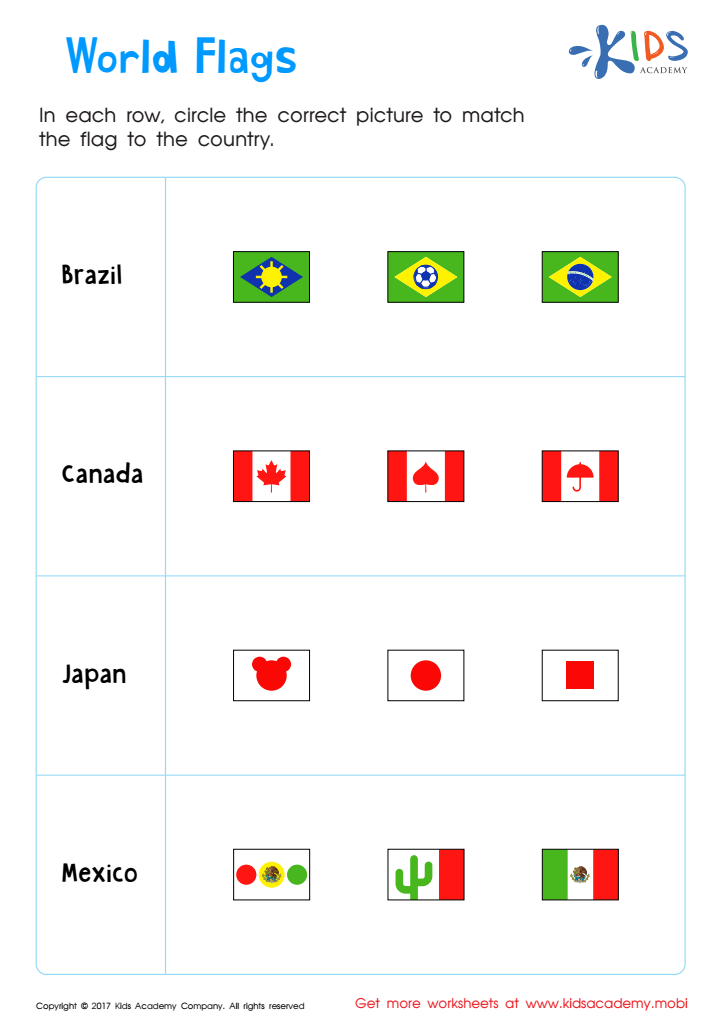
World Flags Printable
 Assign to My Students
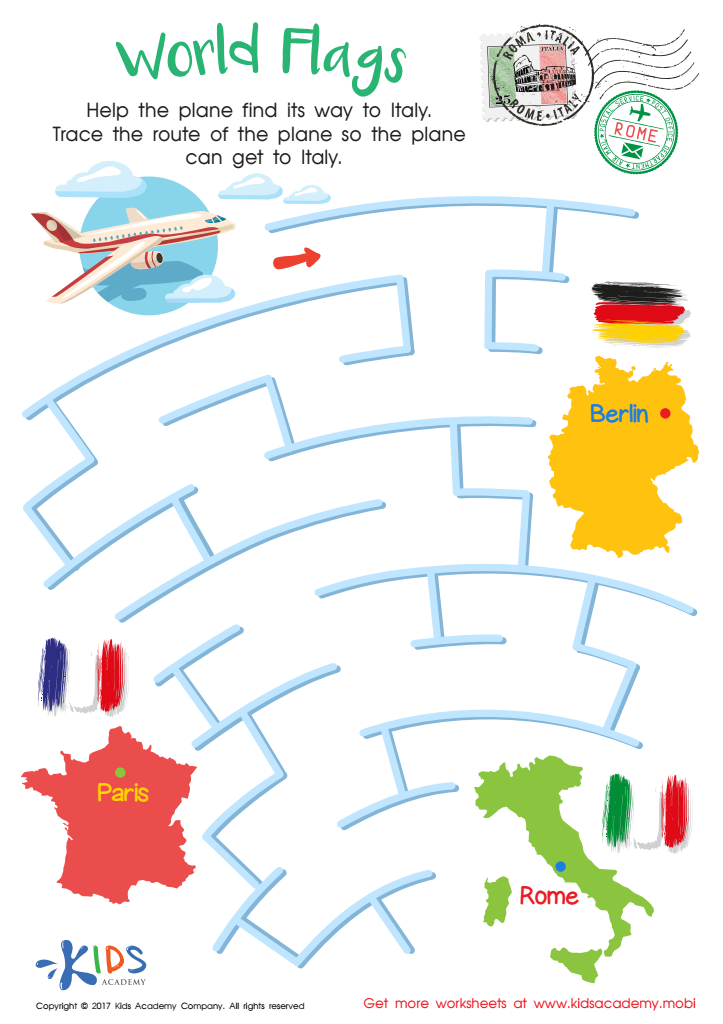
World Flags Maze Worksheet






.jpg)

Cultural understanding is vital for children ages 5-8 as it lays the foundation for empathy, inclusiveness, and respect towards diversity. At this age, children are highly impressionable, actively absorbing information about the world around them. Introducing diverse cultures encourages open-mindedness, helping kids appreciate differences rather than see them as odd or inferior. This understanding fosters social harmony in classrooms and communities by reducing prejudices and stereotypes from a young age.
In an educational setting, culturally inclusive curricula enhance creative thinking and problem-solving skills. Exposure to different customs, traditions, and perspectives broadens a child's worldview, enriching their learning experiences. This well-rounded education is crucial in an increasingly globalized world, where working and interacting with people from various backgrounds is a reality.
For parents, encouraging cultural understanding strengthens the family’s ethical framework, nurturing compassionate and responsible individuals. It also supports emotional development by teaching children effective communication and conflict resolution skills, which are paramount for building meaningful relationships.
In summary, prioritizing cultural understanding in the early years aids in shaping well-rounded, empathetic, and globally-minded individuals. Parents or teachers laying this foundation are investing in a kinder, more cohesive future generation.








