Developing spatial awareness Worksheets for Ages 5-8
3 filtered results
-
From - To
Unlock your child's potential with our engaging "Developing Spatial Awareness" worksheets designed for ages 5-8! Spatial awareness is a crucial foundational skill that helps children understand their environment, build problem-solving abilities, and enhance their overall cognitive development. Our carefully crafted worksheets feature fun activities such as mazes, shape sorting, and 3D thinking exercises, making learning exciting and interactive. Tailored to various learning styles, these worksheets boost confidence while encouraging exploration of space through play. Ideal for home or classroom use, our resources support young learners as they navigate, recognize, and relate to the world around them. Start your child's journey today!
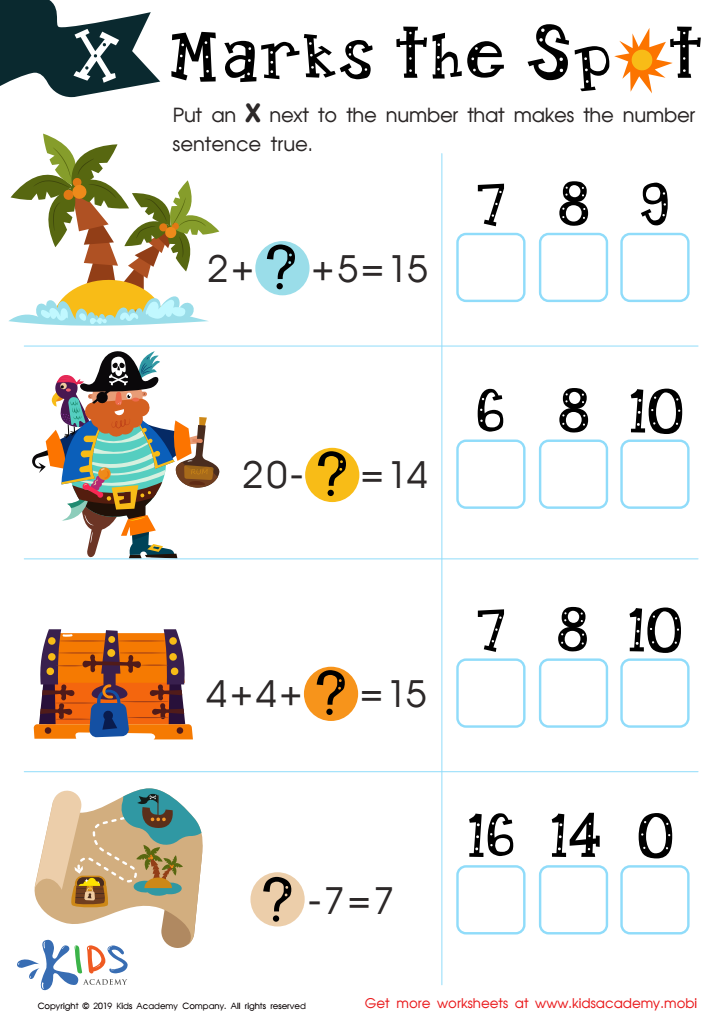
X Marks the Spot Worksheet
 Assign to My Students
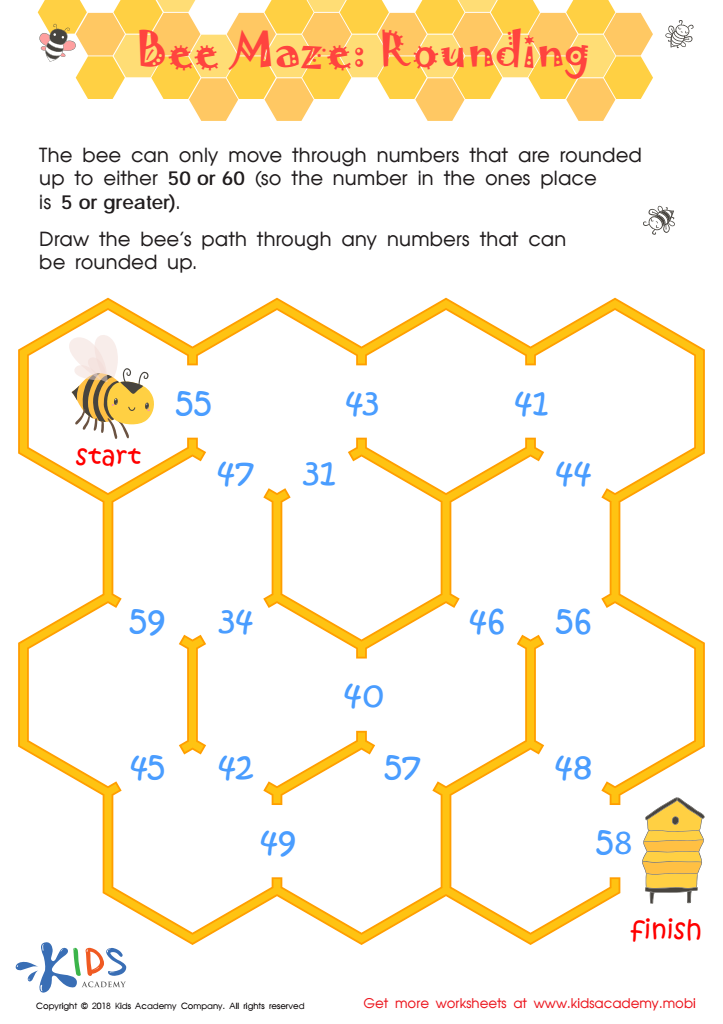
Bee Maze Rounding Worksheet
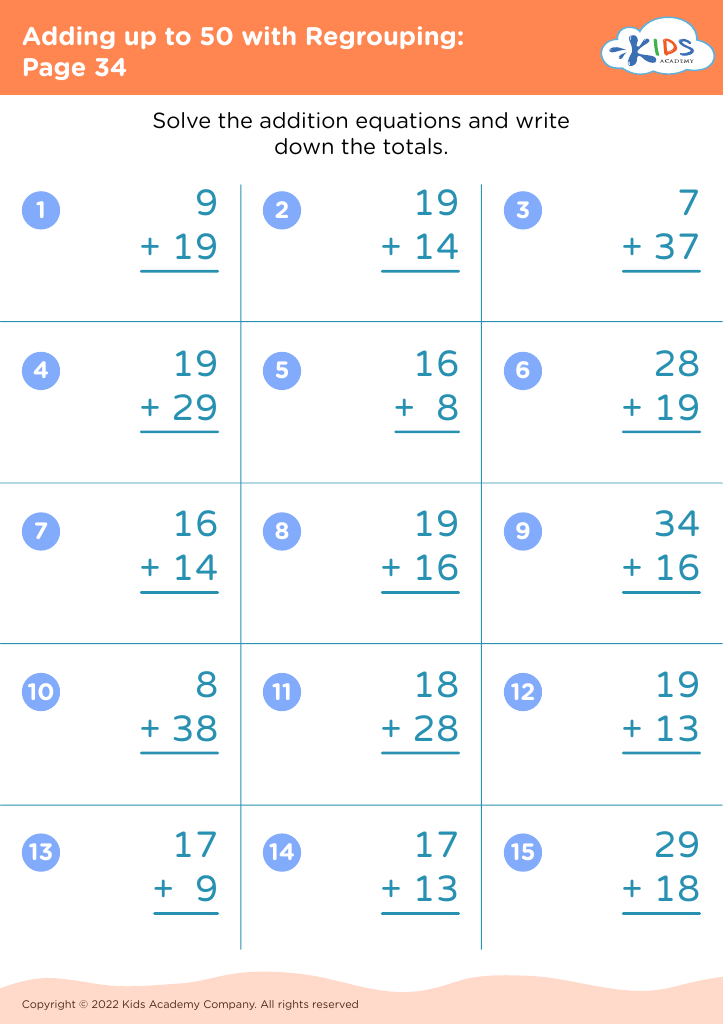





Developing spatial awareness in children aged 5-8 is crucial for their cognitive, social, and academic growth. Spatial awareness refers to the ability to understand how objects relate to each other in space, which is fundamental for various skills, including problem-solving and reasoning.
Understanding spatial relationships aids in critical areas of learning, such as mathematics and science, where concepts like geometry, measurement, and patterns are prevalent. Children with strong spatial skills often find it easier to visualize problems and engage in activities that require logical thinking, such as solving puzzles or doing simple calculations.
Moreover, spatial awareness is vital for motor skills development. Activities such as drawing, building with blocks, or navigating a classroom environment help improve coordination and spatial perception.
Additionally, these skills contribute to social interactions. For instance, children use spatial reasoning when playing games, sharing space with peers, or collaborating on projects.
Encouraging spatial awareness can be achieved through play, hands-on activities, and guided experiences. By fostering these skills early on, parents and teachers lay a solid foundation for children's educational journey, paving the way for future academic success and enhancing their overall learning experiences.








