Event ordering Worksheets for Ages 5-8
3 filtered results
-
From - To
Our Event Ordering Worksheets for Ages 5-8 are designed to enhance your child’s logical thinking and sequencing skills. Utilizing fun and engaging activities, these printable worksheets guide children through the process of putting events in the correct order, a critical skill for early learning development. Perfect for young learners, each worksheet features colorful illustrations and relatable scenarios to keep kids interested while they practice. Give your child a head start in cognitive development and storytelling skills with our expertly crafted event ordering exercises, tailored to stimulate their minds and nurture a love for learning. Discover joyful learning at Kids Academy!
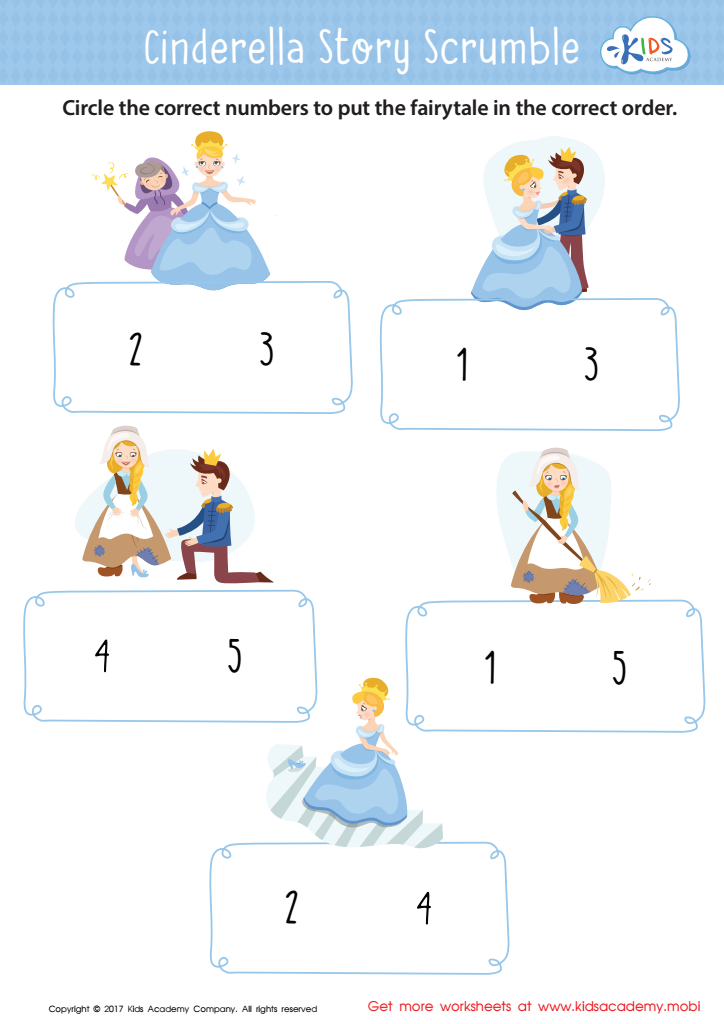
Cinderella Story Sequencing Worksheet
 Assign to My Students
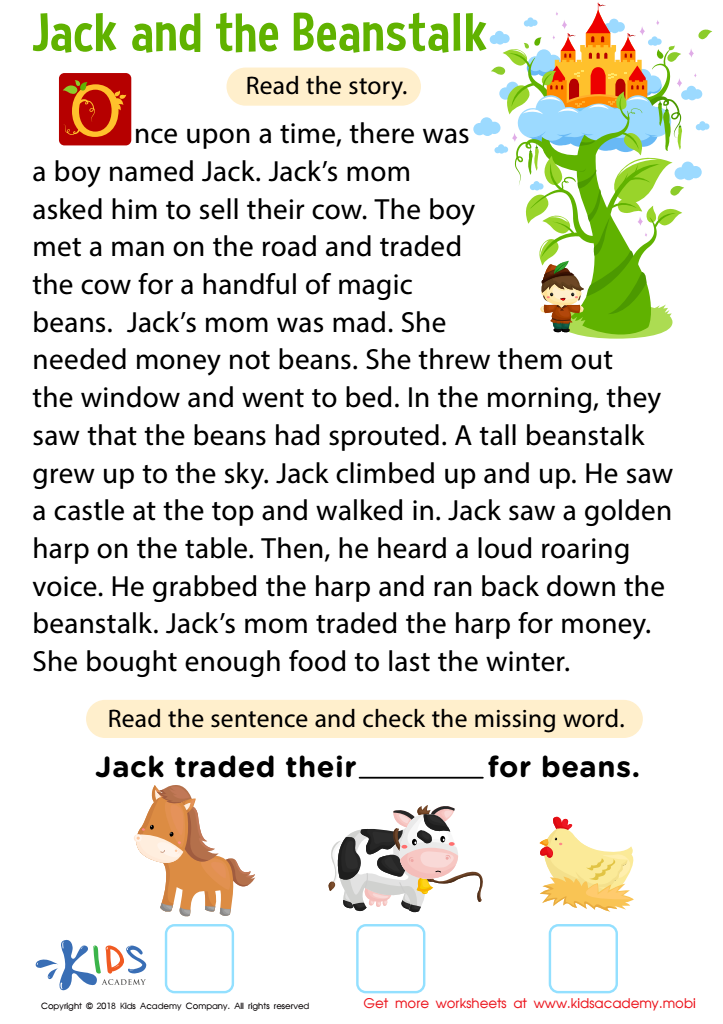
Jack and Beanstalk Worksheet
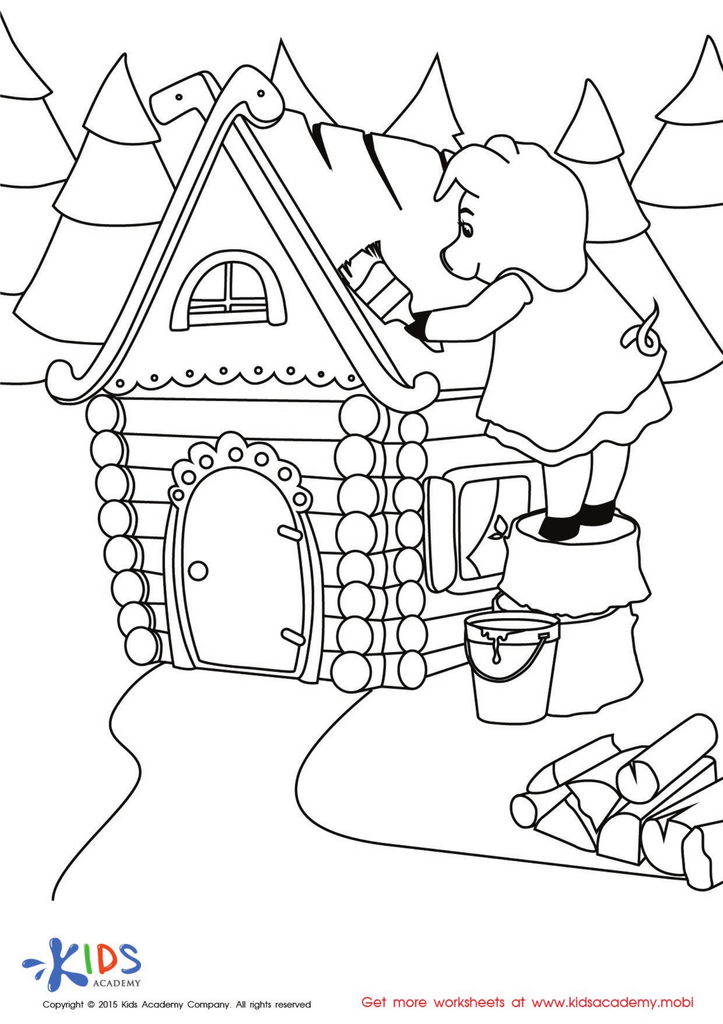
The Three Little Pigs Worksheet






.jpg)

Parents and teachers should care about event ordering for children aged 5-8 because it is fundamental to cognitive development and understanding the world. Event ordering, or sequencing, enhances a child’s comprehension of time, cause-and-effect relationships, and narrative structure, which are crucial for literacy and problem-solving skills.
For example, recognizing that a seed grows into a plant fosters understanding of natural processes and scientific concepts. Similarly, organizing a story with a beginning, middle, and end helps children understand narrative flow and improves reading and writing proficiency. This skill also aids in daily activities; knowing the order of brushing teeth, dressing, and having breakfast helps children manage routines independently, fostering self-reliance and confidence.
Cognitive flexibility is another benefit. Event ordering requires children to mentally manipulate information, which enhances working memory and logical reasoning. These abilities transfer to learning mathematics, understanding historical events, and even social interactions where sequencing helps predict and interpret others’ actions.
Moreover, teaching event ordering aligns with developmental milestones in this age group. It resonates well with their grasp of concrete operations, as described by Piaget, laying a solid foundation for abstract thinking required in later years.
Investing effort in teaching sequences propels children’s academic growth, life skills, and overall cognitive development, setting them up for success in diverse areas.








