Event sequencing Worksheets for Ages 5-8
3 filtered results
-
From - To
Introducing our engaging Event Sequencing Worksheets designed specifically for children aged 5-8! These printable resources help young learners develop crucial skills in understanding and organizing events in a logical sequence. By tracing, coloring, and completing fun activities, children enhance their comprehension abilities, boost critical thinking, and improve their narrative skills. Our worksheets provide a variety of scenarios, encouraging kids to visualize sequences and enhance their storytelling prowess. Perfect for classroom use or at-home practice, these worksheets make learning enjoyable and interactive. Unlock your child's potential today with our colorful, kid-friendly Event Sequencing Worksheets—because every child loves a good story!
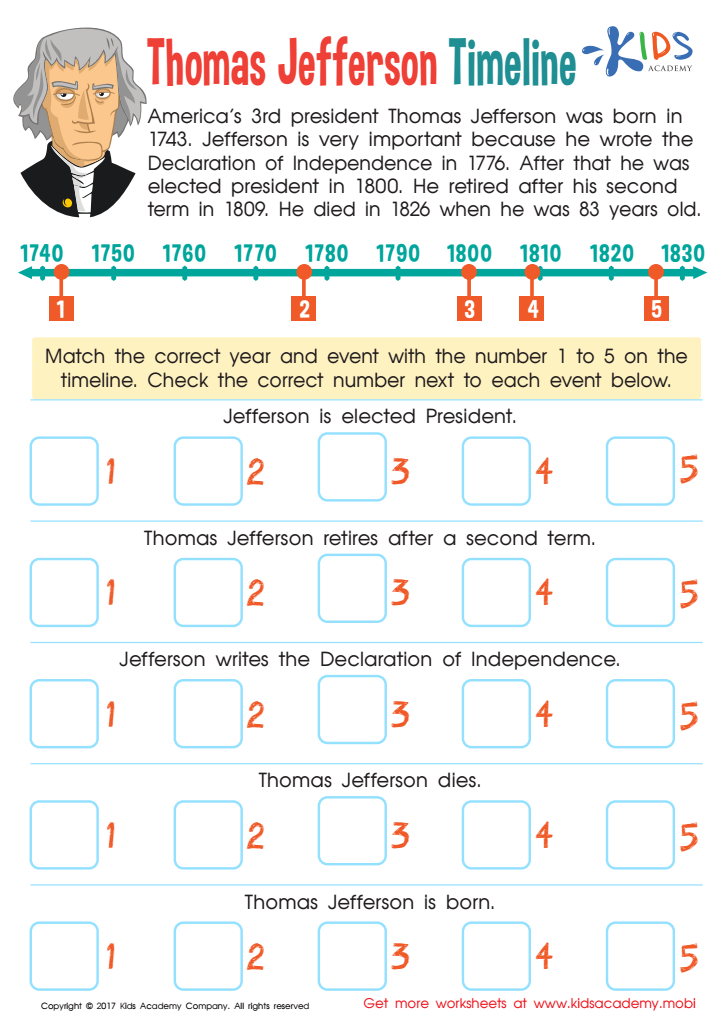
Thomas Jefferson Timeline Worksheet
 Assign to My Students
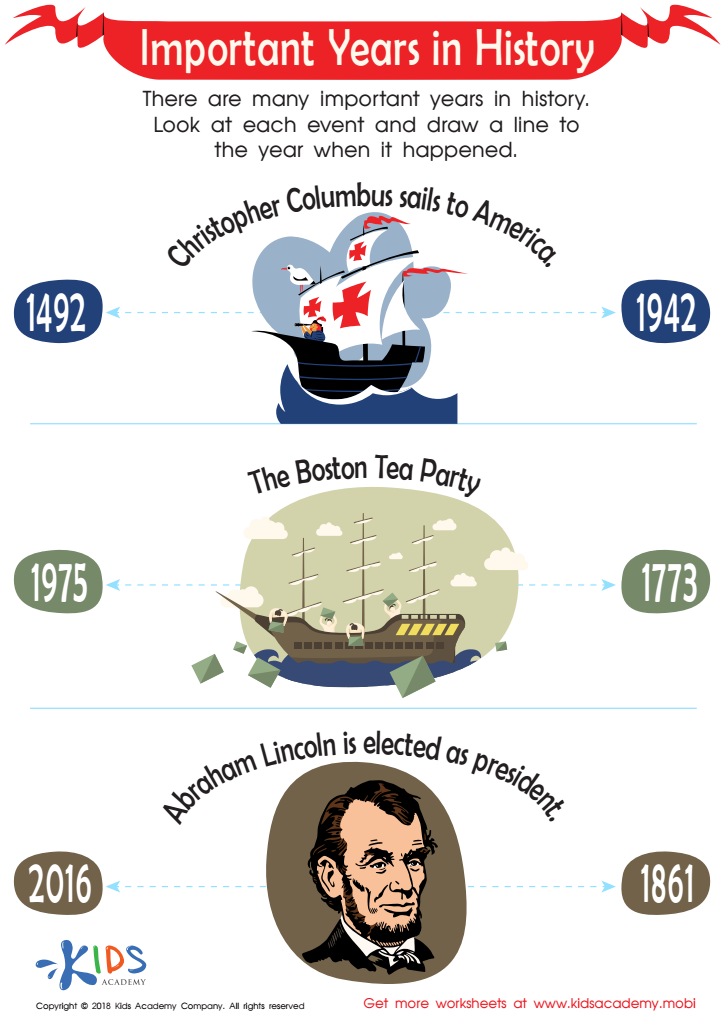
Important Years in History Worksheet
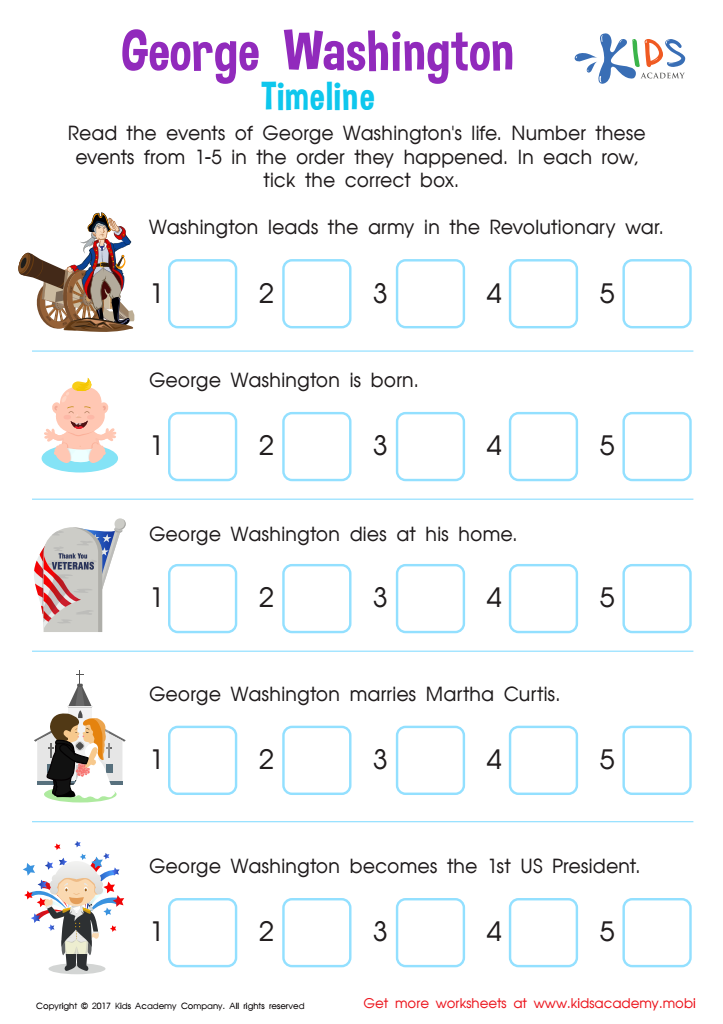
George Washington Timeline Worksheet






Event sequencing is a fundamental skill for children ages 5-8, as it lays the groundwork for essential literacy, cognitive development, and communication skills. Understanding how to sequence events helps children comprehend stories, make sense of their daily routines, and develop logical thinking.
For parents and teachers, nurturing this skill is crucial because it promotes a child's ability to retell stories, enhance their writing skills, and follow multi-step instructions. When children can identify and arrange the order of events, they develop critical reasoning skills that aid in problem-solving both academically and socially. This ability fosters creativity, as they learn to predict outcomes and create their narratives.
Additionally, event sequencing enhances a child’s memory. By encouraging children to break down experiences into sequential parts, parents and teachers can help them improve retention and recall capabilities. This skill also empowers children to share their thoughts and feelings more coherently, enhancing their social interactions.
By focusing on event sequencing, adults provide children with the tools necessary for successful learning and communication, ensuring they are better equipped to navigate educational challenges and everyday life. Ultimately, embracing event sequencing is an investment in a child’s long-term academic and social success.








