Geometry basics Worksheets for Ages 5-8
3 filtered results
-
From - To
Unlock the world of shapes and spatial understanding with our engaging Geometry Basics Worksheets for Ages 5-8! Designed specifically for young learners, these interactive worksheets introduce essential geometric concepts, including shapes, symmetry, and spatial awareness. Packed with fun activities like coloring, matching, and tracing, our resources help children build a solid foundation in geometry while enjoying the learning process. Ideal for both home and classroom settings, these worksheets cater to various learning styles, ensuring that every child has the opportunity to excel. Enhance your child’s critical thinking and problem-solving skills with our Geometry Basics Worksheets today!
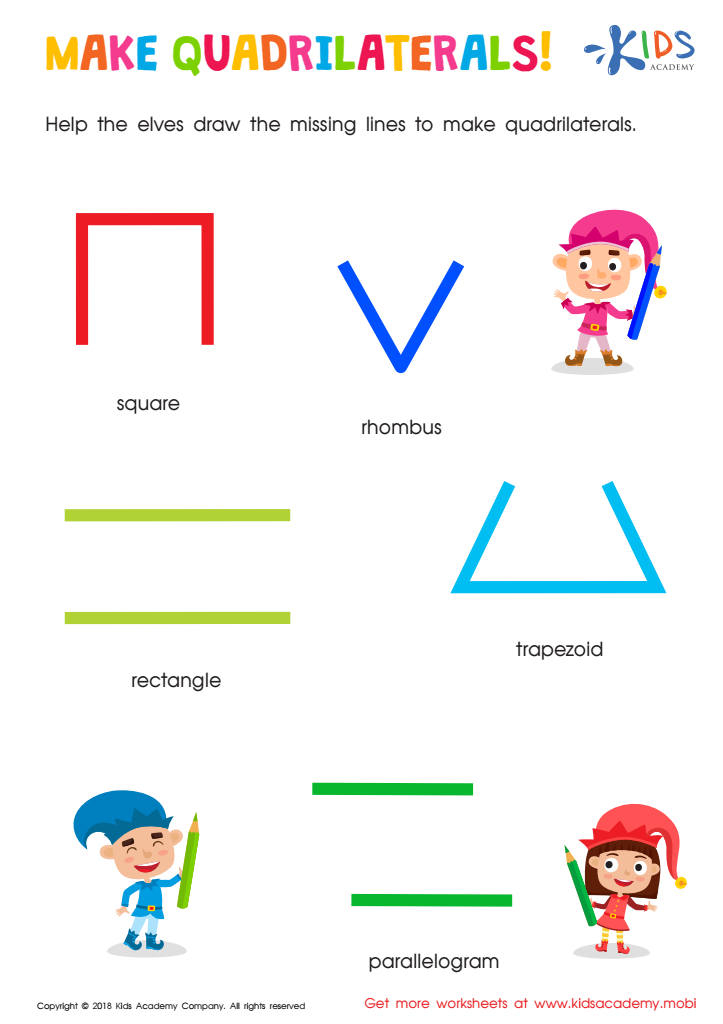
Make Quadrilaterals Worksheet
 Assign to My Students
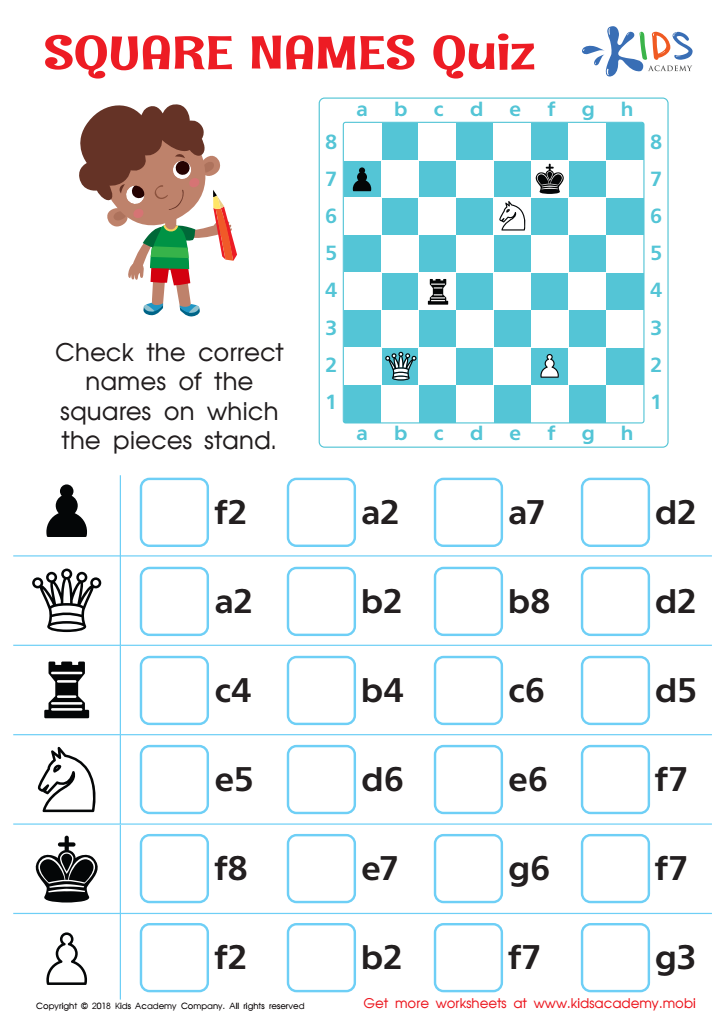
Square Names Quiz Worksheet
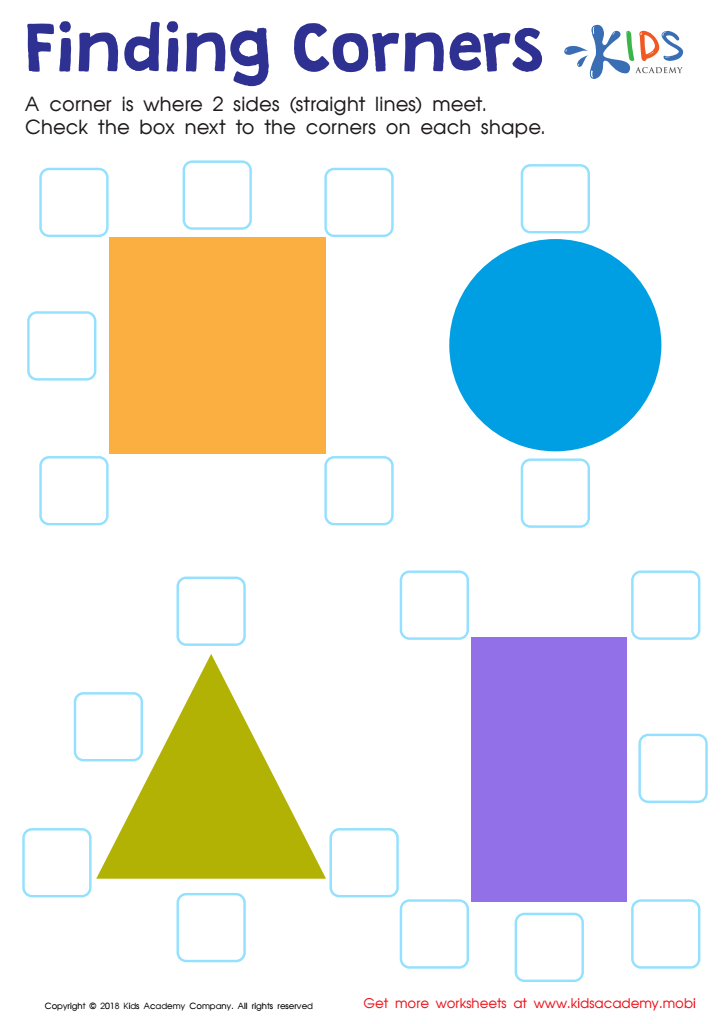
Finding Corners Worksheet




Parents and teachers should prioritize geometry basics for children ages 5-8 as it lays a vital foundation for their mathematical understanding and critical thinking skills. At this age, children are naturally curious and eager to explore their surroundings, making it an ideal time to introduce shapes, spatial relationships, and basic geometric reasoning.
Understanding geometry enhances children's ability to recognize patterns and shapes in the world around them, fostering observational skills and creativity. It also helps develop spatial awareness, which is essential for daily tasks such as reading maps, understanding graphs, and navigating their environments. Furthermore, geometry provides essential building blocks for future mathematics, including measurement, data interpretation, and problem-solving.
When children engage in hands-on activities—like constructing shapes with blocks or identifying geometric patterns in art—they also develop fine motor skills and learn to collaborate with peers. This cooperative learning builds social skills, critical for their overall development.
Lastly, fostering a strong grasp of geometry at a young age instills confidence in their mathematical abilities, setting a positive trajectory for academic success. By nurturing these skills, parents and teachers prepare children for more advanced concepts and promote a lifelong appreciation for mathematics.








