Grouping skills Worksheets for Ages 5-8
4 filtered results
-
From - To
Discover our engaging Grouping Skills Worksheets designed for children ages 5-8, perfect for enhancing early math and critical thinking abilities. These worksheets encourage young learners to identify, sort, and categorize various objects and images, fostering fundamental skills in organization and classification. Each activity is thoughtfully crafted to make learning fun and interactive, helping students develop important skills they will use in everyday life. With vibrant illustrations and diverse themes, our worksheets provide an exciting way for kids to practice grouping items by color, size, and type. Dive into our collection today to support your child's mathematical journey!
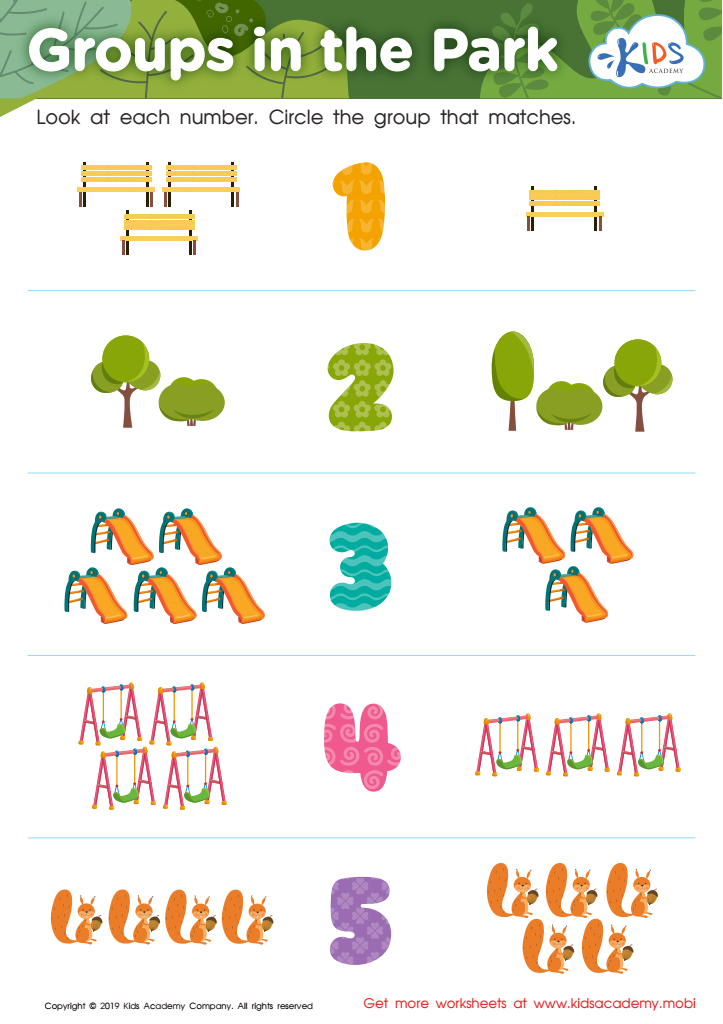
Groups in the Park Worksheet
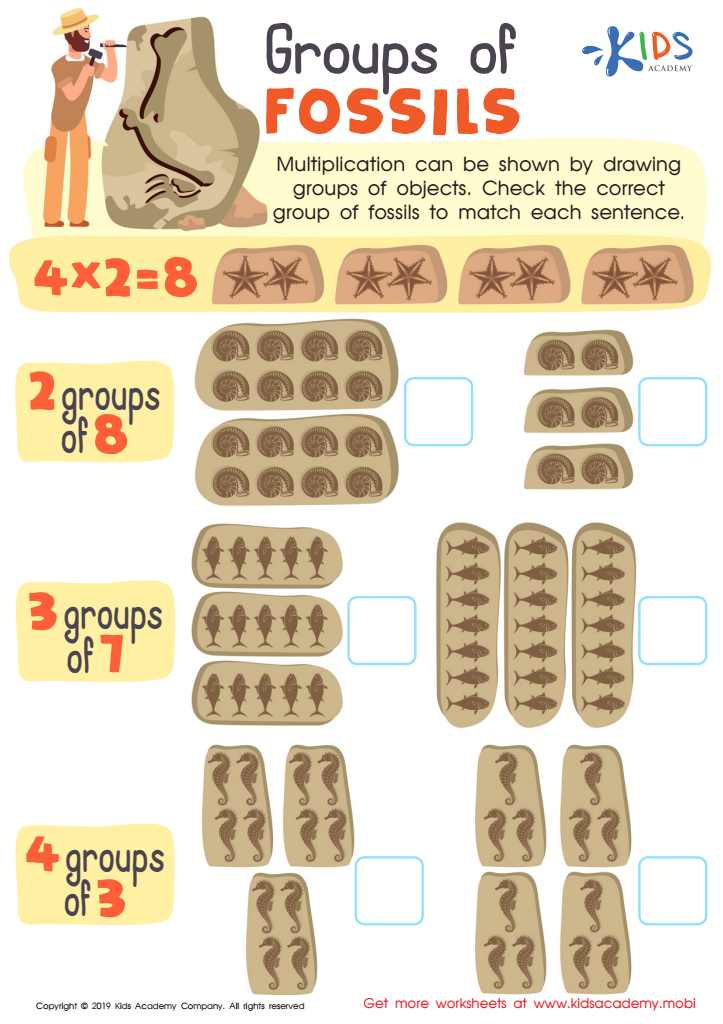
Groups of Fossils Worksheet
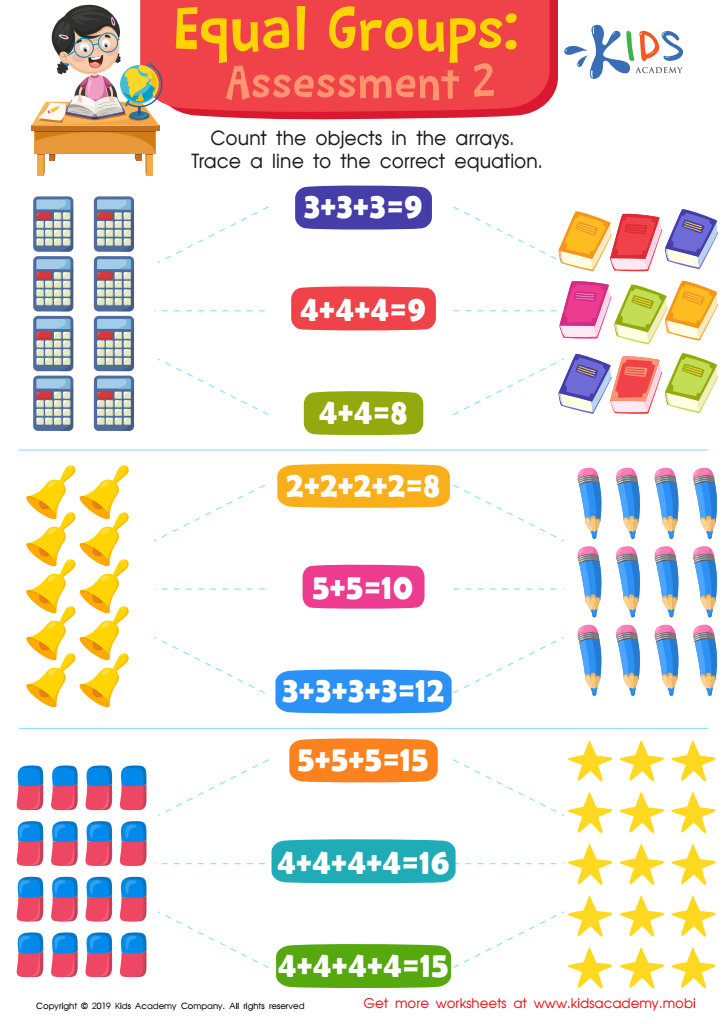
Equal Groups: Assessment 2 Worksheet
Musical Band Worksheet
 Assign to My Students






.jpg)
Grouping skills are essential for children aged 5-8, impacting their social, emotional, and cognitive development. During this formative stage, kids learn to connect with their peers, make decisions, and develop problem-solving skills. Effective grouping strategies can foster collaboration and communication, allowing children to share ideas and work towards common goals.
When children engage in group activities, they learn to navigate social dynamics, such as taking turns, listening, and expressing their thoughts respectfully. These experiences build critical interpersonal skills and promote empathy, guiding them toward becoming compassionate individuals. Additionally, through varied group configurations—like pairs, small groups, or larger teams—children can experience diverse perspectives and enhance their adaptability.
Teachers who prioritize group work help students develop essential academic skills, such as critical thinking and creativity. Children learn from each other, enhancing their understanding and retention of concepts. Parents, in turn, should support these approaches, reinforcing the importance of collaboration in both school and home environments. By investing in the development of group skills, parents and teachers empower children to thrive academically and socially, laying a strong foundation for future learning and relationships. Thus, nurturing these skills profoundly impacts the holistic development of young learners.








